
Tankless Water Heater Installation in Port St. Lucie Homes
Nine out of ten Port St. Lucie homes heat with electricity, and only about one in twenty heats with utility gas, according to Census figures. Heating fuel isn't the same as water-heater fuel, but it's a fair sign that most houses here have no gas line. So the first question for a tankless unit is usually whether the electrical panel can carry it or whether a gas main runs down the street.
Tank-to-Tankless Replacement
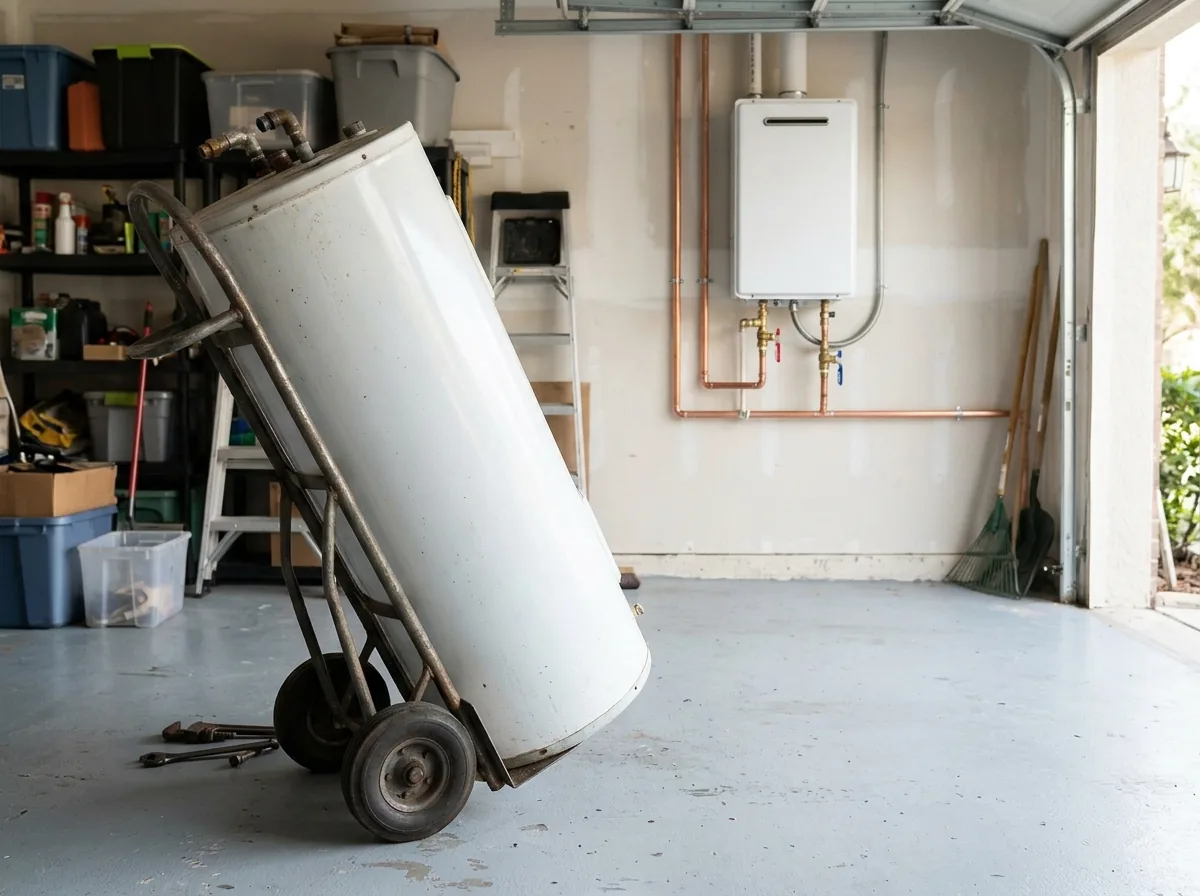
The median Port St. Lucie home was built in 2002, and HomeGuide gives tank heaters 8 to 12 years, so many original tanks here have already been replaced at least once. Switching to tankless means removing the tank (HomeGuide puts haul-away at $75 to $500), mounting the new unit on the wall and reworking the water lines, the power or gas supply and the venting. A gas tank's old vent can't be reused for a tankless unit. Ask the plumber to size the unit before quoting: it's chosen by how many fixtures run at once, not by the tank's gallons.
See Water Heater Replacement in Port St. Lucie for tank-for-tank swaps as well as conversions.
Whole-House Electric Tankless Water Heaters
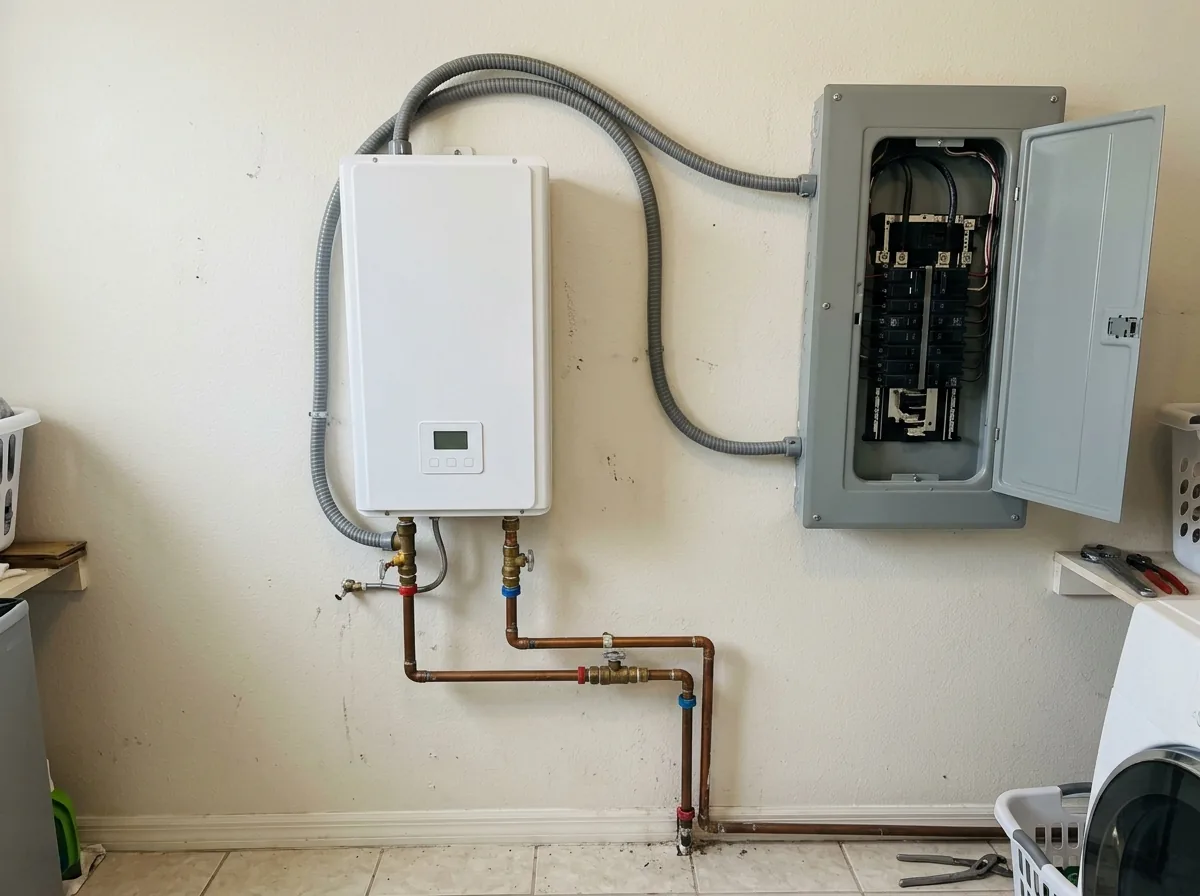
Electric is the cheapest tankless install, $1,400 to $3,000 in HomeGuide's figures, and the natural choice in a house with no gas. The question is the panel. An EcoSmart ECO 27 draws 112.5 amps across three 40-amp double-pole breakers, and Stiebel Eltron asks for at least 200-amp main service for its Tempra 29. This Old House says electric units can suit homes in warmer regions, and Port St. Lucie qualifies: its tap water arrives at around 72°F.
See Electric Tankless Water Heater Installation in Port St. Lucie.
Natural Gas Tankless Installation
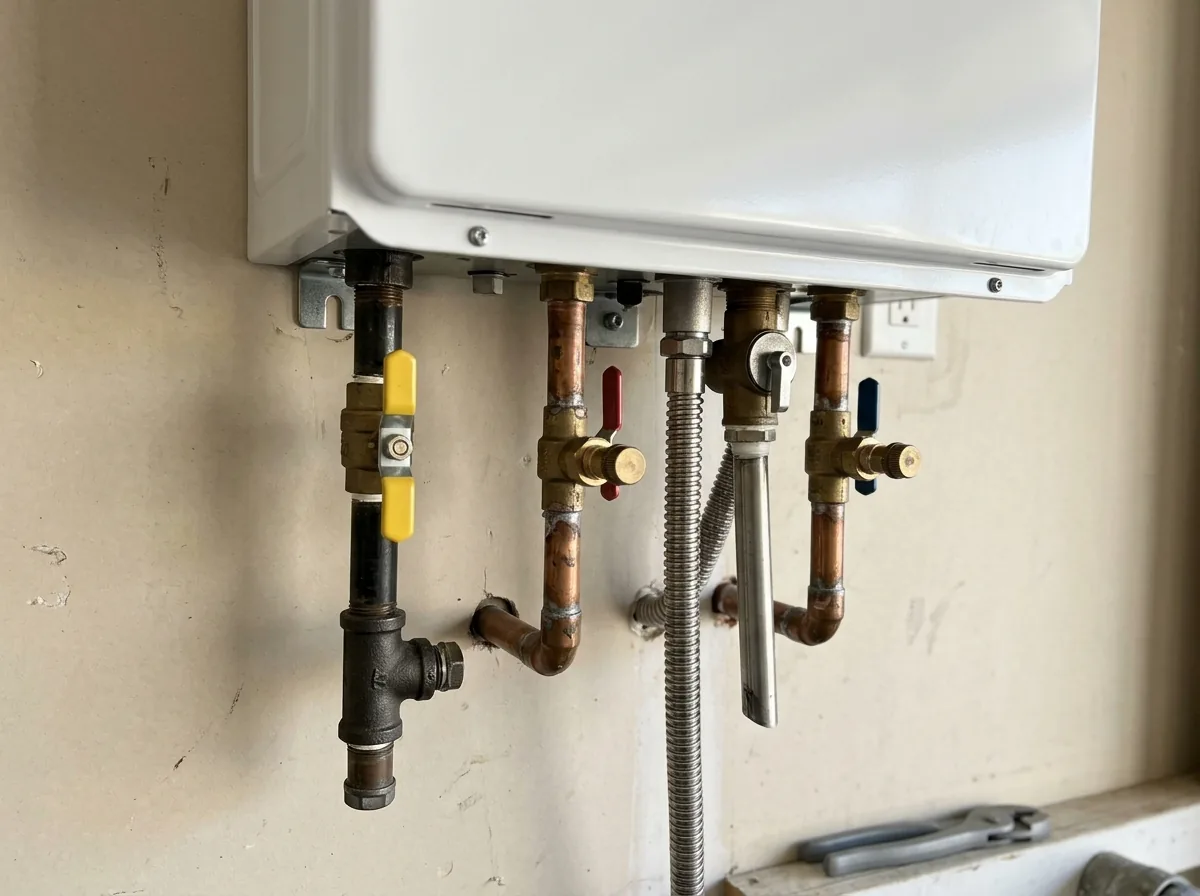
Florida City Gas holds the natural gas franchise in Port St. Lucie, and gas is only available along its mains, so check your street before planning a gas unit. Where it reaches, gas models give the most flow: This Old House lists natural gas units at up to 11 gallons a minute, against 3 to 8 for electric. HomeGuide puts natural gas installs at $2,100 to $5,600. The gas line is the usual extra, because older lines often have to be upsized for a tankless burner ($350 to $2,000).
See Natural Gas Tankless Water Heater Installation in Port St. Lucie.
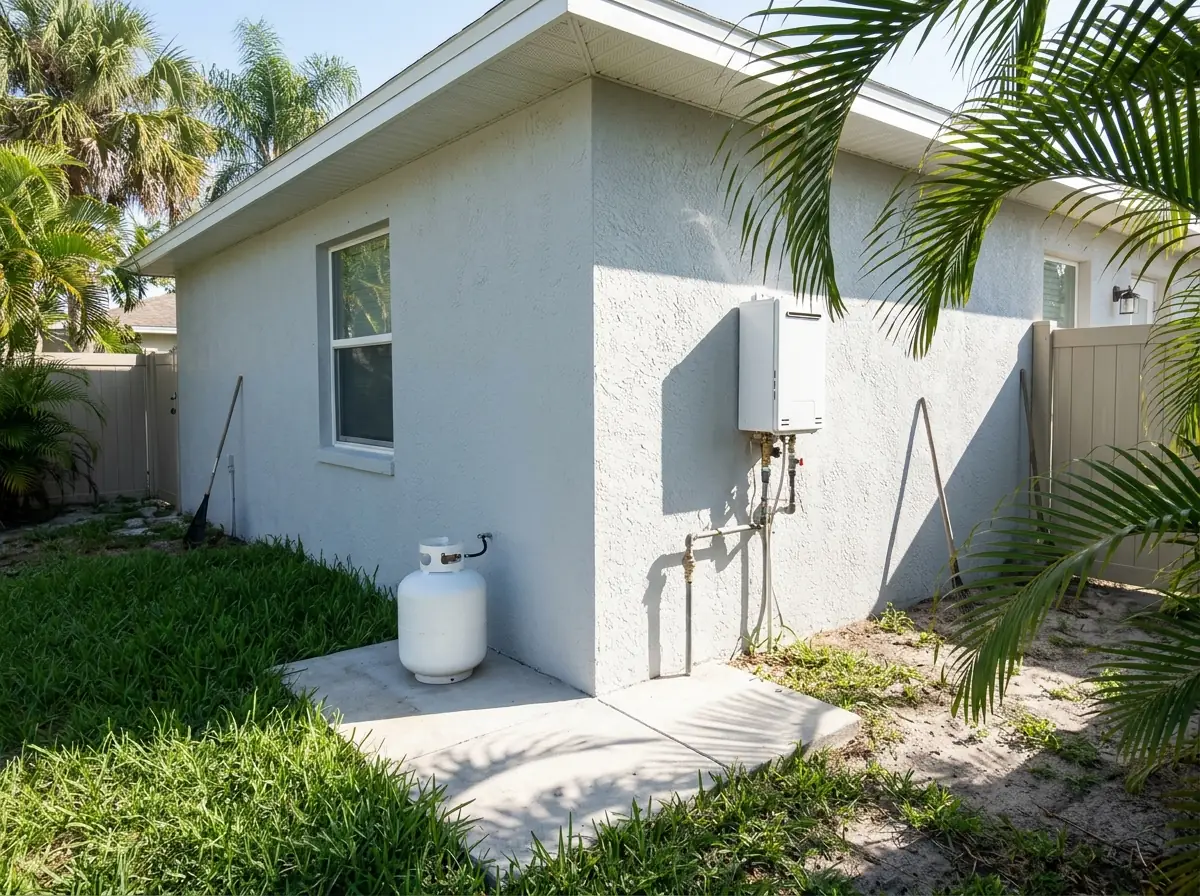
Propane Tankless Water Heaters
Propane brings a gas burner to a house beyond the mains. HomeGuide prices propane tankless at $1,600 to $4,500 installed. The city issues a separate permit for an LP tank ($125, or $115 online), so ask whether the quote covers both the heater and the tank set. A home that already has propane for a range or pool heater may only need a bigger line to the water heater.
See Propane Tankless Water Heater Installation in Port St. Lucie.
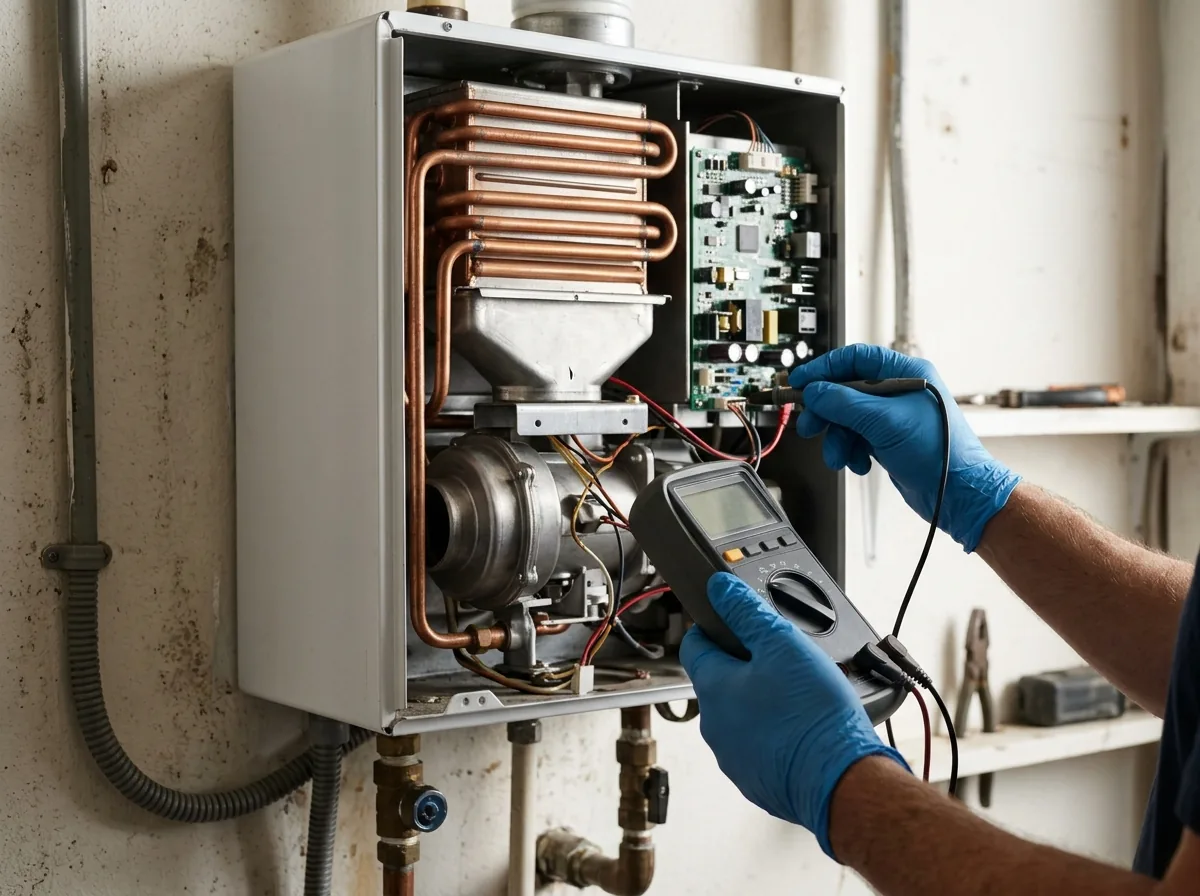
Tankless Water Heater Repair
Lukewarm bursts, an error code on the display, or no hot water at all are the usual reasons to call. Before the visit, write down the code and the model number from the side label, and say whether the unit has ever been flushed. That matters for the bill as well as the fix: Rinnai's manual says damage caused by scale isn't covered by its warranty.
See Tankless Water Heater Repair in Port St. Lucie; for an older tank heater, see water heater repair.
Replacing an Older Tankless Unit
HomeGuide gives tankless heaters 15 to 20 years. When an old one fails, the gas line, vent or circuit is already in place, so the questions are narrower: does the new model's gas input or amp draw match what's there, and does the existing vent suit it?
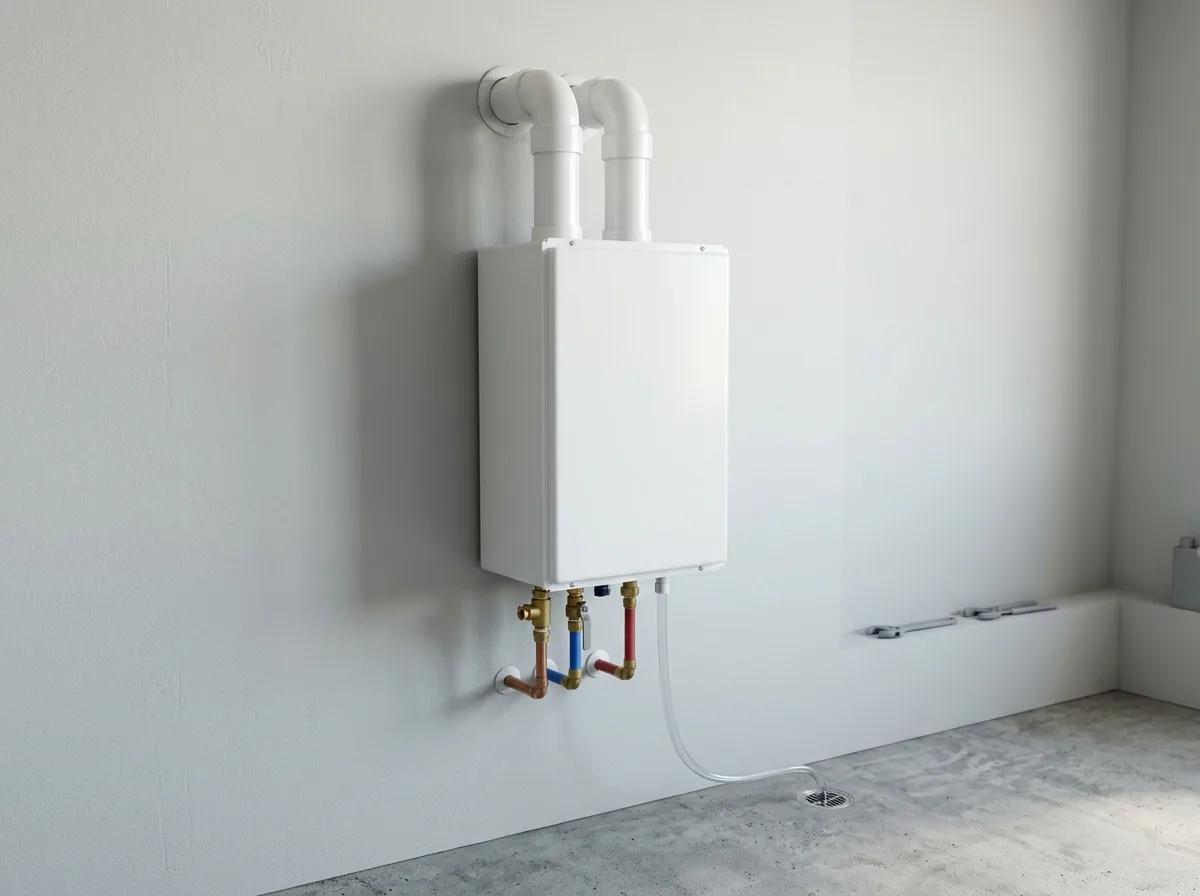
Condensing Tankless Water Heaters
Condensing units are the high-efficiency gas models. ENERGY STAR's gas tankless label requires a uniform energy factor of 0.95 or higher. They can vent through plastic pipe, but Florida's fuel gas code allows plastic only where the appliance is listed for it, and the manufacturer's instructions set the rest.
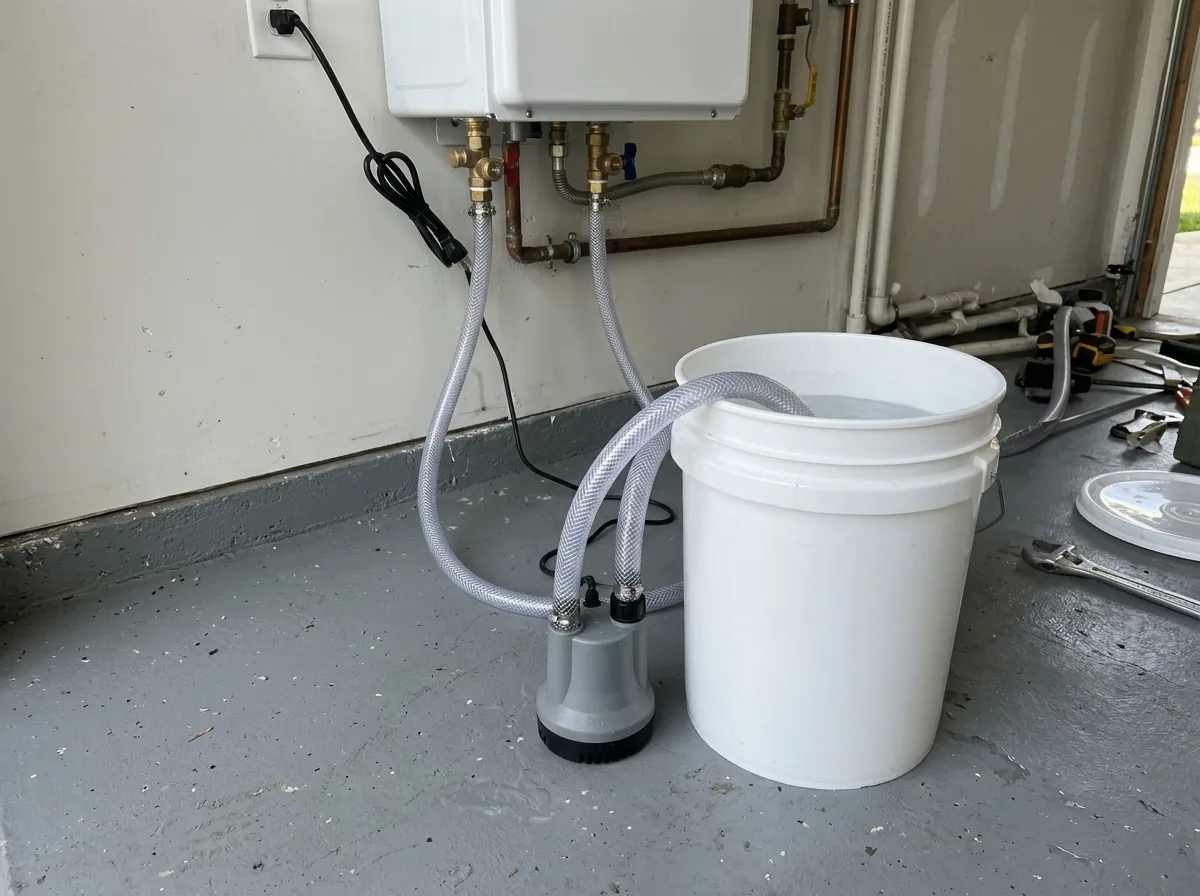
Flushing and Descaling
Rinnai and Navien both call for a flush at least once a year. Rinnai's procedure pumps 4 gallons of undiluted white vinegar through the heat exchanger by way of the service valves, for up to 45 minutes. Port St. Lucie's city water blends lime-softened surficial aquifer water with reverse-osmosis water from the Floridan aquifer, and the city's 2025 report gives no hardness figure; TapWaterData, an aggregator, lists about 3.9 grains per gallon.
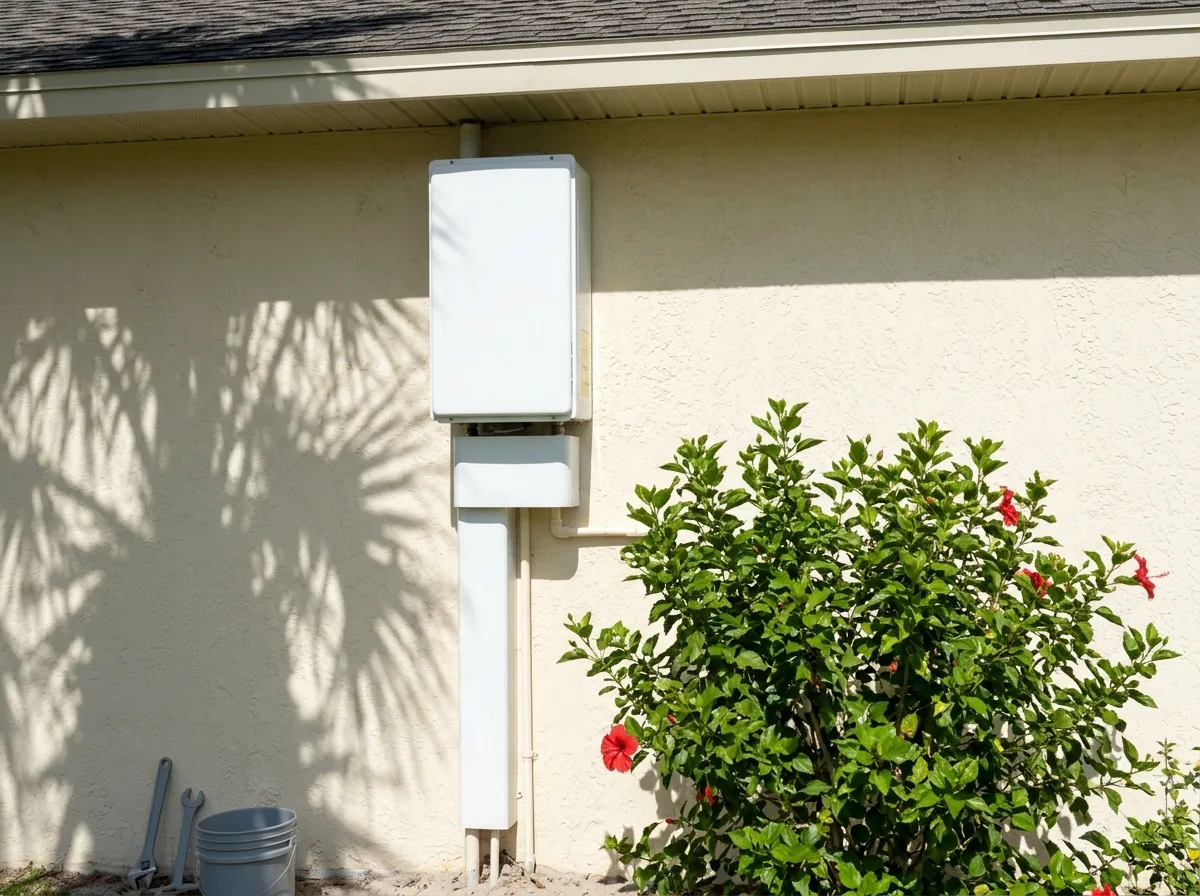
Outdoor Wall-Mount Tankless Units
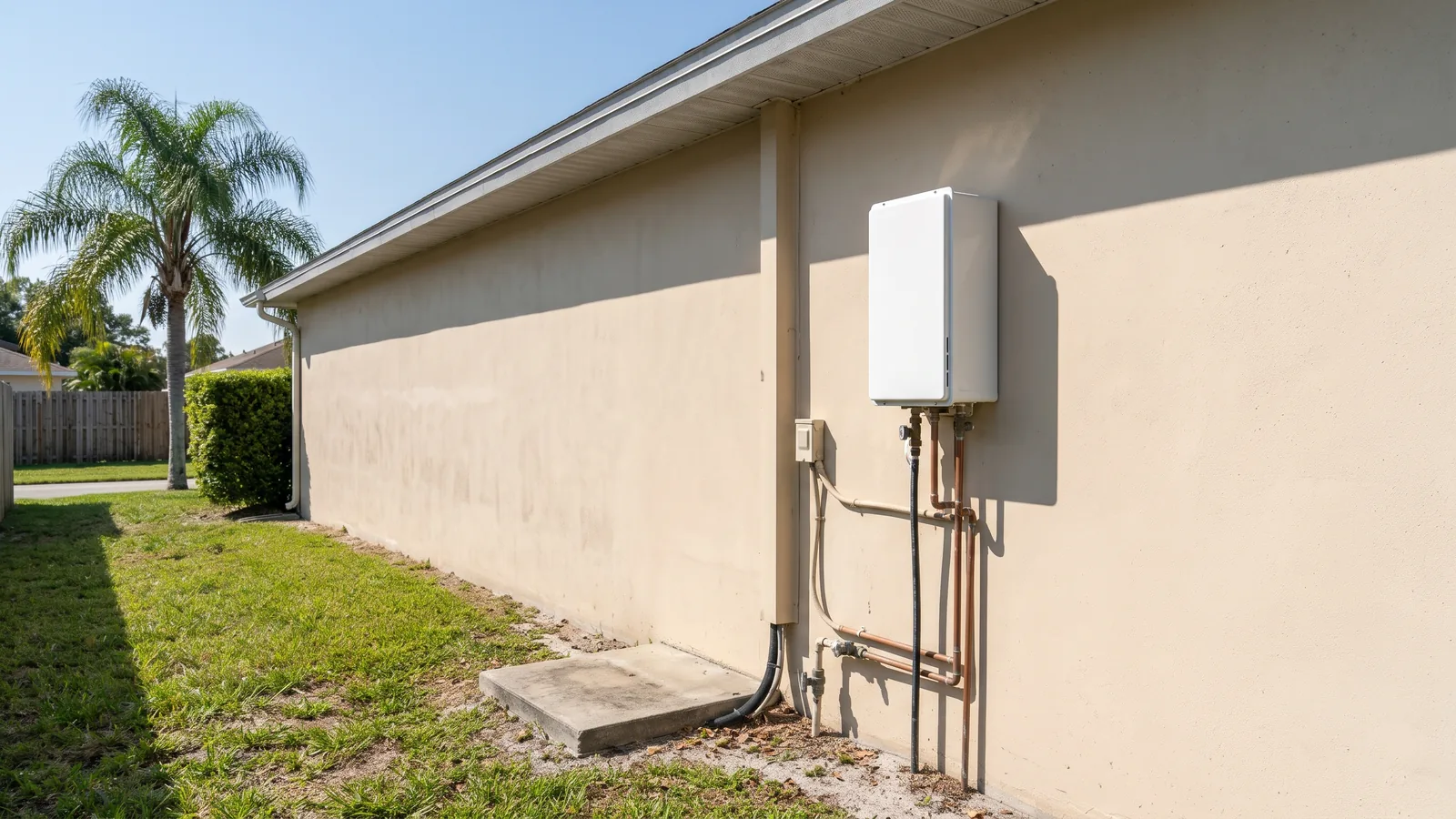
An outdoor model hangs on an exterior wall instead of in the garage or a closet. Placement still has rules: the manufacturer sets clearances around the cabinet, including distances from windows and doors, and the plumber should check them against your wall. Ask for a pipe cover over the lines where they run down the wall.
See Outdoor Tankless Water Heater Installation; the venting page covers terminal clearances for indoor units.
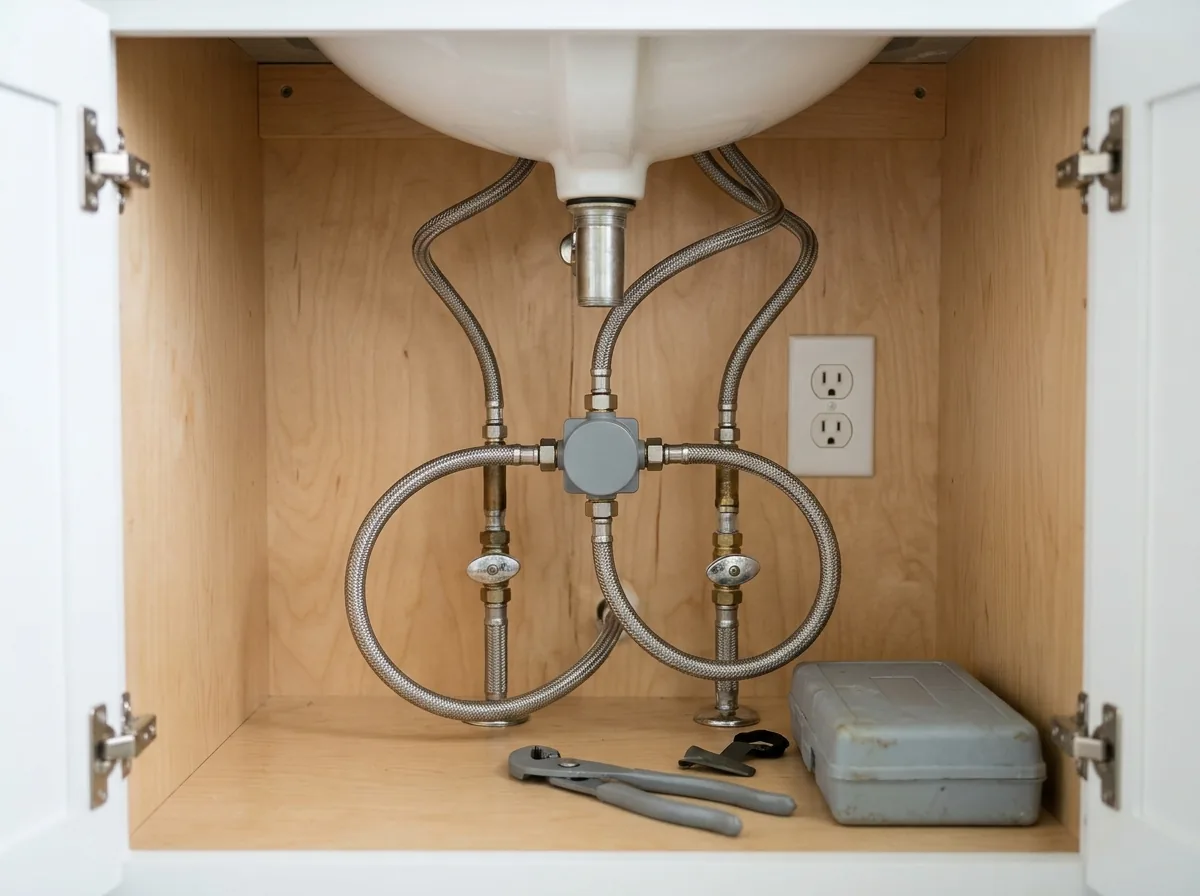
Hot Water Recirculation Pumps
In a long single-story house, the far bathroom can wait a while for hot water. A recirculation pump, built into some tankless models or added with a valve under the farthest sink, keeps warm water near the tap. Ask whether it runs on a timer or on demand.
See Hot Water Recirculation Pump Installation in Port St. Lucie.
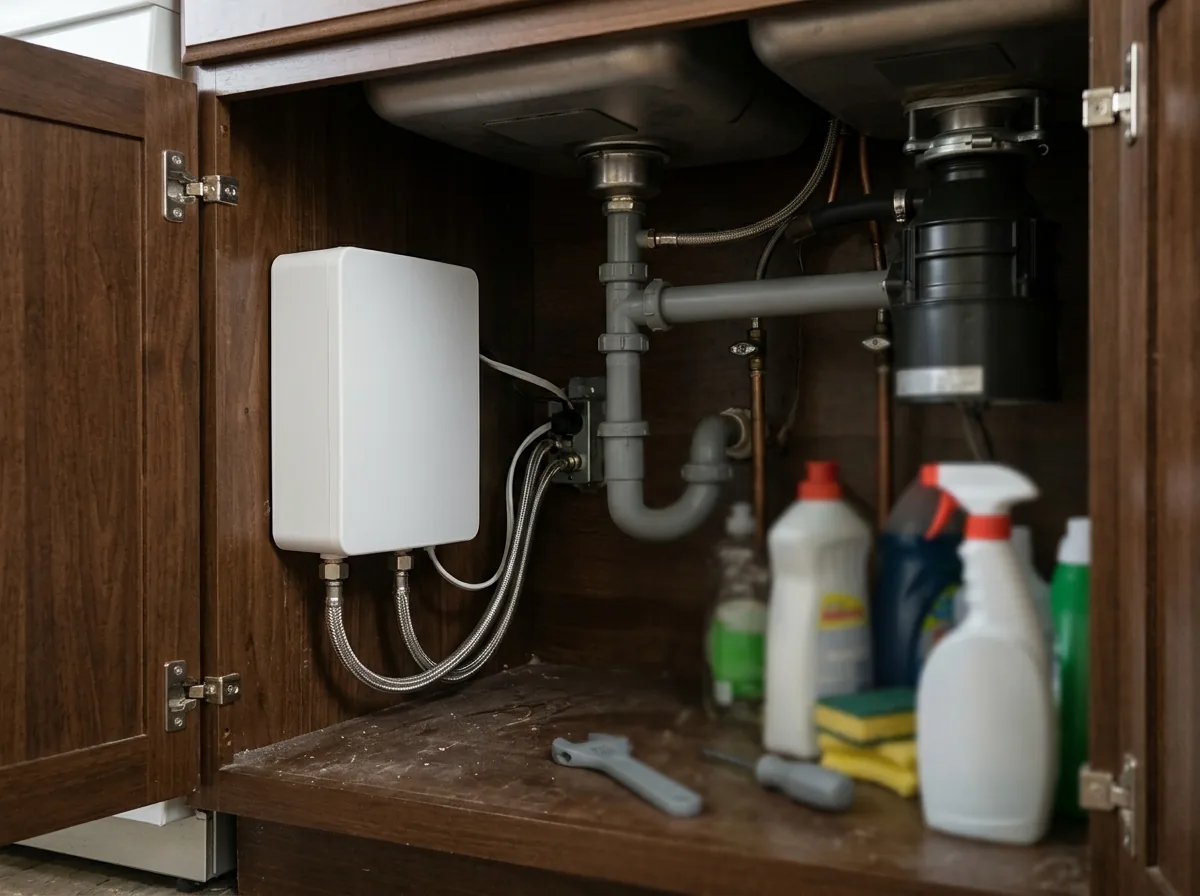
Point-of-Use and Under-Sink Units
A small electric unit under one sink costs $150 to $250 in HomeGuide's figures, against $600 to $2,600 for a whole-house unit alone. It suits a pool bath, a workshop or a guest suite far from the main heater. It adds hot water where the main line is too far away; it doesn't replace a whole-house heater.
See Point-of-Use Tankless Water Heaters in Port St. Lucie, or manufactured home tankless units for a single-wide or double-wide.
Tankless Water Heater Cost in Port St. Lucie
No guide publishes a Port St. Lucie price. The ranges below are HomeGuide's national figures, plus the city's own permit fee. Use them to check whether a quote is in range; the plumber's written price for your house is the one that counts.
| Item | Typical range |
|---|---|
| Electric tankless, installed | $1,400 to $3,000 |
| Propane tankless, installed | $1,600 to $4,500 |
| Natural gas tankless, installed | $2,100 to $5,600 |
| Point-of-use unit (unit only) | $150 to $250 |
| Labor | 3 to 10 hours |
| New dedicated circuit | $250 to $900 |
| New electrical panel | $850 to $1,700 |
| Gas line upsizing | $350 to $2,000 |
| Gas exhaust vent replacement | $100 to $600 |
| Old tank removal | $75 to $500 |
| Port St. Lucie water heater permit | $86, or $72 online, plus $4 surcharges |
A new tank heater runs $600 to $3,100 installed by comparison. The federal 25C tax credit no longer applies to water heaters installed after December 31, 2025. Florida City Gas lists a tankless rebate of up to $675 when switching from a non-gas heater ($550 when replacing a gas one) and an electric-to-gas tankless payment plan at $42.99 a month for 60 months; confirm the current terms with the utility.
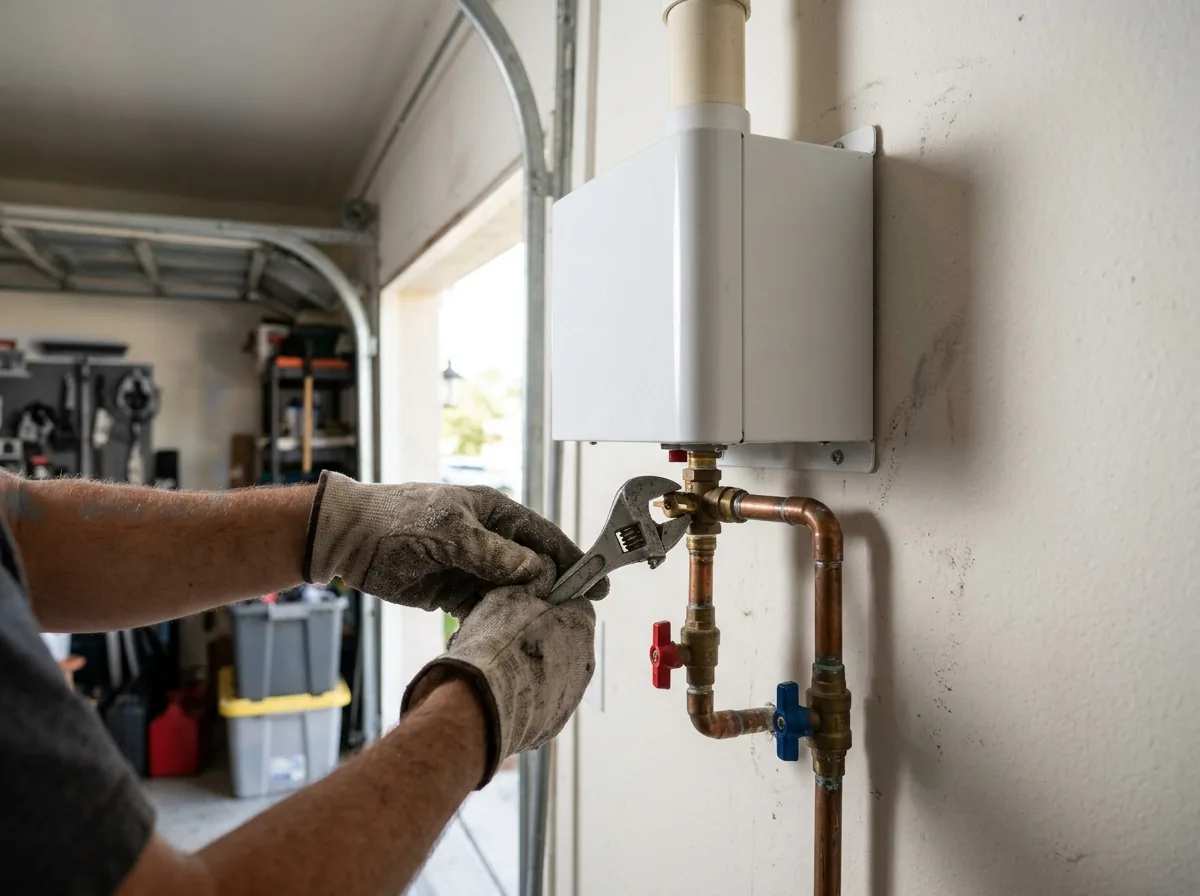
Get a free tankless water heater estimate in Port St. Lucie
- Sending a request is free and doesn't commit you to anything
- Your details go to one licensed plumber, never a list of callers
- Ask for the unit's flow rate at your water temperature in writing
- Ask who files the city permit and books the inspection
- The referral adds nothing to the plumber's price
Commercial Tankless Water Heaters in Port St. Lucie
Say in your request that it's for a business, and give the number of sinks, showers or machines that use hot water at the same time. A commercial unit is sized from that peak, the same flow-and-rise method as a house.
Restaurants and Food Service
Dish machines, prep sinks and hand sinks can all call for hot water during one rush. Ask whether two units on one manifold make sense, so one can be flushed or repaired while the other keeps running.
Condo Associations and Multi-Family Buildings
In condo buildings and townhome rows, a wall-hung unit frees closet space in each home. An association can ask for one model across all units so parts and flush schedules match.
See Condo and Rental Tankless Water Heaters, which also covers landlords' units.
Rental Properties
For a long-term rental or a seasonal home, ask about an outdoor unit or a leak shutoff, since no one is there to notice a problem while the place sits empty.
Salons and Barbershops
Size for every shampoo bowl running at once, plus the washer if towels are laundered on site.
See Commercial Tankless Water Heater Installation in Port St. Lucie for salons, offices and other businesses.
Medical, Dental and Veterinary Offices
Point-of-use units at the farthest hand sinks can shorten the wait without a long recirculation loop.
Electrical, Gas and Venting Work for Tankless Units
The supply and venting work around the heater decides whether the install passes inspection, and it's where quotes differ most.
Panel and Circuit Upgrades
This Old House says most whole-house electric units need 120 to 160 amps of dedicated service and several 240-volt circuits. If the panel can't spare that much, a new panel comes before the heater; HomeGuide puts one at $850 to $1,700.
Gas and Propane Line Sizing
Older homes often need the line upsized from half-inch to three-quarter-inch pipe before a tankless unit will fire properly; This Old House prices that at $400 to $800. Ask the plumber to count every gas appliance in the house, a range, dryer or pool heater included, when sizing the line.
Venting and Wall Terminals
Non-condensing gas units usually vent through stainless steel, which This Old House puts at $400 to $800. Condensing units can use plastic vent where the model is listed for it. Wall terminals keep the code clearances: 12 inches above grade, and units over 150,000 Btu per hour at least 4 feet below or beside an operable window or door.
See Tankless Venting in Port St. Lucie for vent materials and terminal rules.
Scale Protection and Water Softeners
Rinnai's manual sets a 200 mg/L hardness limit for its units. If a test shows harder water, ask about a softener or scale-reduction cartridge ahead of the heater.
See Water Softeners for Tankless Heaters, and for pressure that keeps popping the relief valve, expansion tanks.
Heat Pump Water Heaters as an Alternative
If the panel can't take a whole-house electric tankless unit, ask the plumber to price a heat pump water heater as well. It's the other high-efficiency electric option.
Sizing a Tankless Unit for 72-Degree Treasure Coast Water
The Department of Energy sizes tankless heaters by two numbers: the flow rate you need at once and the temperature rise. Its worked example assumes 50°F incoming water. Port St. Lucie's water starts warmer: Rinnai's groundwater map puts the Florida peninsula in its 72°F band, so reaching 120°F at the tap takes a rise of only about 48 degrees.
That changes the numbers a lot. The DOE example adds a 2.5-gallon shower head to a 0.75-gallon faucet and arrives at a heater that must deliver at least 3.25 gallons a minute. Rinnai's chart shows a 160,000 Btu gas unit giving 5.1 gallons a minute of 105°F shower water with 72°F inlet water, against 3.6 with 52°F water, and a 199,000 Btu unit giving 7.9 against 5.6. A quote built on a northern sizing chart can oversize the heater, the gas line or the panel work, so ask which inlet temperature the plumber used.
Florida's plumbing code caps tankless output for household use at 140°F. That's still hot enough to burn: Rinnai's manual warns that water over 125°F can cause severe burns, which is why 120°F is the usual setting.
See Tankless Water Heater Sizing in Port St. Lucie for worked examples by household.
Port St. Lucie Water Heater Permits and Plumbing Licenses
Port St. Lucie's Building Department has its own Water Heater Permit Application under the 2023 Florida Building Code, with a separate box for tankless units. Tankless and solar heaters need plan review, so the manufacturer's specifications go in with the application. Both the contractor and the owner sign, and the form is notarized. A water heater replacement permit is $86, or $72 through the Contractor E-Permitting Portal, plus $4 in surcharges. Changeouts can be inspected virtually, usually the next business day.
In Florida, a licensed plumbing contractor may install the water lines, natural gas and LP gas piping and venting without a separate local license. Ask for the contractor's state license number and check it on the DBPR site. Panel and service upgrades go to a licensed electrician.
Hurricane Season, Power Outages and Tankless Heaters
A gas tankless heater needs electricity. The fan, igniter and controls run on 120 volts, so when a storm takes out the power, the hot water goes too. Rinnai approves a few battery backups for its units; its bulletin lists run times of about 5 to 9 hours on one of them, depending on the model.
Before a storm, Rinnai's advice is to turn off the power and gas to the heater, and to move it if flooding is expected.
From Request to Hot Water
- STEP01
Send the form or call
Tell us the fuel you have now (electric, propane or natural gas), where the heater sits and how many bathrooms the house has.
- STEP02
One licensed plumber gets the request
We send it to one independent licensed plumber who works in Port St. Lucie, who contacts you to arrange a look at the house.
- STEP03
Sizing and a written quote
Ask for the unit's flow rate at your inlet temperature, the breaker or gas line changes, the venting and the permit in writing, with the price.
- STEP04
Permit and installation
Ask who files the city permit; the city's online portal is for licensed contractors. HomeGuide puts most installs at 3 to 10 hours of labor.
- STEP05
Inspection
The city inspects the finished work, by video for a changeout. Keep the permit card and the unit's manual, and register the warranty with the manufacturer.
Tankless Service Across Port St. Lucie
Port St. Lucie Tankless Water Heater takes requests from homes and businesses anywhere in Port St. Lucie. City water comes from Port St. Lucie Utility Systems' lime-softening and reverse-osmosis plants, and Florida City Gas runs the natural gas mains where they exist.