
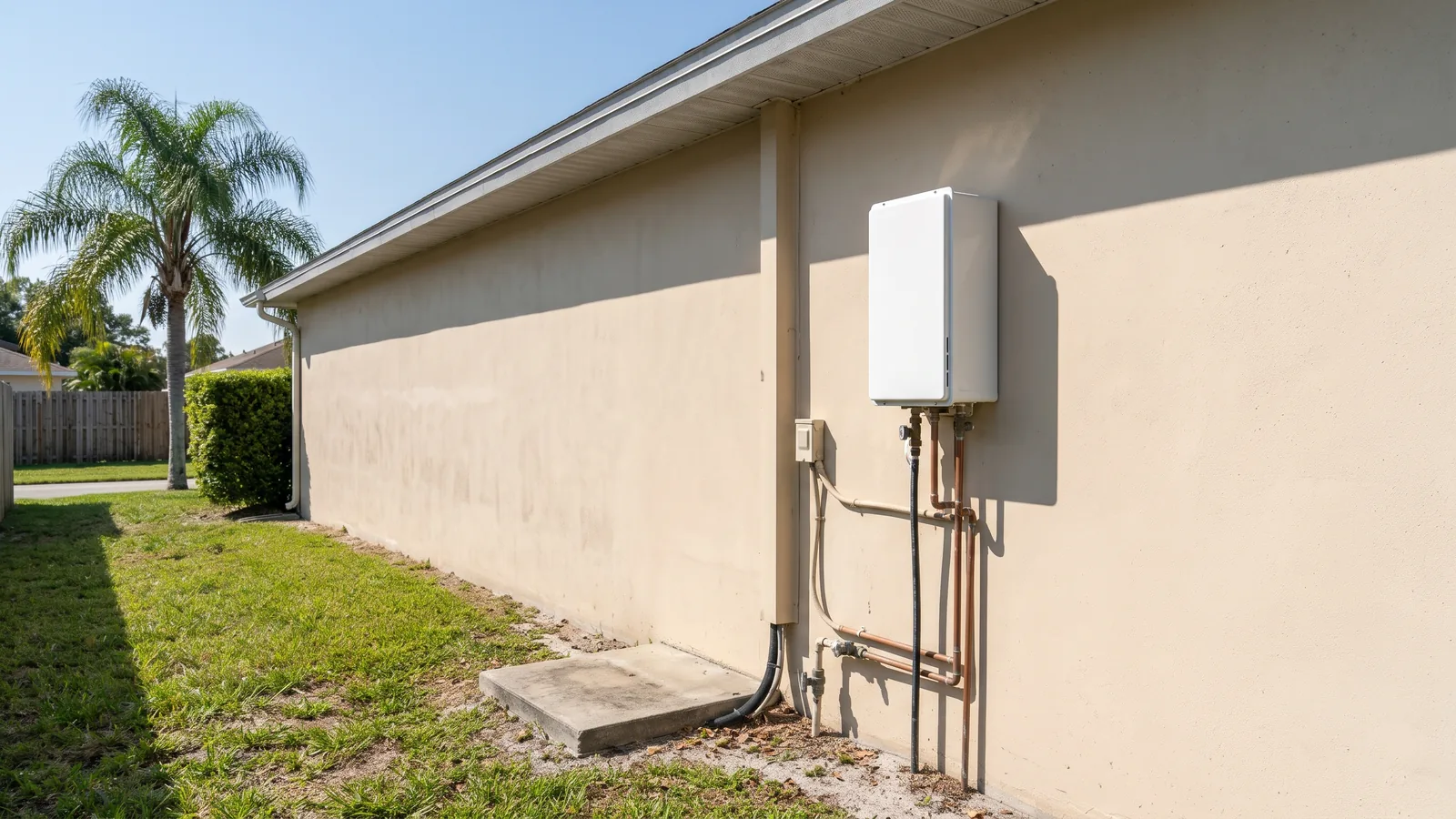
Restaurant Hot Water Loads a Tankless System Has to Meet
Florida's Division of Hotels and Restaurants regulates kitchens against the 2017 FDA Food Code, and that code wants hot water systems big enough for the peak demand across the whole establishment. In a kitchen, the peak isn't showers. It's a dish machine rinse, three compartments filling and a line of cooks washing hands at the same moment.
Sanitizing Rinse and Booster Heaters
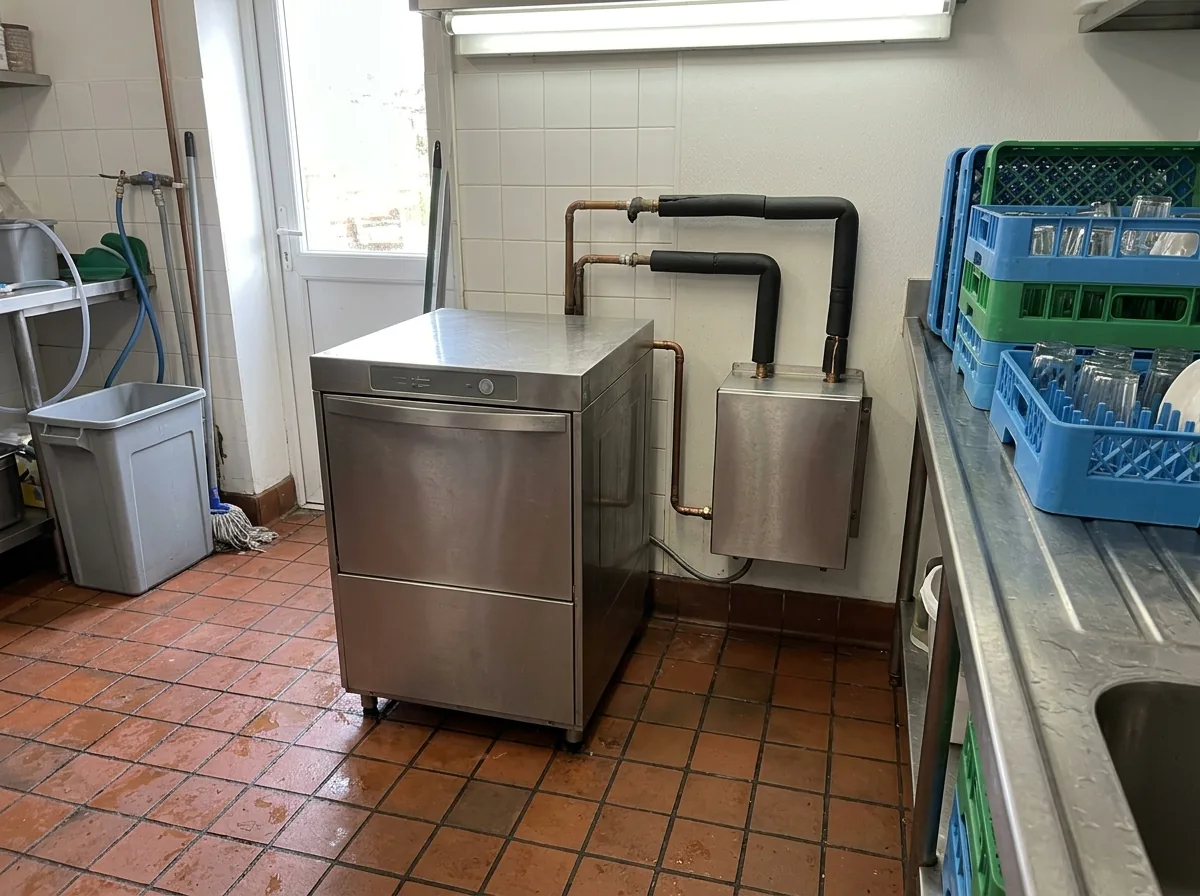
A hot-water dish machine sanitizes with its final rinse, and the Food Code sets that rinse at the manifold:
- Most machines: at least 180°F, no more than 194°F.
- Stationary-rack, single-temperature machines: at least 165°F.
A booster heater at the machine lifts the incoming water to that level. The Food Code's notes say a booster fed too little water, or water that isn't hot enough, won't reach sanitizing temperature, so the tankless system feeding it has to keep up during the rush. Rinnai's commercial controller goes to 185°F. Florida's 140°F tankless cap is written for domestic uses (see sizing and the 140°F limit); ask how the plan separates kitchen water from restroom water.
Handwash Sink Temperature Rules
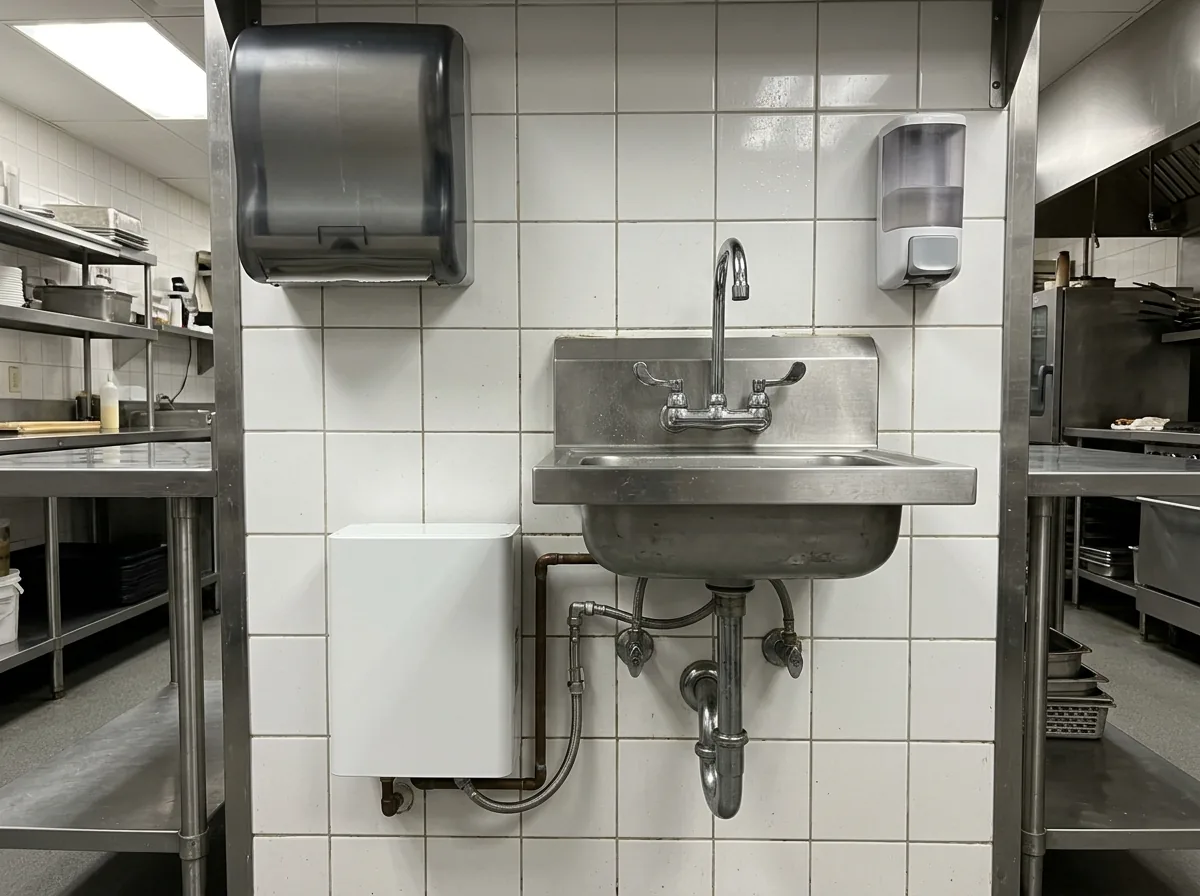
The Food Code wants every hand sink able to supply 100°F water or warmer, blended through a mixing valve or a combination faucet. Steam mixing valves are out, and a metering or self-closing faucet has to keep flowing for 15 seconds or more each time it's pressed. Short pushes at low flow can fall under a tankless unit's minimum firing flow (Rinnai lists 0.4 gallons a minute as the minimum for two of its VB indoor models); see minimum flow and recirculation. Florida's plumbing code also limits hot water piping to 50 feet from the heater to the fixture.
Filling a Three-Compartment Sink
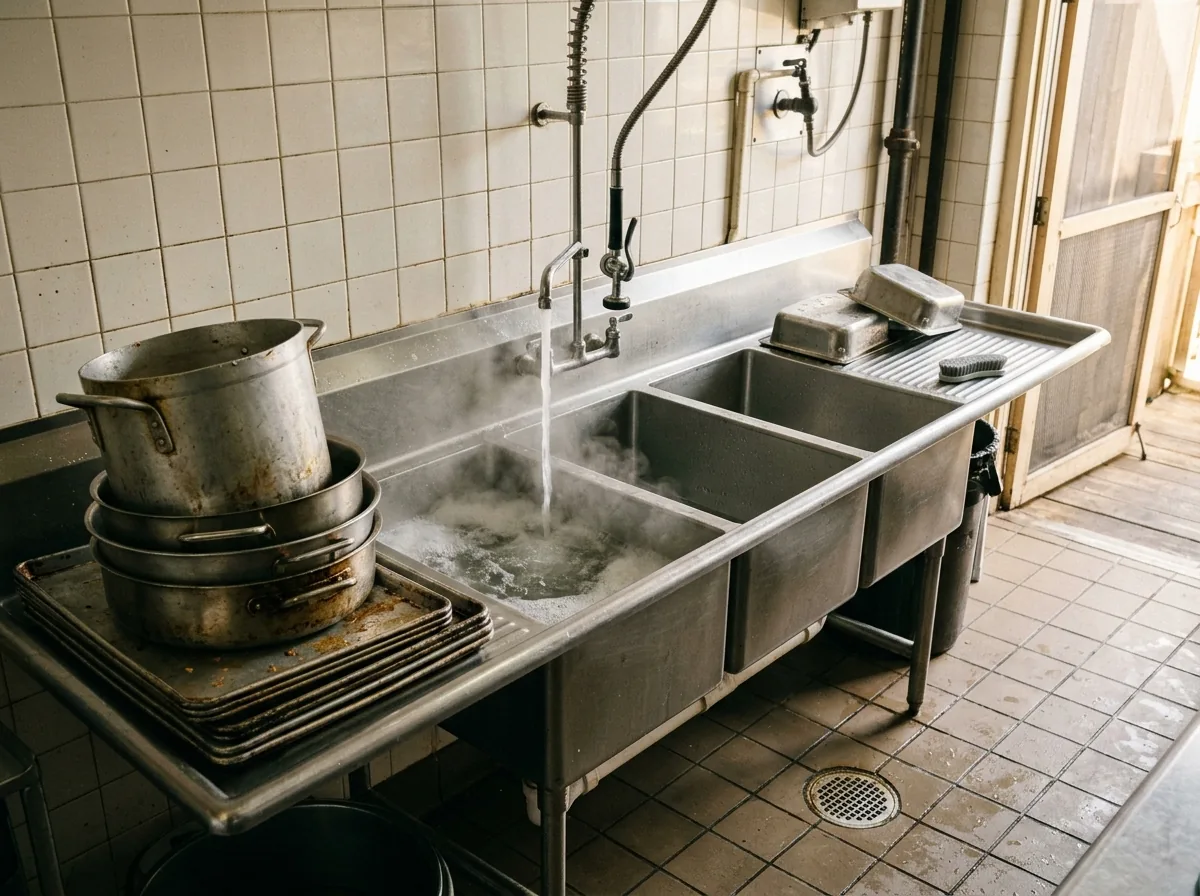
Manual dishwashing needs a sink with at least three compartments, each large enough to submerge the biggest pan or utensil. Two temperatures matter:
- Wash compartment: 110°F minimum, unless the cleaning agent's label calls for another temperature.
- Hot-water sanitizing compartment, if used instead of chemicals: 171°F or above.
Fill time is a flow question. Rinnai's chart gives a 199,000 Btu unit 7.9 gallons a minute of 105°F mixed water with 72°F inlet water and the heater at 120°F, about 1.3 minutes per 10 gallons at that temperature; the 110°F wash compartment fills a little slower. Rinnai also notes that a higher set temperature cuts the flow a unit can deliver, so a hotter sanitizing fill comes slower.
Back-of-House Wall Space and Venting
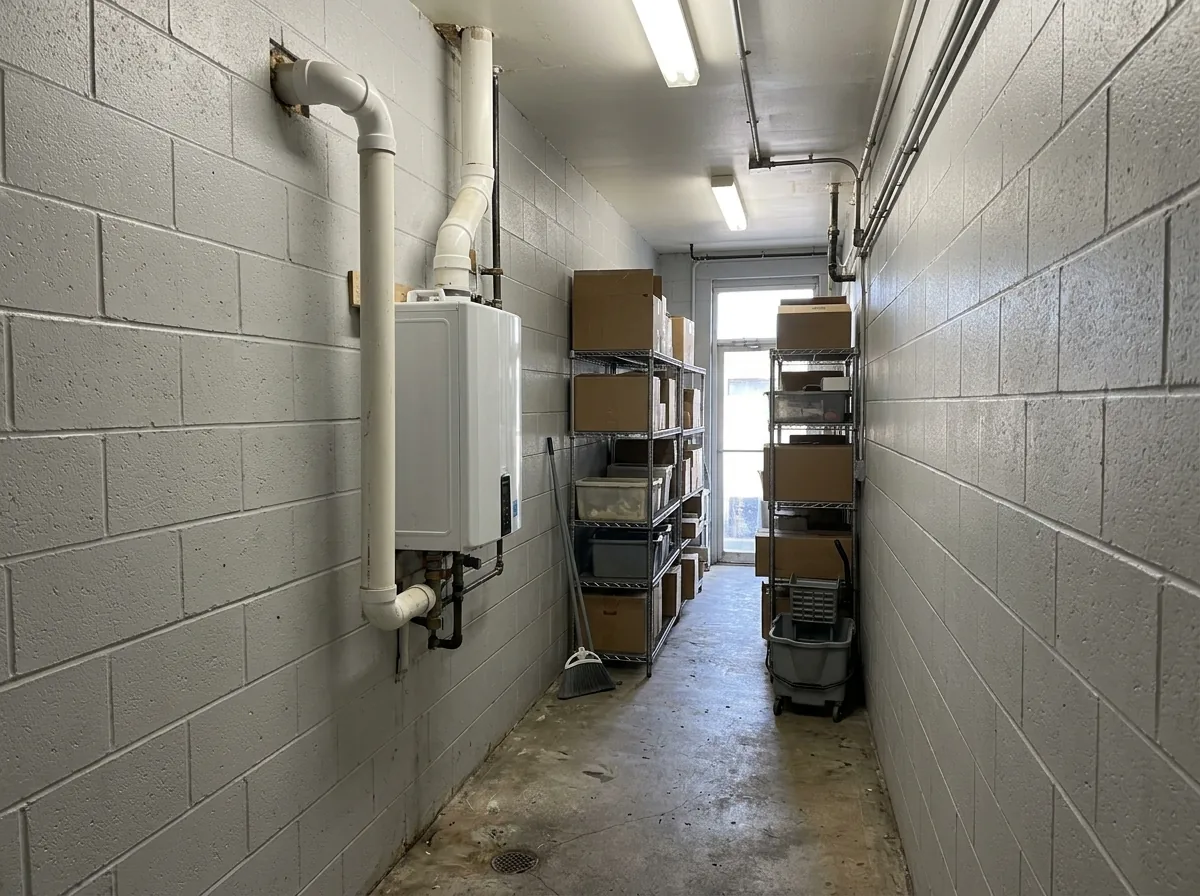
Back kitchens are short on wall. A tankless unit hangs flat, but it still needs a 30-by-30-inch clear working space in front of its controls, so shelving can't crowd it. Rinnai's commercial line can be mounted indoors or on an outside wall, and PVC is among its venting options; hanging it outdoors frees the kitchen wall entirely. Vent terminals keep code clearances from doors and air intakes; see venting and wall terminals.
Why Port St. Lucie homeowners and businesses call Port St. Lucie Tankless Water Heater
- Sending a request is free and doesn't commit you to anything
- Your details go to one licensed plumber, never a list of callers
- Ask for the unit's flow rate at your water temperature in writing
- Ask who files the city permit and books the inspection
- The referral adds nothing to the plumber's price
Permits, Gas and Timing for a Kitchen Install
On the city's commercial schedule, the water heater permit for a restaurant is the same $150 ($135 online) as any business, and added gas capacity is billed by the Btu. Kitchens already running gas ranges may still need a bigger line, because the code sizes pipe for every appliance firing at once; see gas line sizing. For linked banks and the full commercial cost picture, see commercial tankless installs.
Ask for the quote to show:
Peak load
Dish machine, compartment sinks and hand sinks, and the flow at your inlet temperature.Booster feed
The temperature and flow the booster maker asks for.Shutdown window
When water goes off and when the inspection is booked.