
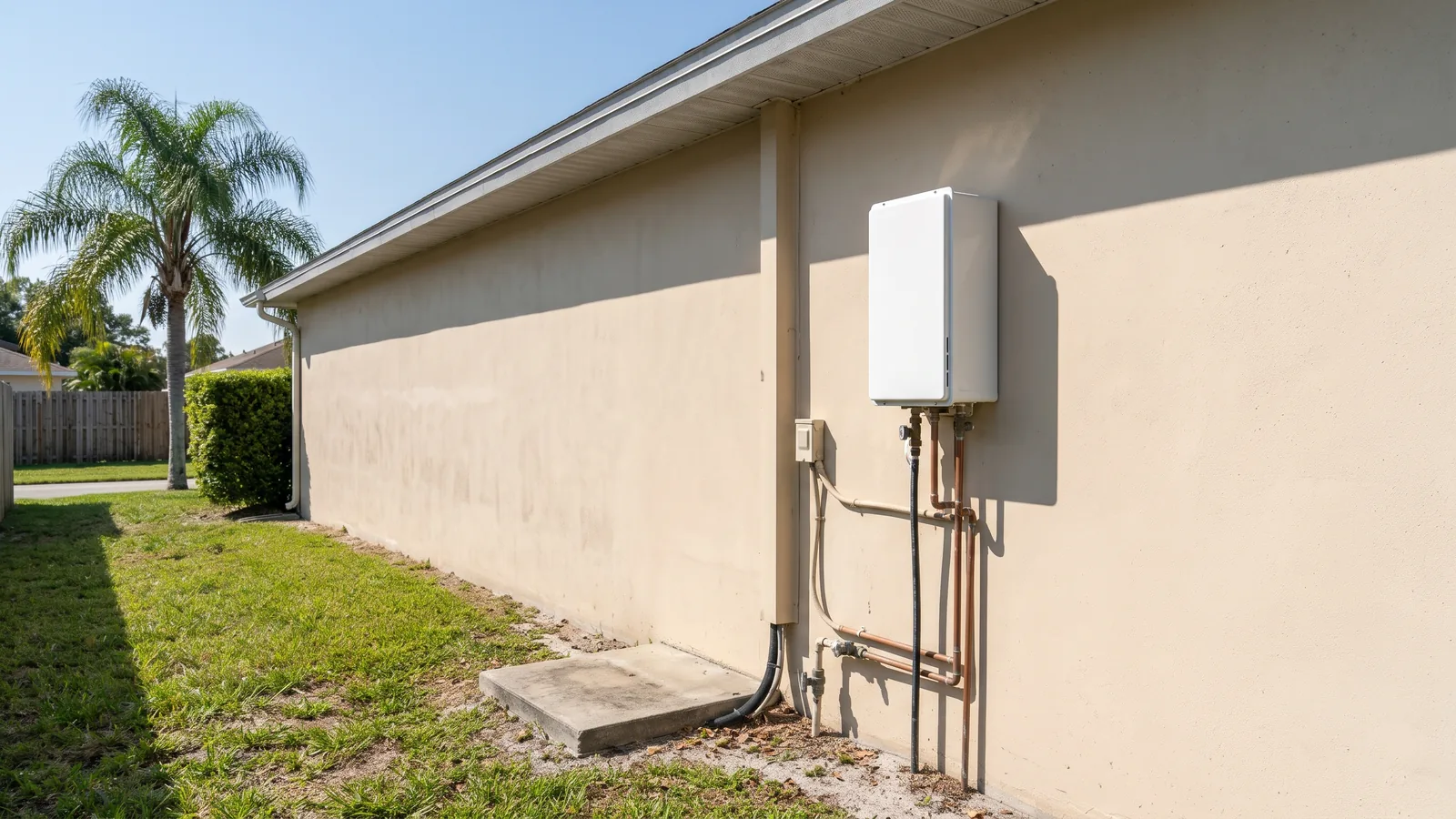
Water Treatment Options Ahead of a Tankless Heater
Scale forms when hard water is heated, and a tankless heat exchanger heats every gallon the house uses. Rinnai's manual says damage from lime buildup isn't covered by its warranty, so treatment is about protecting that part. Which option fits depends on what comes out of your tap.
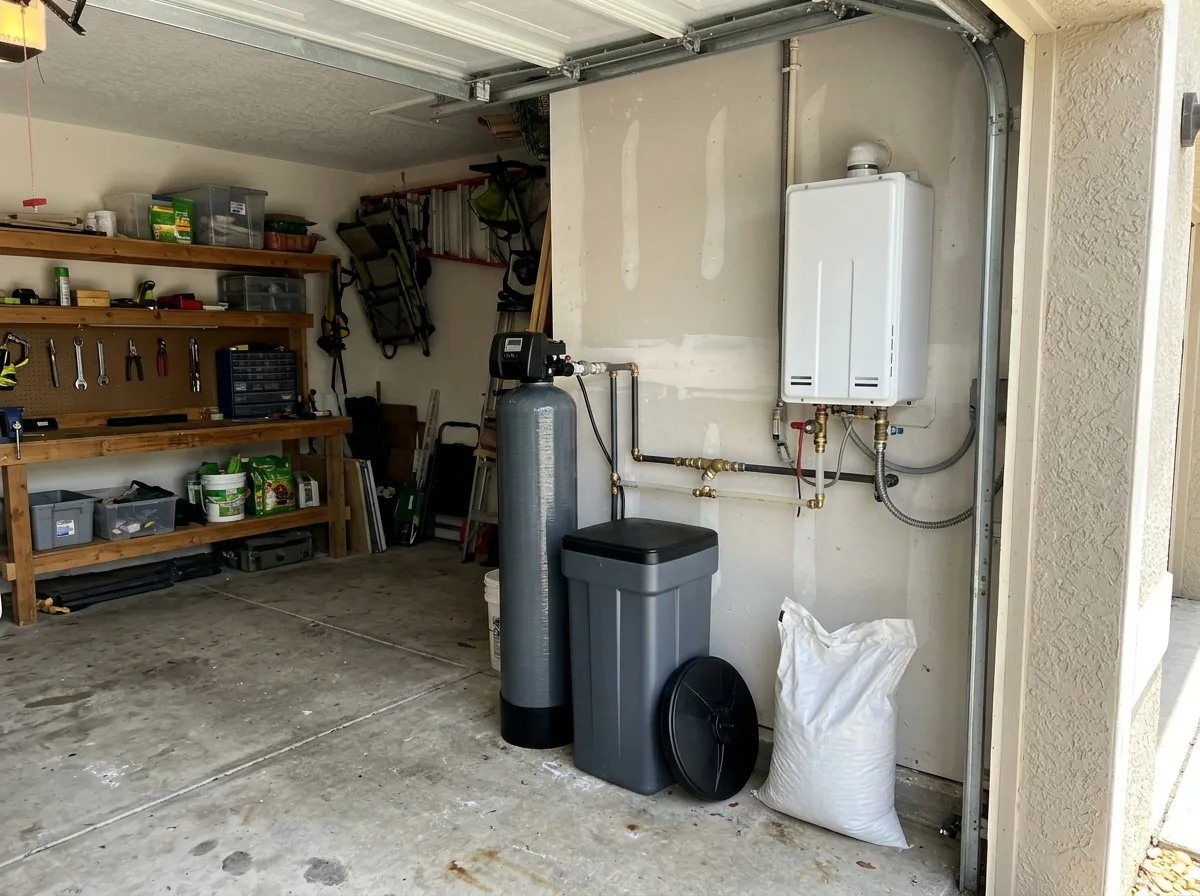
Salt-Based Softeners Ahead of the Heater
An ion-exchange softener swaps calcium and magnesium for sodium in resin beads, then recharges itself with brine. It's the strongest fix for hard water, and the bulkiest: a resin tank, a brine tank, a drain line and salt bags in the garage. HomeGuide's sizing rule: gallons used per day times grains of hardness, multiplied again by the number of days (3 to 7) between regenerations.
- Salt-based softener, installed: $1,200 to $3,800 (HomeGuide, national)
- Dual-tank model for heavy use: $1,700 to $5,000
- Yearly salt or potassium: $50 to $150
- Expected life: 15 to 20 years with maintenance
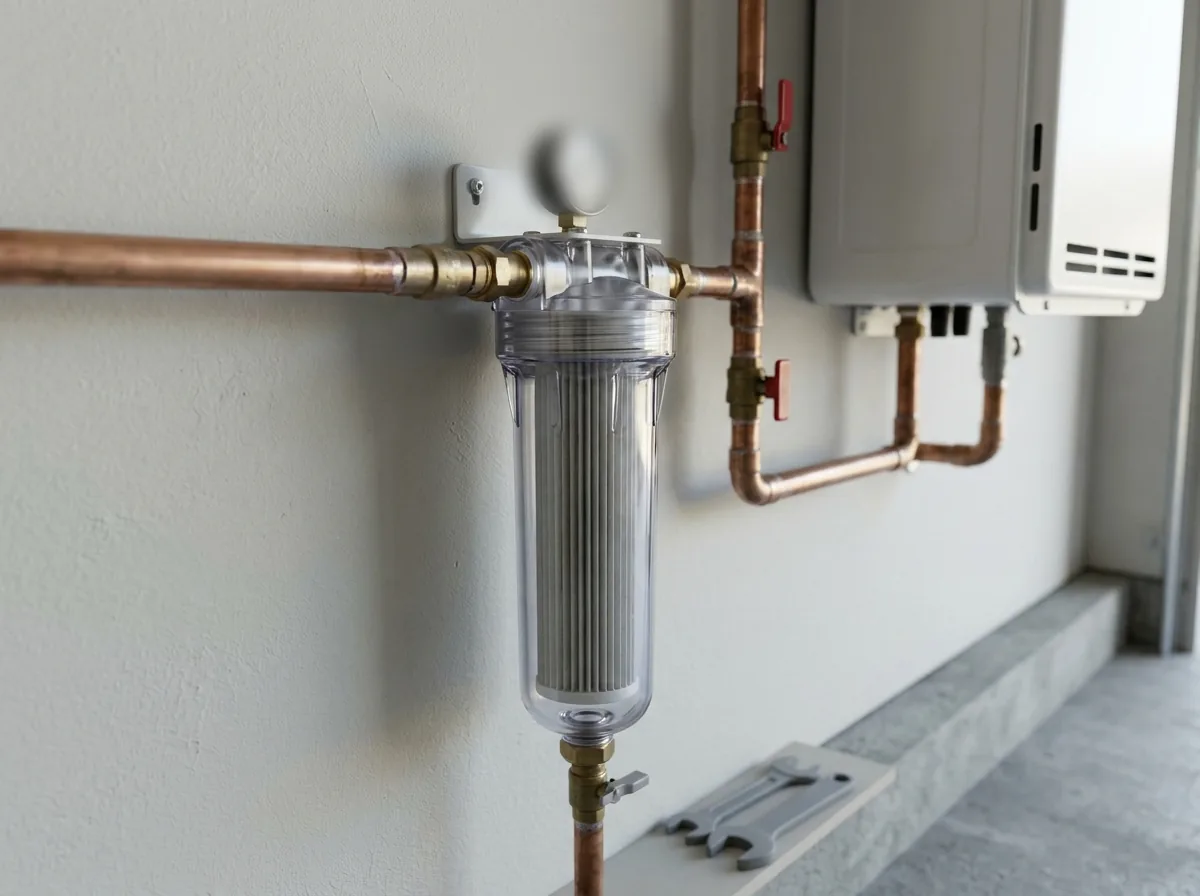
Scale-Reduction Cartridges on the Cold Line
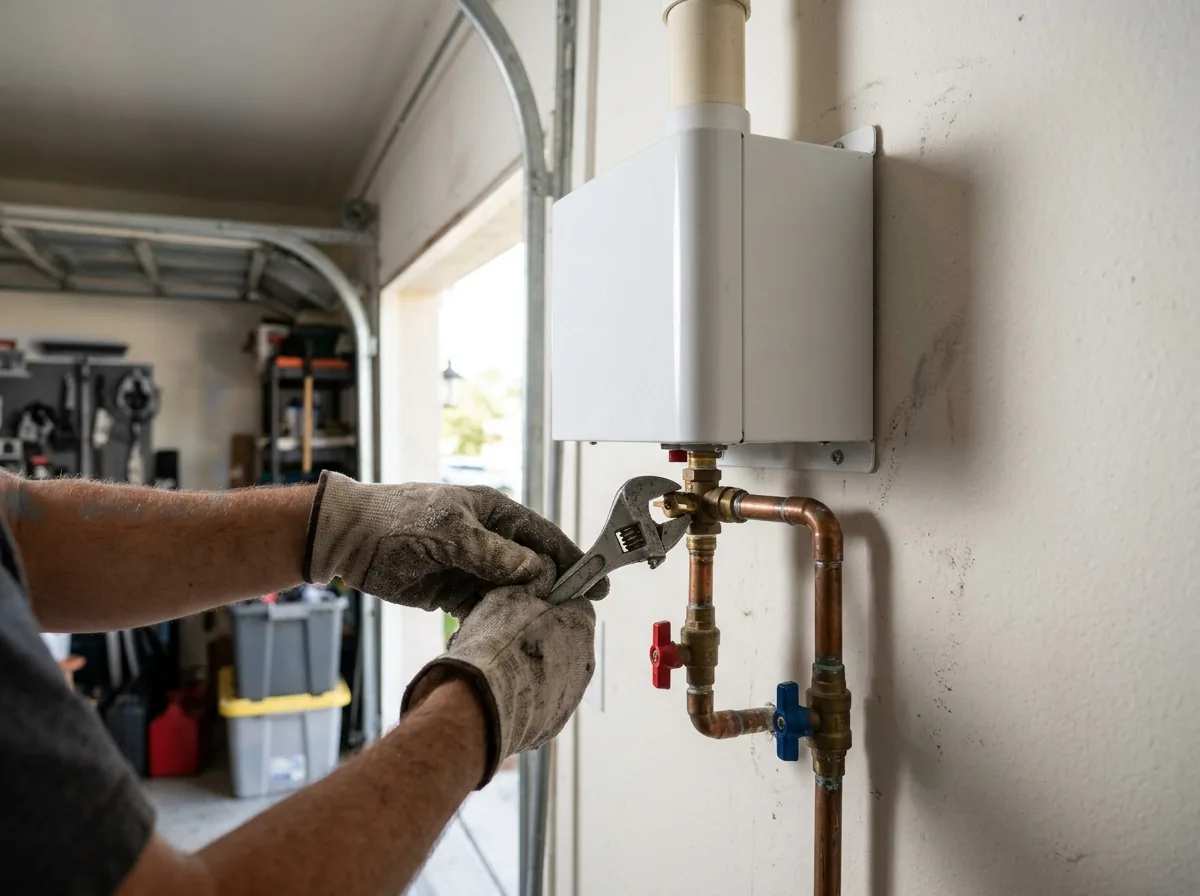
A polyphosphate cartridge doesn't remove hardness. It coats the calcium so it stays in the water instead of settling on the heat exchanger. Noritz's Scale Shield is one example: it goes on the cold supply line to the heater only, has a built-in 5-micron sediment filter, and uses two pressure gauges to show when the cartridge is clogged. HomeGuide notes salt-free systems are less effective where water is very hard.
- Noritz's replacement interval: 12 months at 15 grains per gallon or less
- Connections on the Scale Shield: 3/4-inch NPT
- Salt-free whole-house conditioner, installed: $1,500 to $4,500 (HomeGuide)
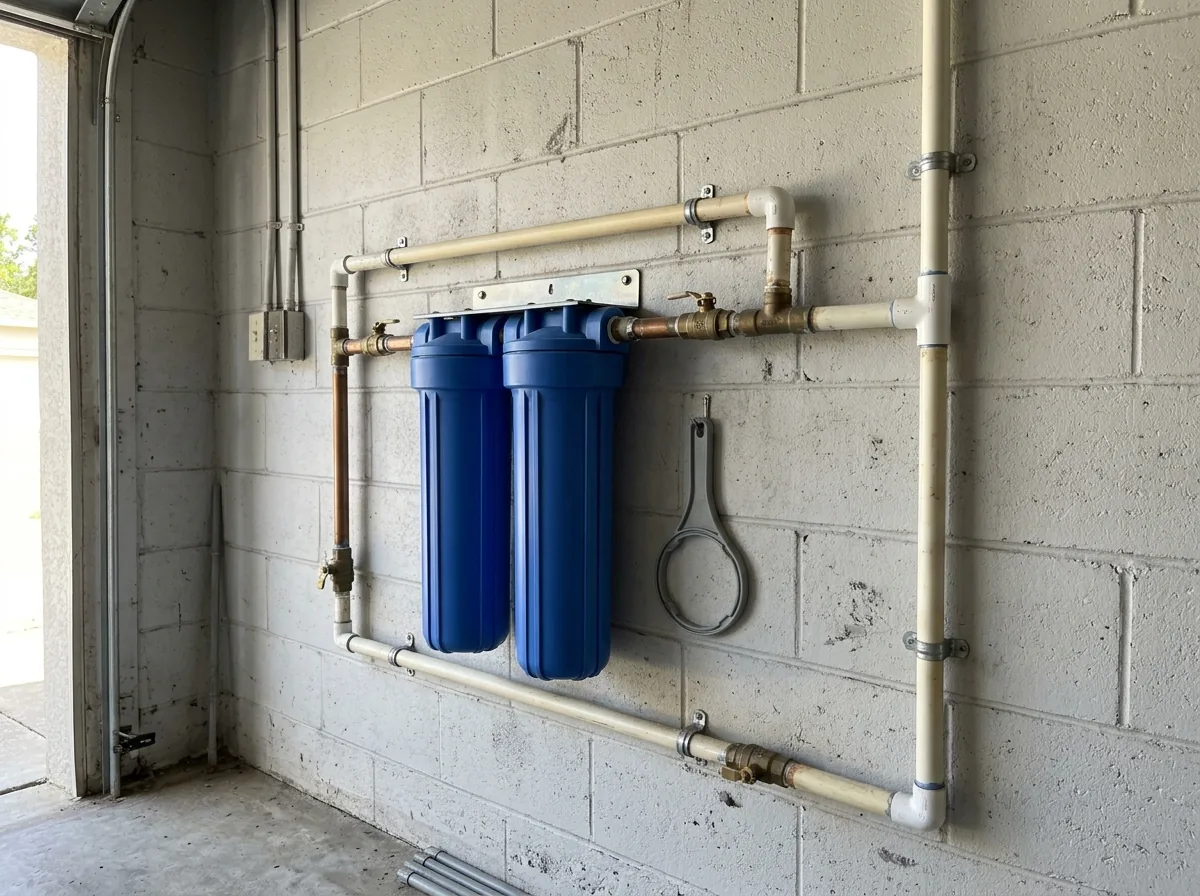
Sediment Filters and Whole-House Filters
Rinnai's units have an inlet water filter, and its troubleshooting table lists cleaning it first when nothing happens as a hot tap opens. A larger sediment filter upstream catches grit before it reaches that screen. It does nothing for hardness, so it's usually paired with one of the options above. Whole-house reverse osmosis is the far end of the scale at $4,800 to $10,000 installed in HomeGuide's figures, more than most households need for a water heater.
- Noritz's Scale Shield filter rating: 5 microns
- Whole-house RO, installed: $4,800 to $10,000 (HomeGuide)
Private Wells Outside the City Water System
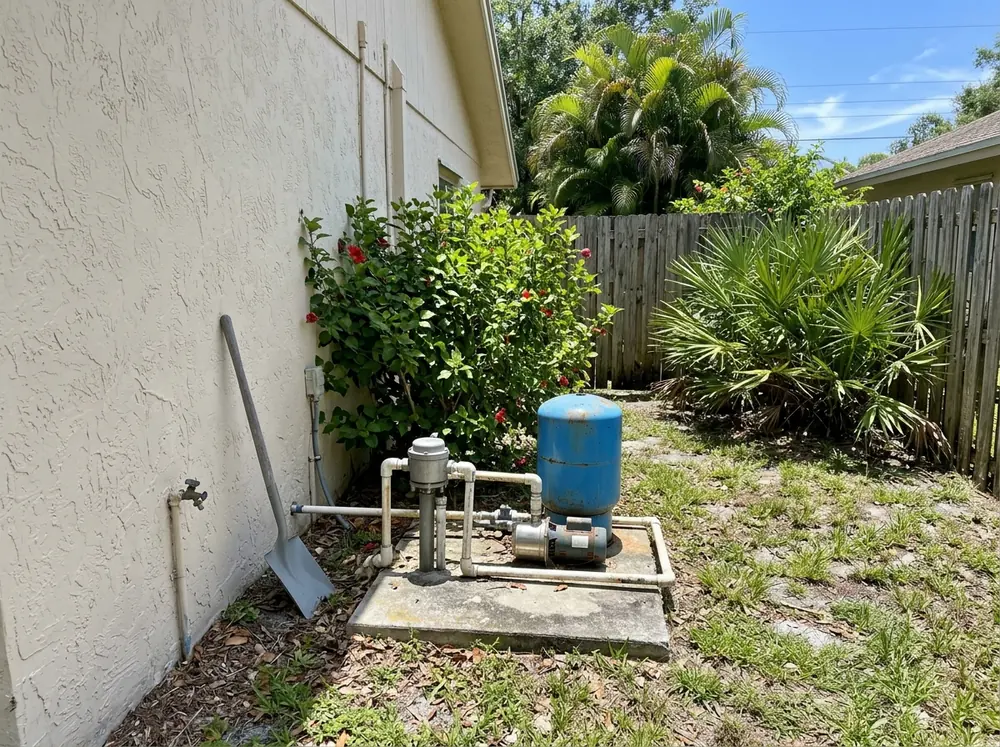
Not every Port St. Lucie home started out on city water. A city-hosted 2006 history of the utility says thousands of homes were built on private shallow-aquifer wells and septic, that homes with working systems didn't have to connect until one failed, and that connected homes could keep the well for irrigation. Well water skips the city's treatment, so its hardness is whatever the ground gives. Test it before choosing equipment.
- Florida Department of Health advice: test a private well for bacteria and nitrate at least once a year
- State lab bacteria test: $40 for private testing (a separate test from hardness)
- Hardness test: $130 to $200 (HomeGuide)
Why Port St. Lucie homeowners and businesses call Port St. Lucie Tankless Water Heater
- Sending a request is free and doesn't commit you to anything
- Your details go to one licensed plumber, never a list of callers
- Ask for the unit's flow rate at your water temperature in writing
- Ask who files the city permit and books the inspection
- The referral adds nothing to the plumber's price
Port St. Lucie City Water and Scale
The city draws from two aquifers. Water from the East Coast Surficial aquifer, about 100 feet down, goes through an 8-million-gallon-a-day lime softening plant; water from the Floridan aquifer, about 1,350 feet down, goes through two reverse osmosis plants. The two are blended before they reach your meter. The 2025 water quality report lists sodium near 92 to 93 ppm but no hardness figure.
The only published number we found is TapWaterData's 66.9 mg/L, or 3.9 grains per gallon. HomeGuide calls 3.5 to 7 grains moderately hard, a level that "may benefit from softening". That's about a third of Rinnai's 200 mg/L limit, which suggests city customers can often rely on the yearly flush and descale alone, with a cartridge as an extra layer. Wells are a different story until a test says otherwise.
Ask for these in the quote:
The test result
Grains per gallon or mg/L, from your own tap.Where it connects
Cold line to the heater only, or the whole house.Ongoing cost
Salt, cartridges and any service visits per year.