
Outdoor Tankless Units: Mounting, Covers and Weather
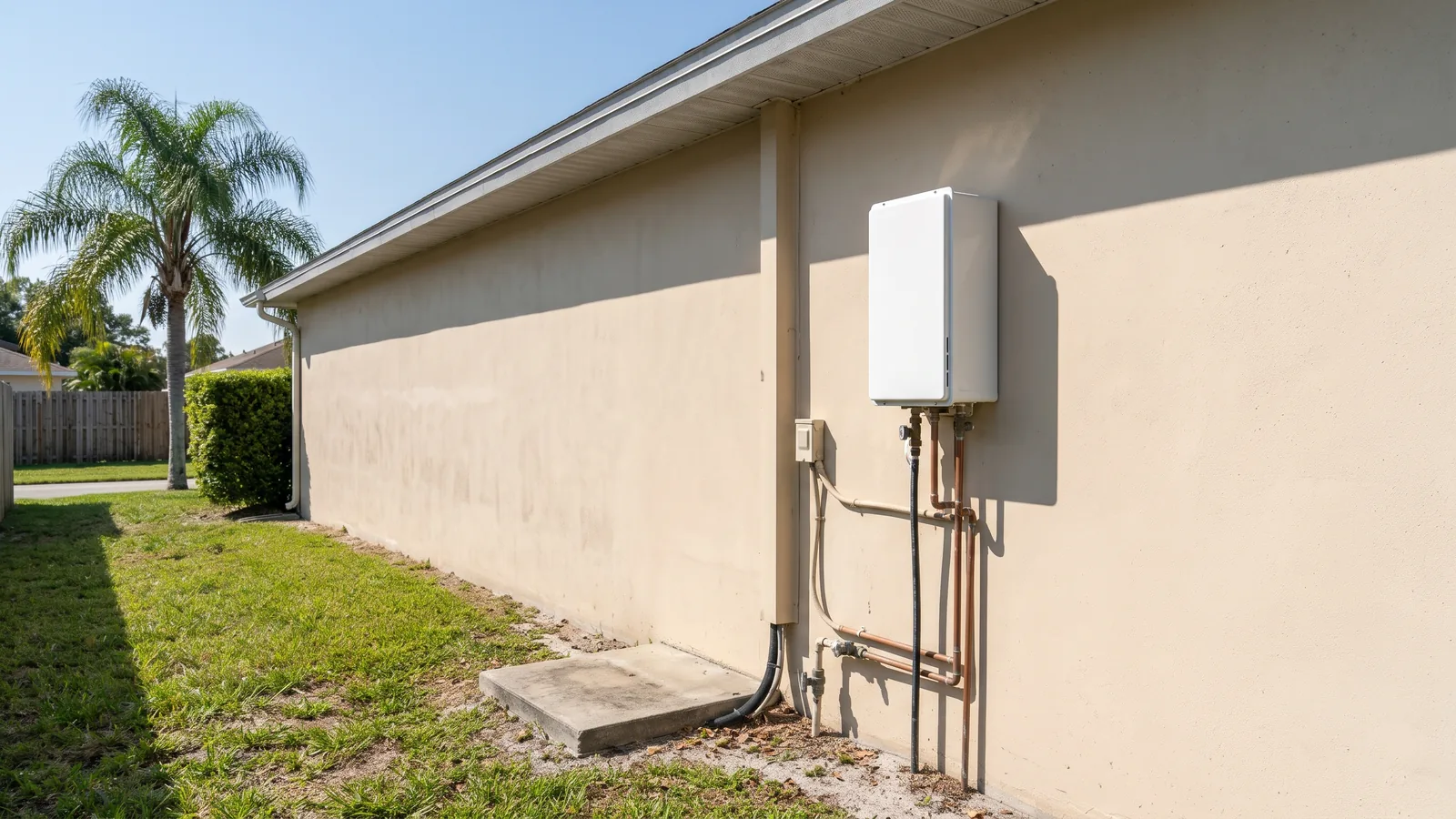
An outdoor tankless heater is built to hang on the outside of the house and exhaust straight from its cabinet. That frees the garage wall and drops the vent run, but it puts the heater in the sun, the salt and the wind. These four details decide whether it lasts out there.
Exterior Wall Units on Block-and-Stucco Homes
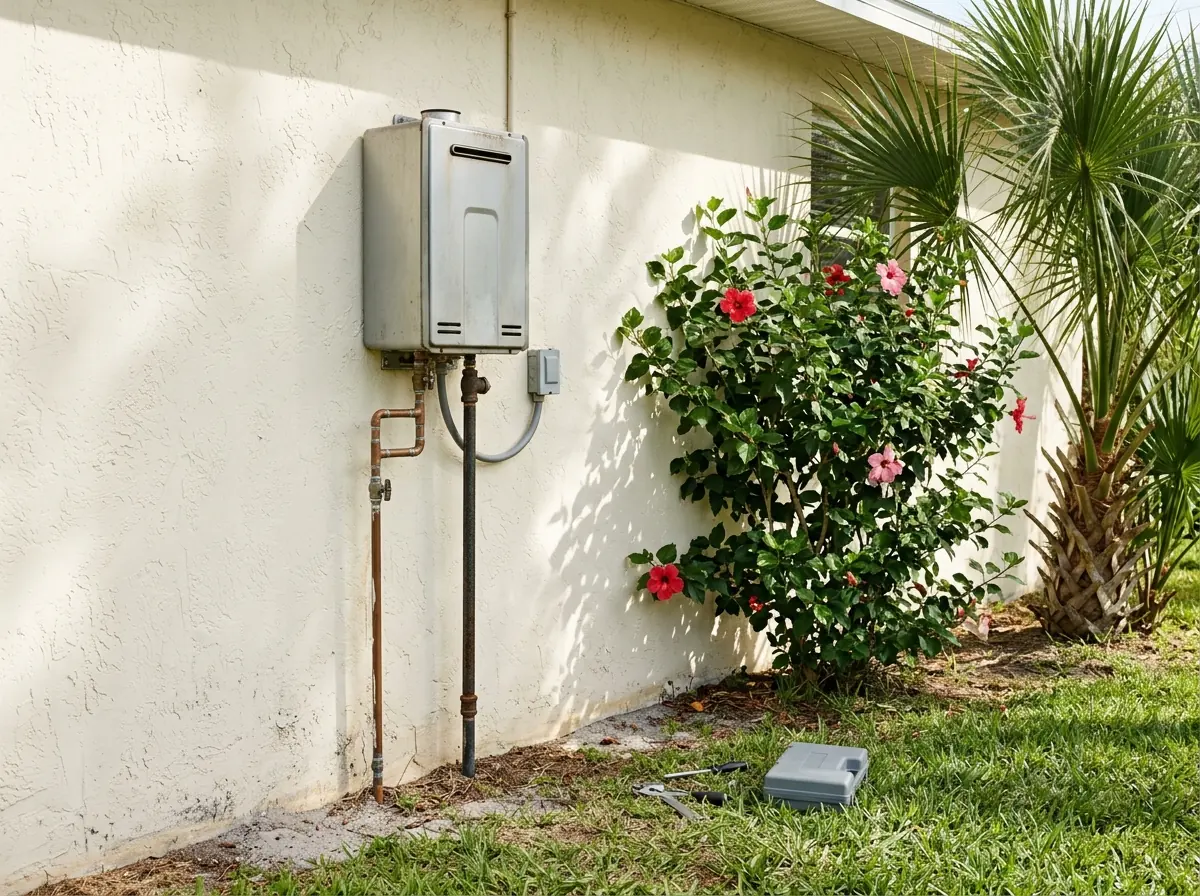
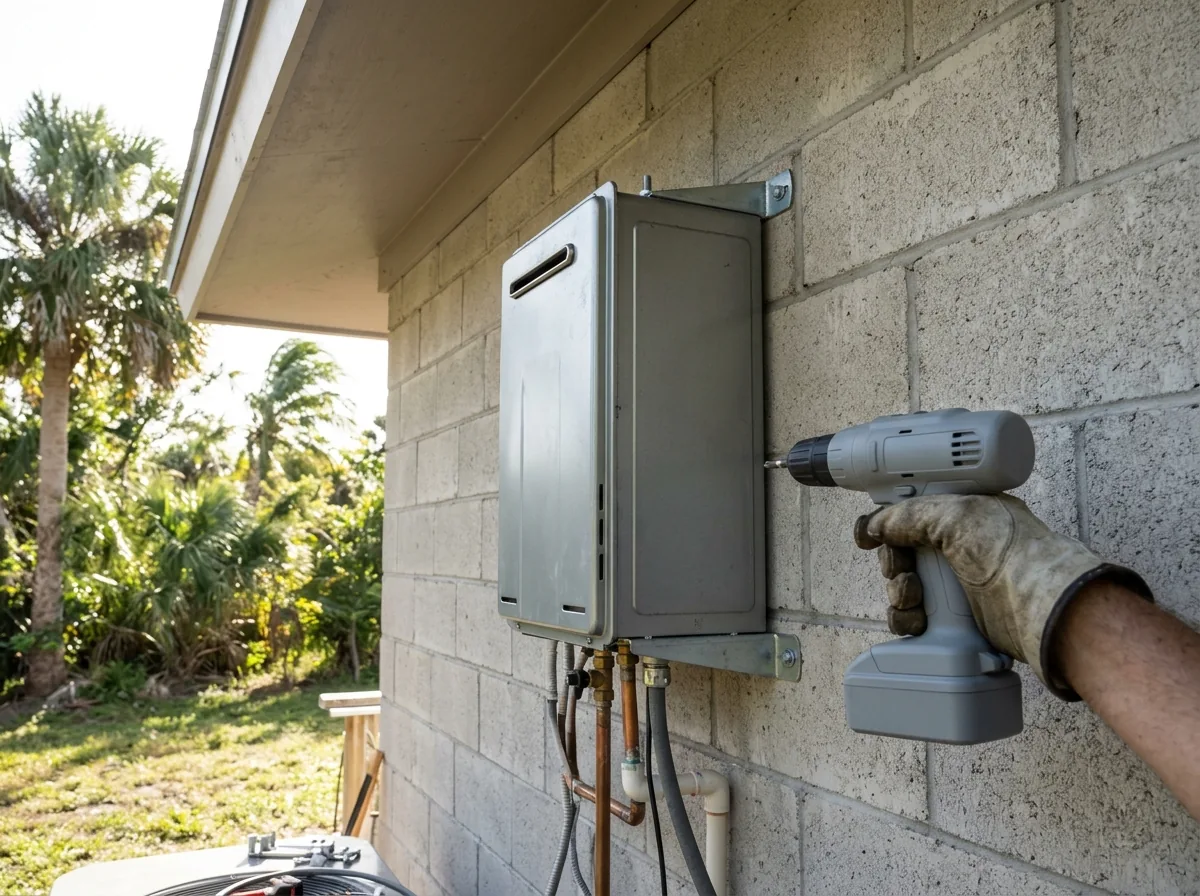
A masonry wall is a good place for one. Rinnai's spec sheet for the outdoor RL75e separates clearances from combustible and non-combustible surfaces, and the non-combustible figures are much tighter. The exhaust leaves through the front of the cabinet, so the spot in front of it has to stay open, and Rinnai wants 24 inches clear there for servicing anyway. Distances from windows, doors and air intakes come from the fuel gas code; see clearances.
- From non-combustible (block and stucco): 2 inches top and bottom, 1/8 inch at the sides, 0 at the back
- From combustible surfaces: 12 inches top and bottom, 6 inches at the sides
- Front: 24 inches clear for the exhaust and for service
Service Covers for Exposed Pipe and Wiring
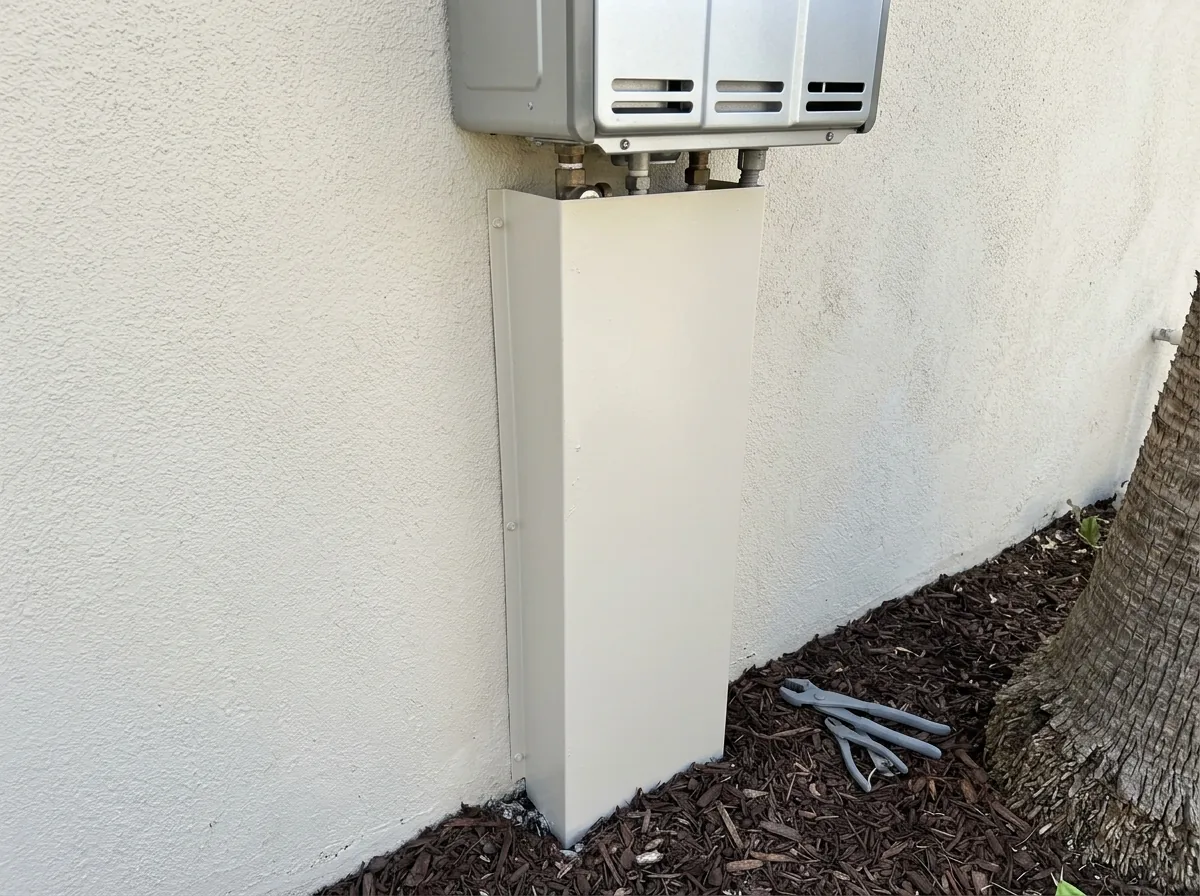
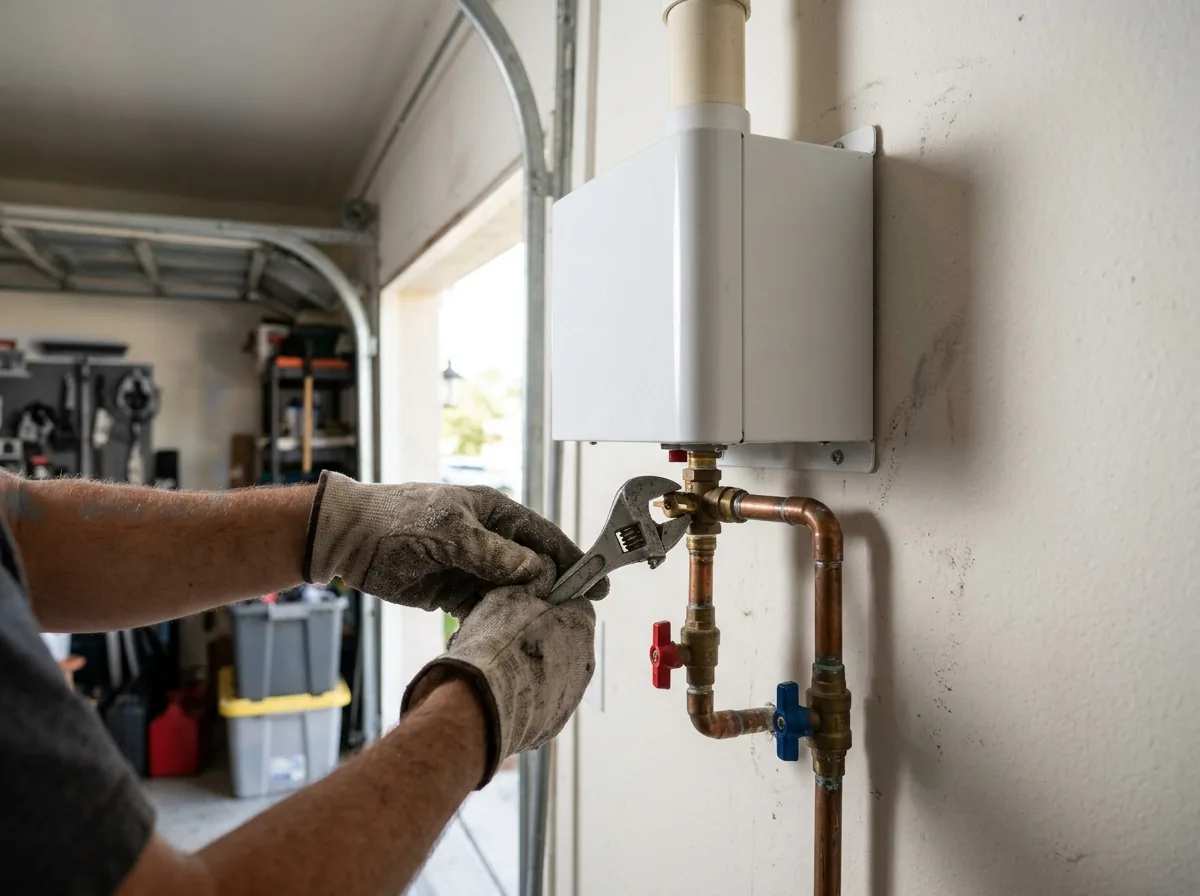
The lines that drop out of the bottom of an outdoor unit are the part people see and bump. Rinnai sells a pipe cover and a recess box as accessories for the RL75e, and the heater comes with isolation valves and a pressure relief valve. Florida's plumbing code wants a shutoff on the cold line near the heater and a level working space at least 30 inches by 30 inches in front of the controls, so a cover can't block either. Ask for the electrical feed to come up inside the cover as well.
- Pipe cover or recess box: listed accessories, not standard
- Included with the RL75e: isolation valves, pressure relief valve
- Keep reachable: cold shutoff, isolation valves, 30-by-30-inch working space
Salt Air and Corrosion Near the Coast
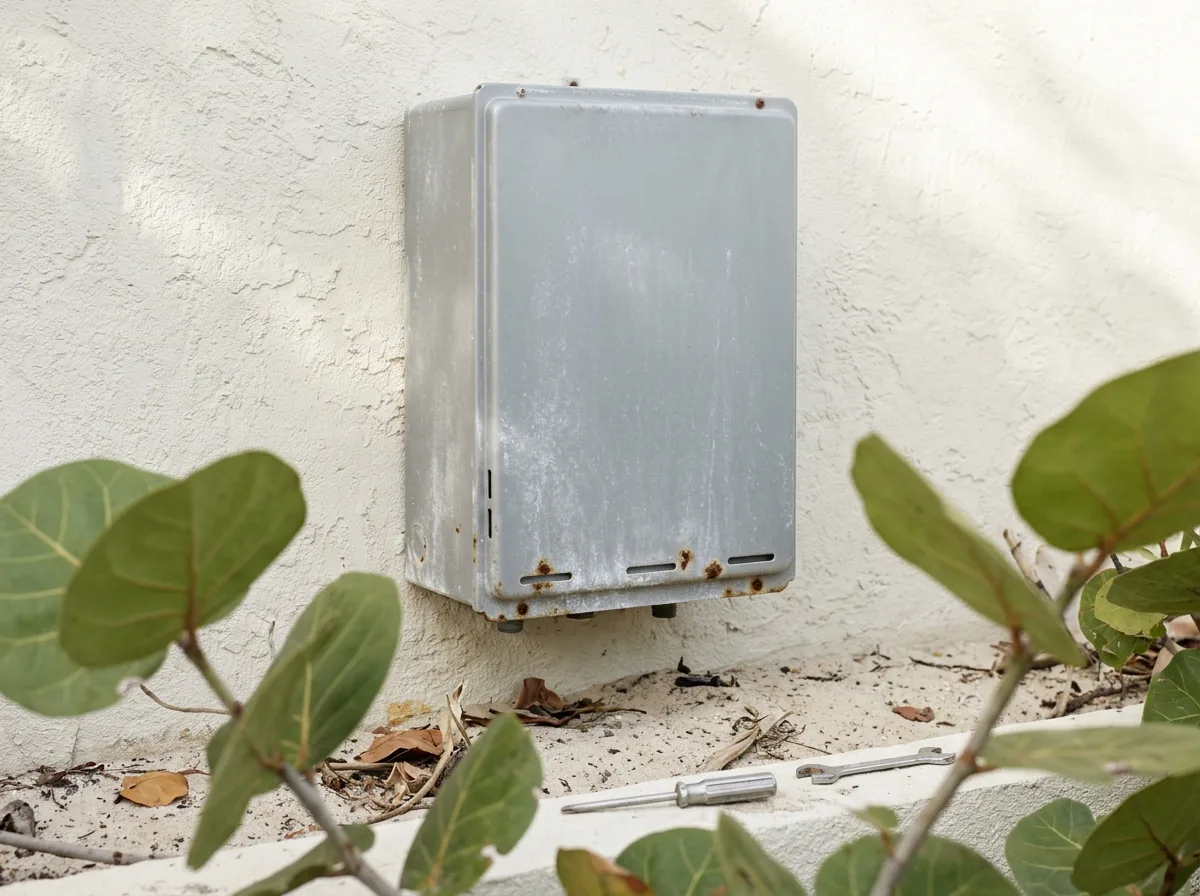
Rinnai's care guide says installations in or near coastal areas may need extra maintenance because of airborne sea salt. Its manual adds that damage from corrosive compounds in the air isn't covered by the warranty. The same manual names storage areas for pool supplies among the places where indoor air carries those compounds, and recommends outdoor models there where possible. So if pool chlorine lives in your garage, that's a point in favor of the outside wall. Mounting it away from the dryer vent and any air inlet also helps.
- Ask what extra coastal upkeep belongs in the yearly flush and service
- Keep it clear of the dryer exhaust, kitchen vent hood and pool chemicals
- Ask about the warranty's corrosion terms before choosing the wall
Anchoring and Wind Exposure in Storm Season
Section 301.15 of the Florida mechanical code says equipment exposed to wind must be designed and installed to resist the wind pressures set by the building code. Ask the plumber how the mounting bracket is fastened to the block and whether the inspector will want anything beyond the maker's bracket. In a mapped flood zone, the same code says equipment must sit at or above the required elevation. That can rule out the low corner by the downspout. Rinnai's hurricane bulletin tells owners to move a heater if flooding is expected, which is easier said than done with a wall unit. A sheltered wall under an eave beats an exposed gable end. Outage and shutdown steps are on the power outages page.
Why Port St. Lucie homeowners and businesses call Port St. Lucie Tankless Water Heater
- Sending a request is free and doesn't commit you to anything
- Your details go to one licensed plumber, never a list of callers
- Ask for the unit's flow rate at your water temperature in writing
- Ask who files the city permit and books the inspection
- The referral adds nothing to the plumber's price
Choosing Between the Garage Wall and an Outside Wall
In a Port St. Lucie house with an attached garage, the choice is usually that wall or an outside one, and the outside wall wins on a few counts. There's no vent to buy: HomeGuide prices replacement gas exhaust vents at $100 to $600 and This Old House puts stainless venting at $400 to $800. And since HomeGuide says a gas tank's flue can't serve a tankless unit, an indoor gas install means buying that vent. Cold is rarely the problem: Rinnai says its outdoor models freeze-protect themselves down to -4°F when sheltered from wind and powered.
The garage wins on exposure: no sun, salt or storm debris, and an easier walk for the yearly flush. If the gas meter or propane line is already on one side of the house, I'd start with that wall to keep the gas line short. On an all-electric house, the comparison is with electric tankless instead.