
Tankless Swap Jobs, from Simple to Involved
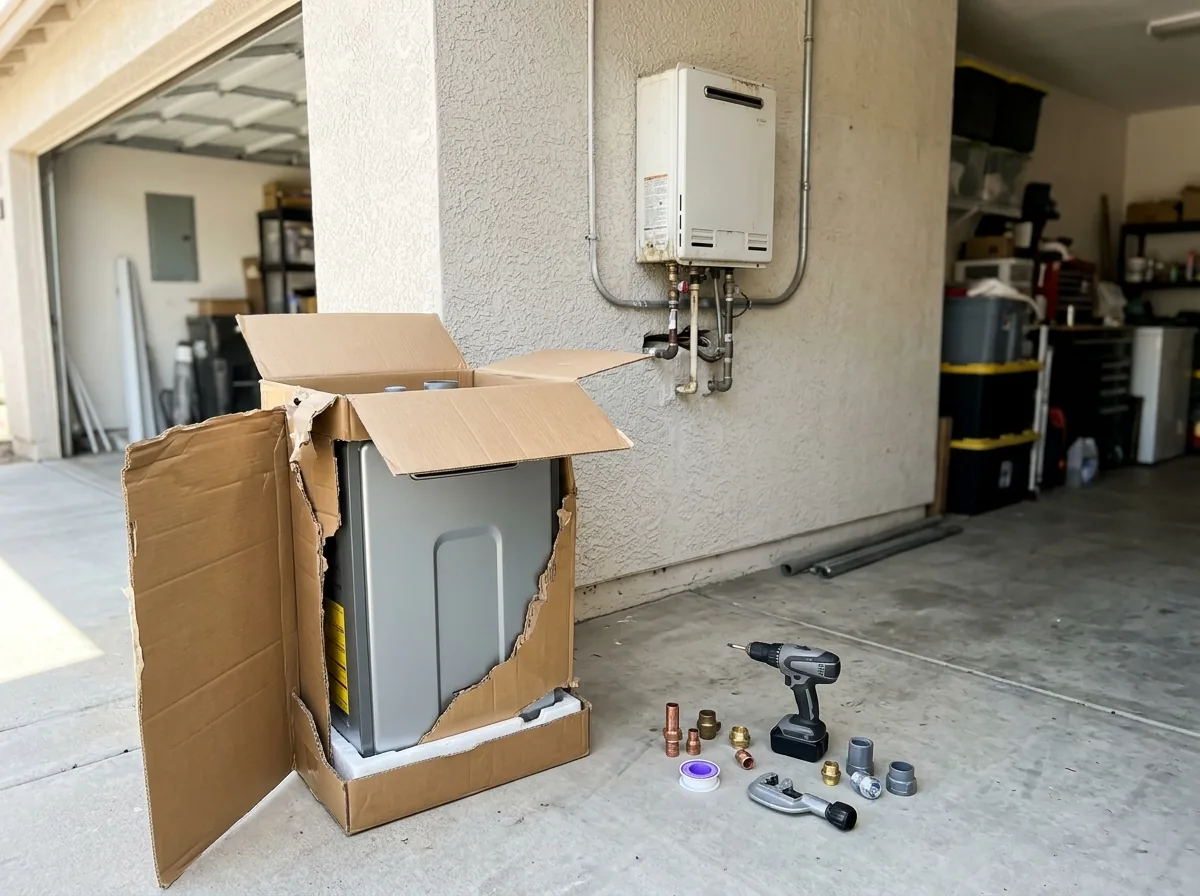
The gas line, vent or circuit is already there when an old tankless unit gives out. HomeGuide says that makes a same-type replacement easier and cheaper than retrofitting tankless into a house that never had it. How much of that head start survives depends on which of these four jobs you have.
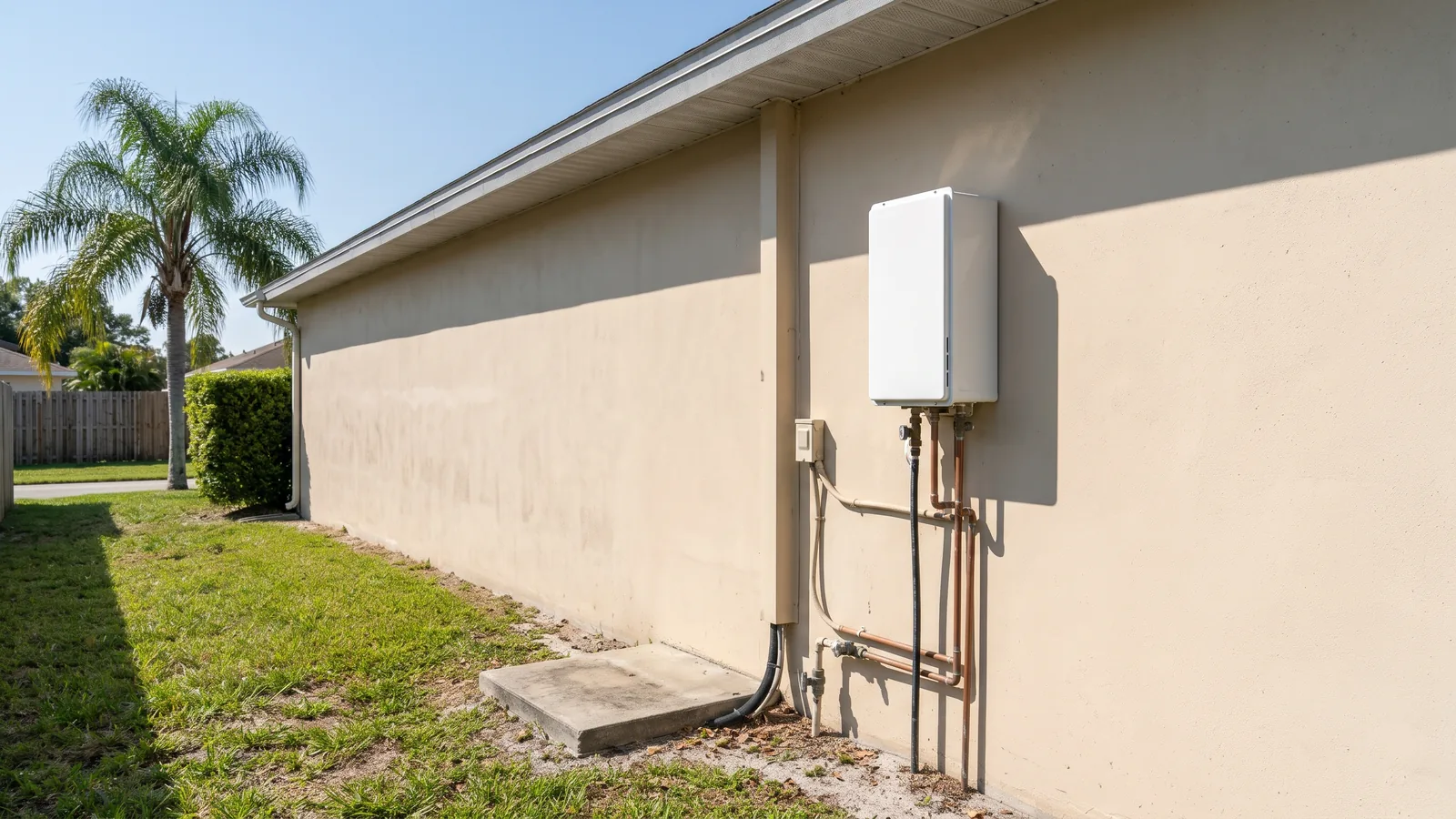
Same-Fuel Swap on Existing Gas, Vent and Wiring
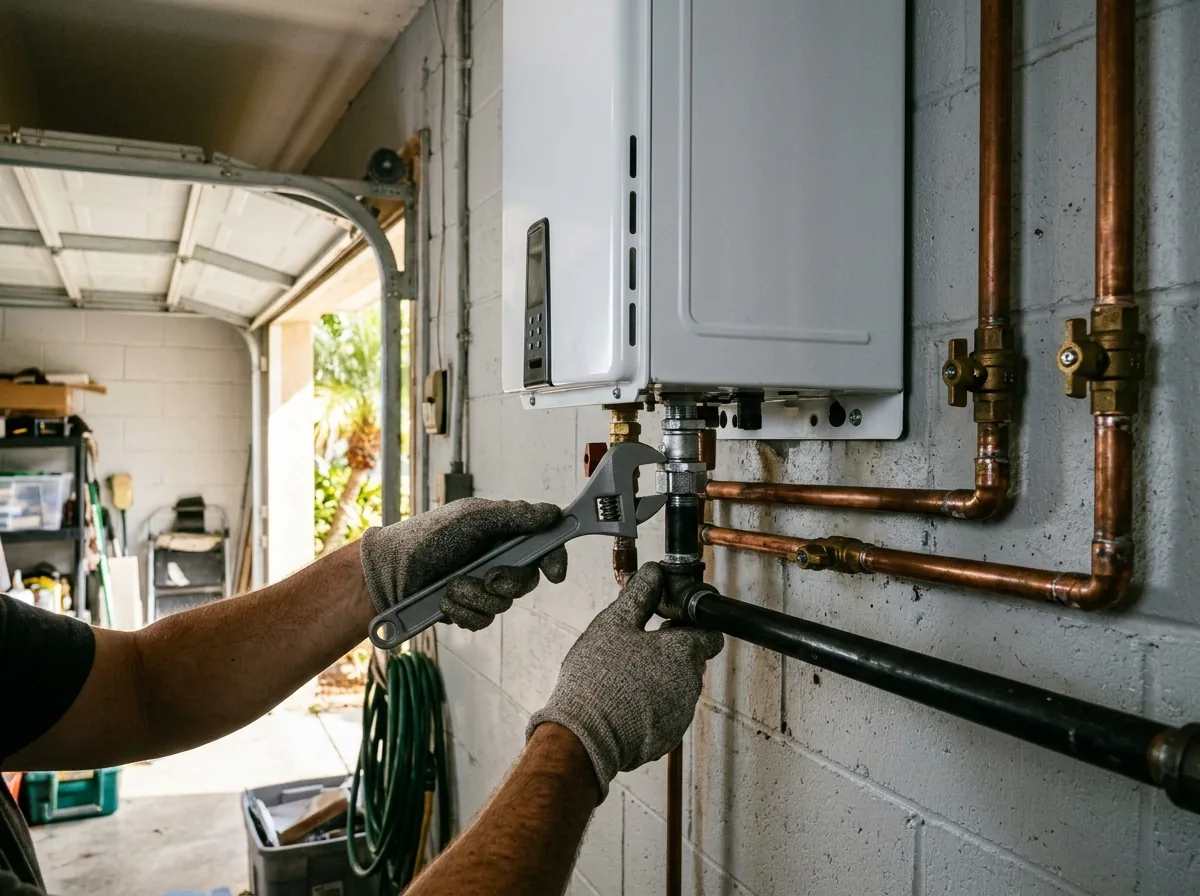
The cheapest replacement hangs a new unit on the old connections. That only works if the new model's needs match what's in the wall. Rinnai's FAQ says its units run on a half-inch or three-quarter-inch gas line as long as there's enough flow, and that an undersized line can stress the heater and shorten its life. Electric models change too: Stiebel Eltron's Tempra 24 runs on two 50-amp breakers, while the Tempra 29 needs three 40-amp breakers.
- Compare the old and new units' maximum Btu/h (gas) or breaker count and size (electric)
- Confirm the vent material is one the new model's instructions list
- Check whether the old install has isolation valves; Rinnai's RL75e comes with a set
Trading a Non-Condensing Unit for a Condensing One
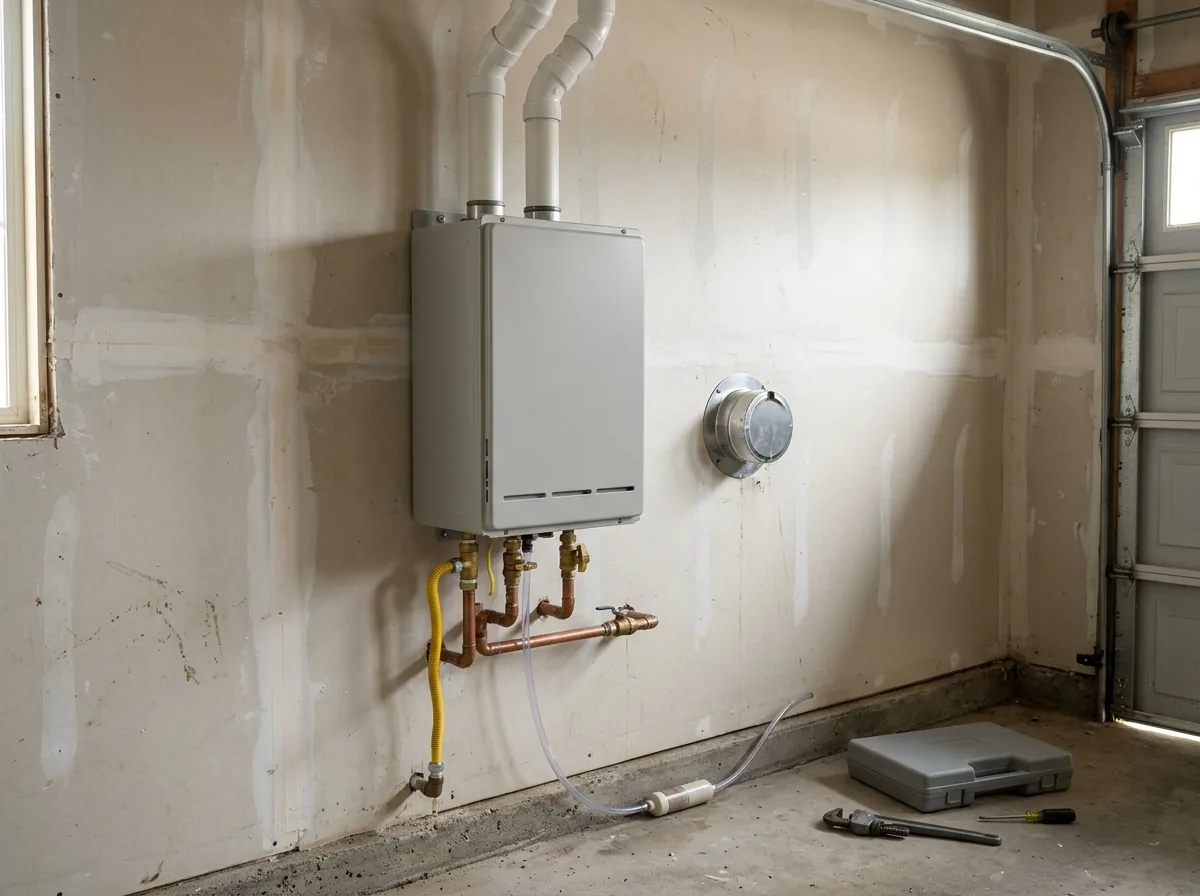
When an older non-condensing unit is swapped for a condensing one, the vent is what changes. A condensing heater such as Rinnai's SENSEI RX vents through Schedule 40 PVC or CPVC and needs a half-inch condensate drain. HomeGuide puts non-condensing installs at about 25% less, so the upgrade costs more up front. The efficiency gap is real: Rinnai rates its outdoor non-condensing RL75e at 0.81 UEF and the SENSEI RX199i at 0.98. Details are on the condensing tankless page.
- Vent: metal out, PVC or CPVC in (where the model is listed for it)
- New drain: condensate line, ideally through a neutralizer
- UEF: 0.81 (RL75e) against 0.98 (RX199i)
Heat Exchanger Failure on an Aging Unit
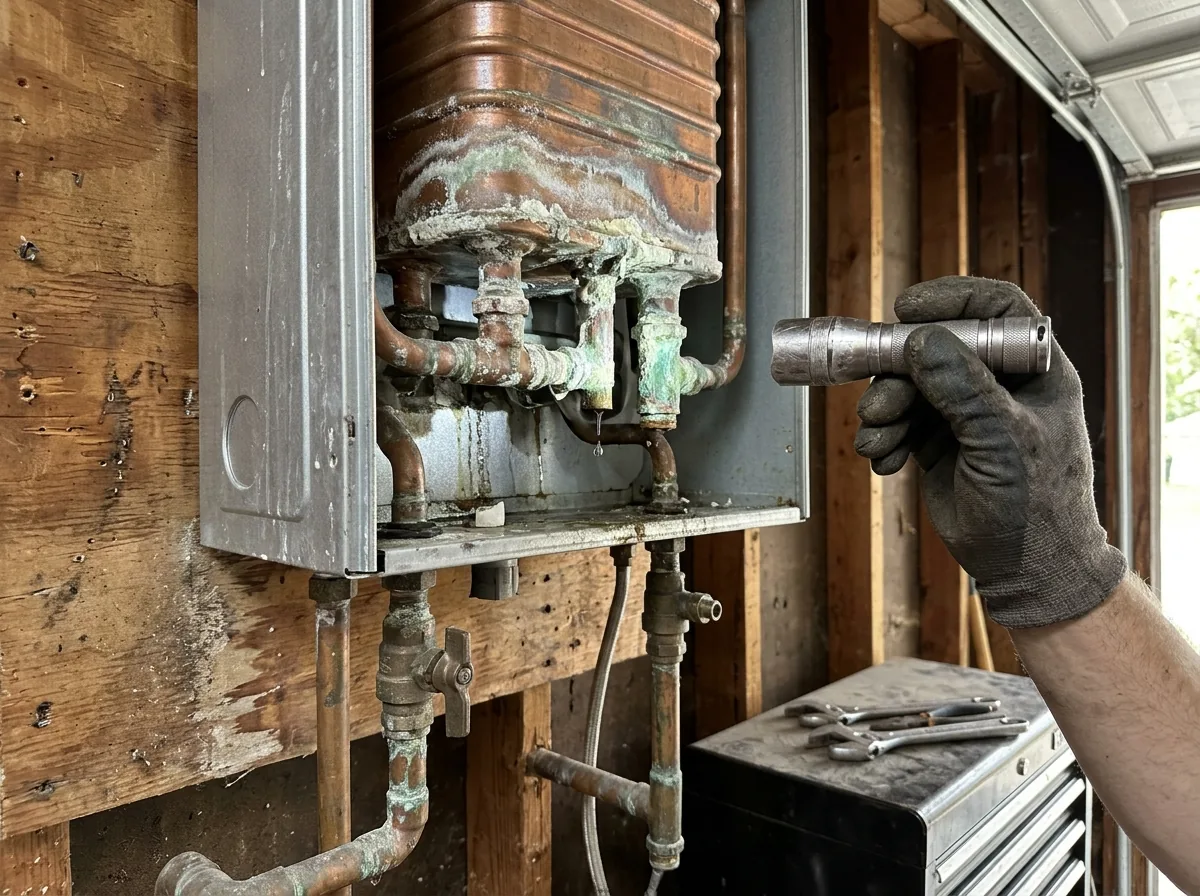
A scaled-up heat exchanger can turn a repair call into a replacement. Rinnai's indoor manual says an "LC" or "00" code means the unit is starting to lime up and must be flushed, and that skipping the flush damages the heat exchanger. It also says lime damage isn't covered by the warranty. So before paying for a new part, find the install date and check it against the model's heat exchanger term. Past that term, it's worth pricing a new unit alongside the repair before agreeing to either.
- Rinnai RL75e: 12-year residential heat exchanger warranty
- Rinnai SENSEI RX: 15 years or 12,000 operating hours, whichever comes first
- Fault-finding before the decision: tankless repair
Undersized Units After a Bathroom Was Added
A heater sized for two bathrooms can fall short once a third is added. The Department of Energy warns that a shower and the dishwasher running together can push a tankless unit to its limit, and suggests a second unit or a separate heater for appliances. HomeGuide's rule of thumb is 7 GPM or more for three to four fixtures at once. Warm inlet water changes the math here, so read sizing for warm inlet water before buying the biggest unit on the shelf.
- Count the fixtures that run at the same time now, not when the heater went in
- Larger gas units may need a larger line; electric ones more breakers
- Option: a point-of-use unit at the new bathroom
Why Port St. Lucie homeowners and businesses call Port St. Lucie Tankless Water Heater
- Sending a request is free and doesn't commit you to anything
- Your details go to one licensed plumber, never a list of callers
- Ask for the unit's flow rate at your water temperature in writing
- Ask who files the city permit and books the inspection
- The referral adds nothing to the plumber's price
Tankless Lifespan Figures and the Age Question
How long a tankless heater lasts depends on who you ask. HomeGuide and This Old House both give 15 to 20 years, against 8 to 12 for a tank. The Department of Energy is more generous: more than 20 years for most tankless units, 10 to 15 for storage heaters. Rinnai says up to 20, and ties the actual figure to water quality, usage and maintenance. Fixr puts a gas tankless unit at around 20 years.
Water quality is the part a Port St. Lucie owner can do something about. City water is a blend of lime-softened surficial aquifer water and reverse-osmosis water from the Floridan aquifer, and the city's report doesn't print a hardness number. A unit that has gone years without a descale ages faster, so ask the plumber to look at the flush history and whether a softener or scale cartridge makes sense for the new one.
The replacement goes through the city permit and plan review like any tankless install, with the new unit's manufacturer specs attached. Ask for the quote to list the model, its heat exchanger warranty term, haul-away of the old unit and any gas, vent or breaker changes as separate lines.