
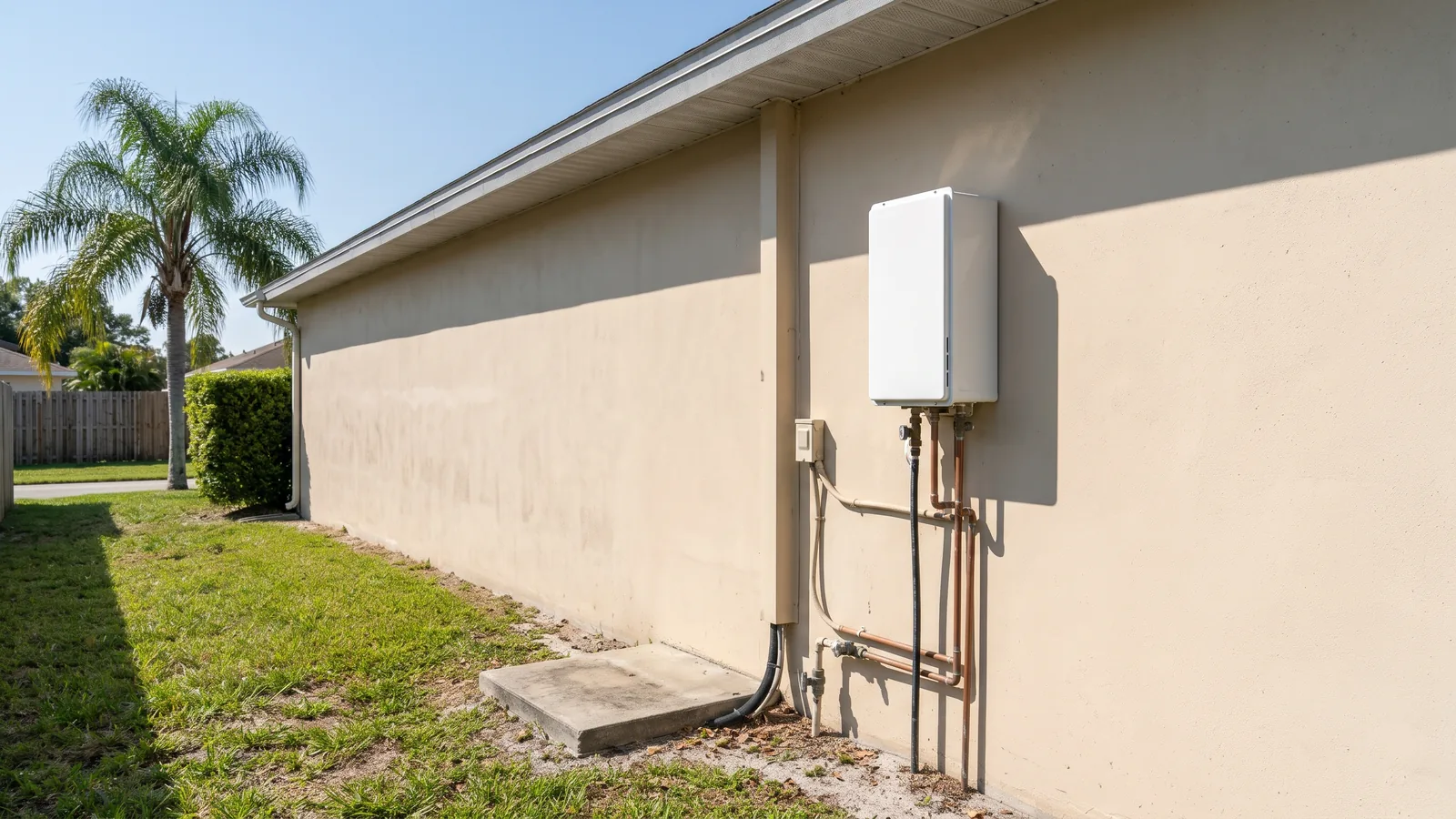
Backup Power Choices for a Gas Tankless Heater
A gas tankless heater burns gas but runs on electricity: the fan, igniter and circuit board all need it. Rinnai's FAQ says its units won't work in a power outage, and Fixr makes the contrast with a tank, which keeps stored hot water for hours or days. The choices below are ways to keep the 120-volt supply alive.
Battery Packs Listed for Gas Tankless Units
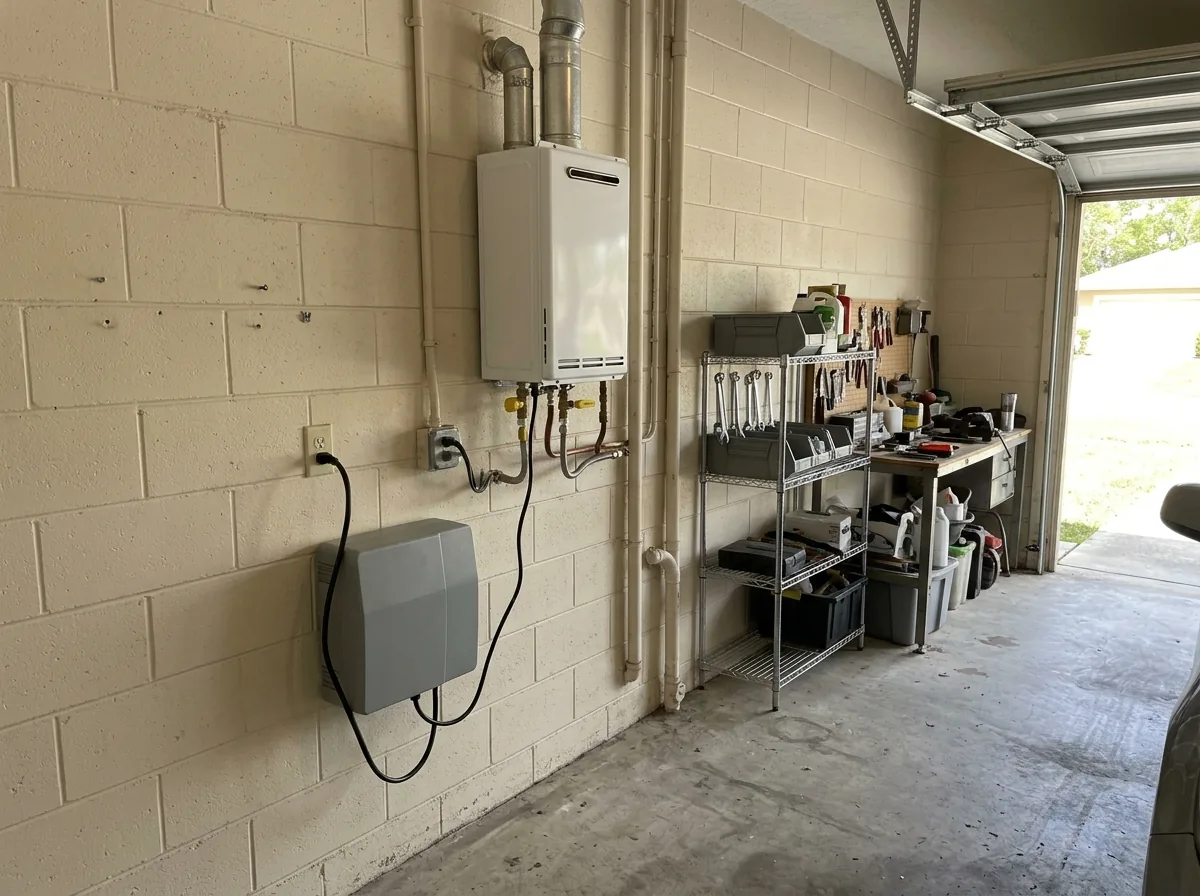
Rinnai's Technical Bulletin 130 approves three units: Hugo's SUPS350A, APC's SMX750 and Tripp Lite's SMART750RMXL2U. The run times it lists are for the Hugo unit and count only time spent heating water; Rinnai notes standby time varies. Noritz says a battery isn't required and isn't meant to run the heater for days, and that whatever you buy should put out a pure sine wave.
- Rinnai V65e: 8 h 53 min
- Rinnai V75i and RL75i: 6 h 40 min
- Rinnai V94i: 5 h 13 min
- Install per the battery maker's instructions and the heater manual
Portable Generator Hookups
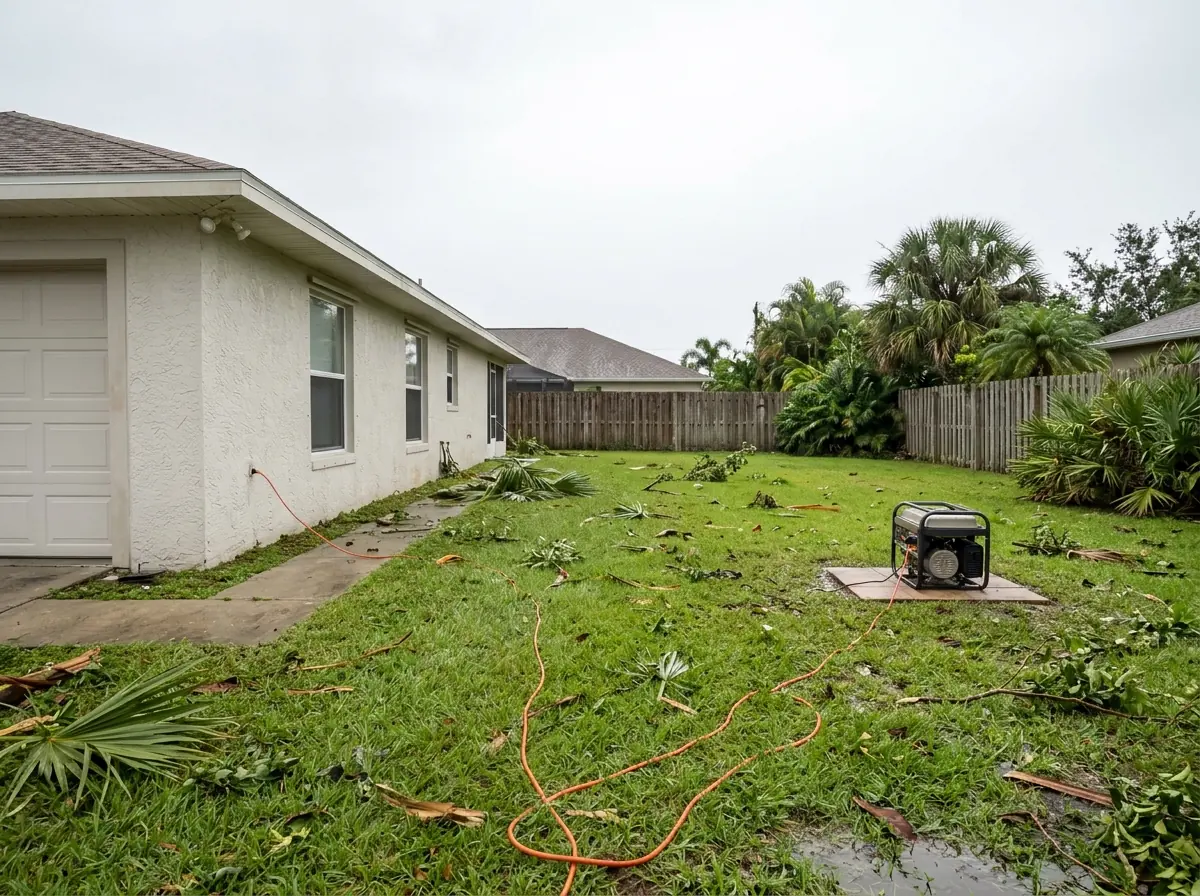
Rinnai's hurricane bulletin says backup power can feed its heaters after a storm, provided it's 120 volts, 60 Hz, from a properly grounded circuit. Noritz asks for the same clean sine wave from a generator that it asks from a battery. The draw is small, 76 to 83 watts for Rinnai's RL75i and RL94i, so the heater isn't what sizes the generator; the safe place to run it is the harder part.
- Ready.gov spacing: 20 feet or more from windows, doors and attached garages
- Battery-powered carbon monoxide detectors on every level
- Noritz example draw: 98 watts for one propane model in normal operation
Standby Generators and the Heater Circuit
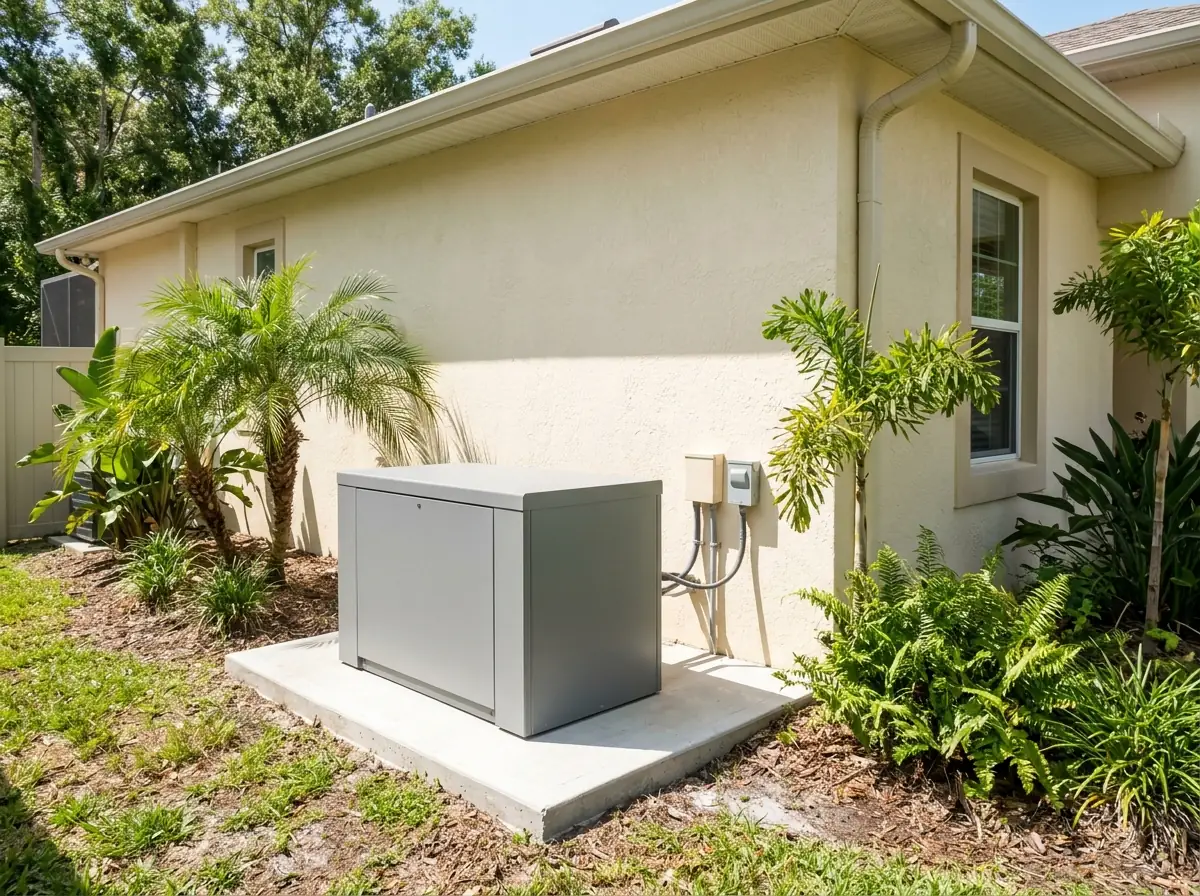
A permanent generator powers the heater circuit without extension cords. How that circuit is wired to the generator is electrical work, and under Florida law a plumbing contractor subcontracts work outside the plumbing trade, so expect an electrician on that part of the job. An all-electric whole-house tankless unit is a different load altogether: EcoSmart's ECO 27 pulls 112.5 amps and takes three 40-amp breakers, a load in a different class from the 76-watt gas units above.
- Gas tankless: 76 to 98 watts running in the Rinnai and Noritz examples
- Electric whole-house tankless: 112.5 amps for an ECO 27; see breaker and amp load
Shutting Down Before a Storm and Restarting After
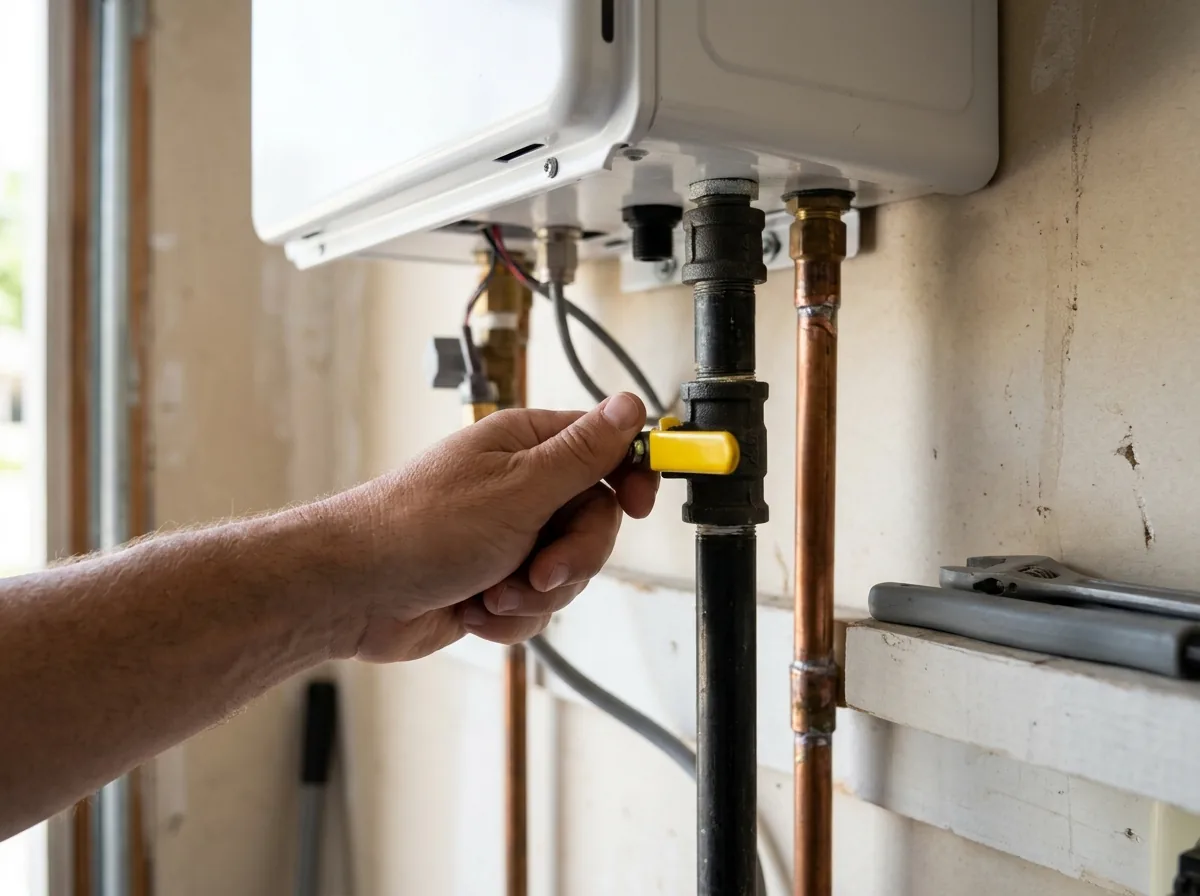
Rinnai's Technical Bulletin 51 gives the storm routine. Before it arrives: switch off the heater's electric power, close any propane tank, and turn the manual gas valve clockwise to off. If flooding could reach the unit, Rinnai suggests moving it, and has a separate bulletin for heaters that were under water. When power comes back, Ready.gov warns of surges and spikes, so turn the heater back on once the supply has settled.
- Before: power off, propane off, gas valve off
- Flood risk: move the heater or have it checked before relighting
- After: wait for steady power before switching back on
Why Port St. Lucie homeowners and businesses call Port St. Lucie Tankless Water Heater
- Sending a request is free and doesn't commit you to anything
- Your details go to one licensed plumber, never a list of callers
- Ask for the unit's flow rate at your water temperature in writing
- Ask who files the city permit and books the inspection
- The referral adds nothing to the plumber's price
Hurricane Planning for Port St. Lucie Tankless Owners
Census figures put utility gas heat in roughly one Port St. Lucie home in twenty, so battery packs mainly matter in homes with natural gas or propane. An all-electric house loses an electric tankless unit in an outage too, and only a generator brings it back. A battery pack covers the shower that gets cut off mid-rinse; a generator covers the days after a storm. If the heater sits outside, the outdoor installation page covers wall mounting and covers.
Ask the plumber for:
The approved backup list
for your heater's brand and model.The run time
that model gets on the unit you're buying.Where it mounts
and what it plugs into, away from any flood line.