
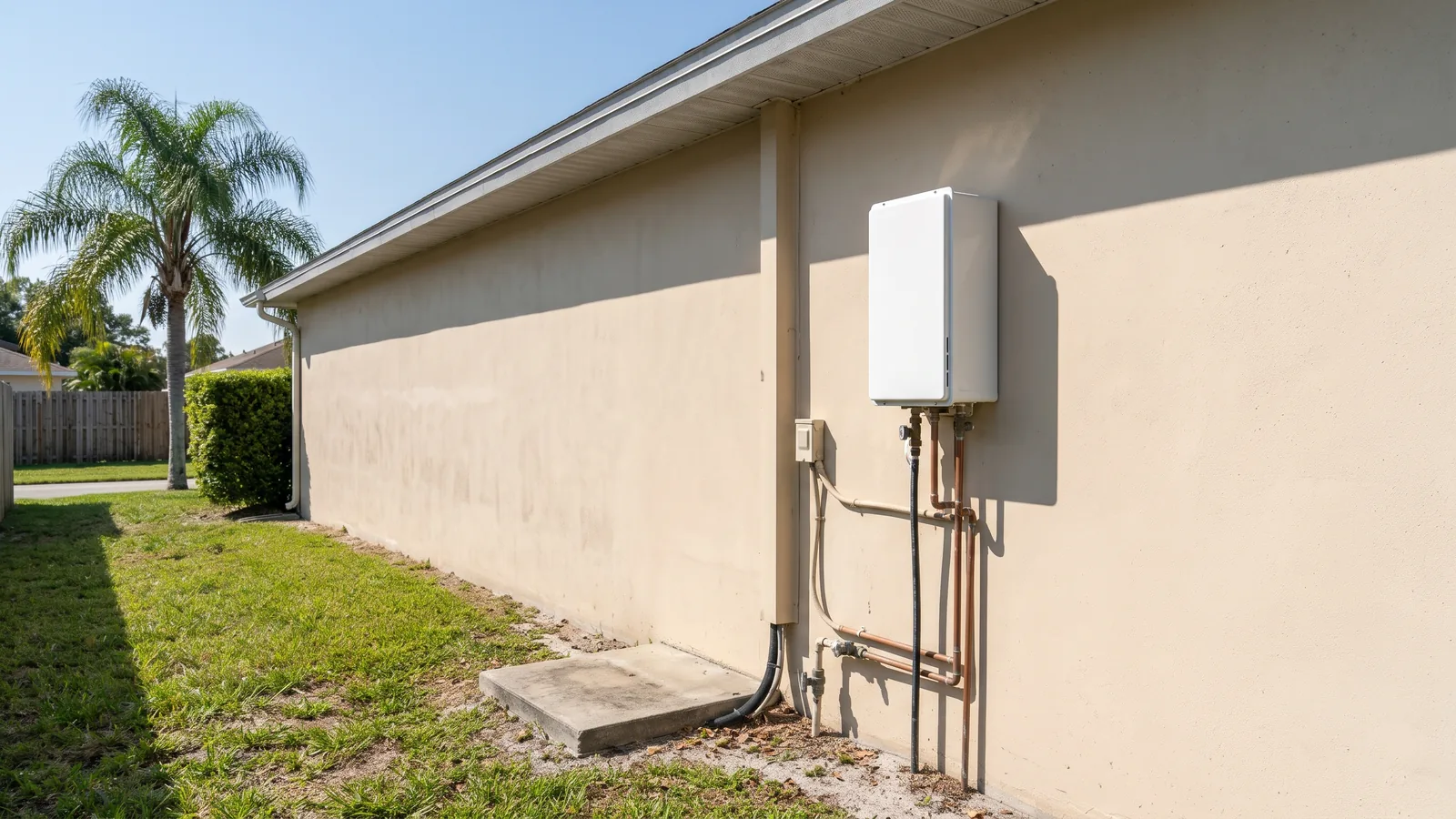
Tankless Water Heater Maintenance, Task by Task
A yearly service is short, but it covers more than the vinegar flush. Rinnai's manual asks for a qualified technician to inspect the heater every year. The five tasks below are what a full visit on a gas unit includes; an electric unit only needs some of them.
The Yearly Descale Cycle
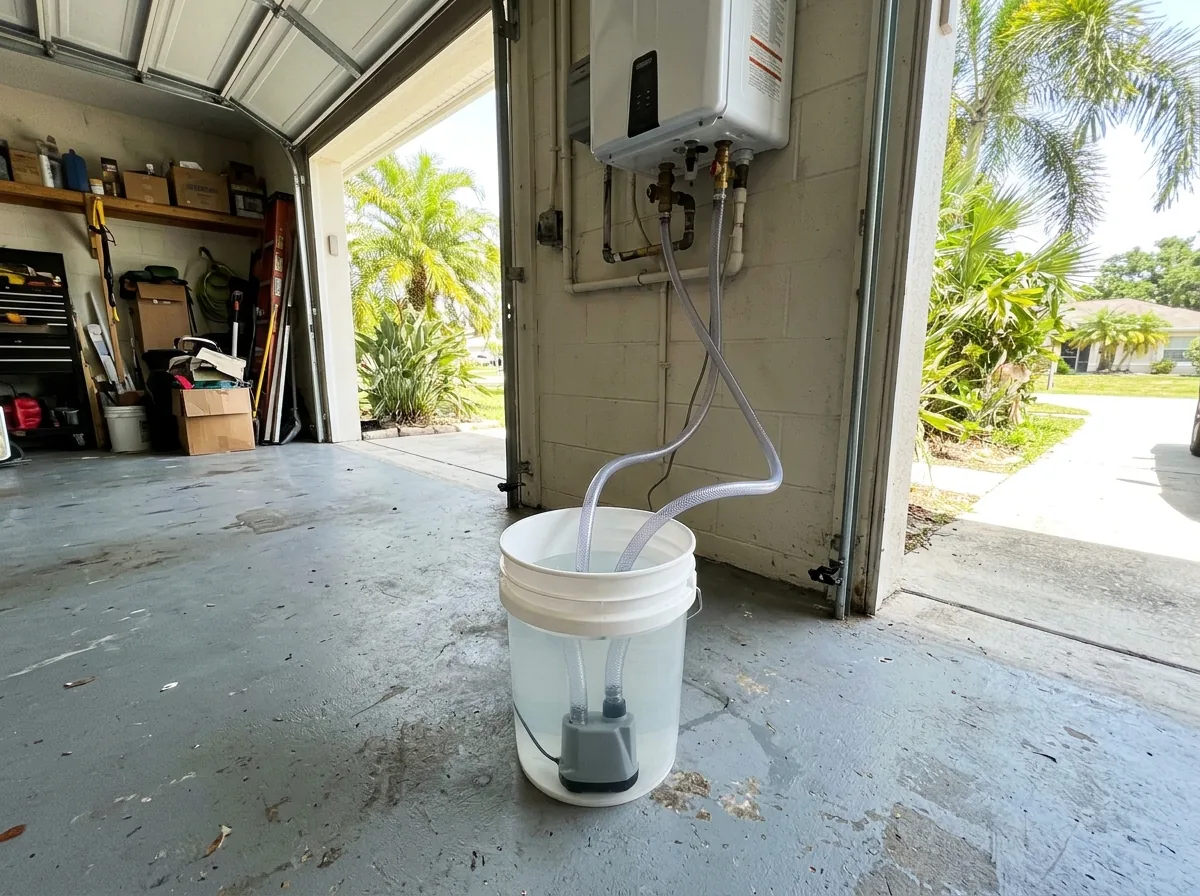
Minerals in the water collect on the heat exchanger, and a descale dissolves them. The plumber shuts off power and the main hot and cold valves, connects a small pump to the service ports, and circulates vinegar through the heat exchanger. Fresh water then pushes the vinegar out. On a Rinnai, the LC code clears when the power is switched off and back on afterward. The manufacturers' numbers differ a little, so the plumber should follow your model's manual:
- Solution: 4 gallons of undiluted white vinegar (Rinnai); vinegar or a descaling solution (Navien)
- Circulation: at least 1 hour at 4 gallons a minute in Rinnai's manual, up to 45 minutes in its web steps, at least 45 minutes for Navien
- Rinse: 5 minutes in Rinnai's manual, then the cold-inlet filter is cleaned; at least 10 minutes for Navien
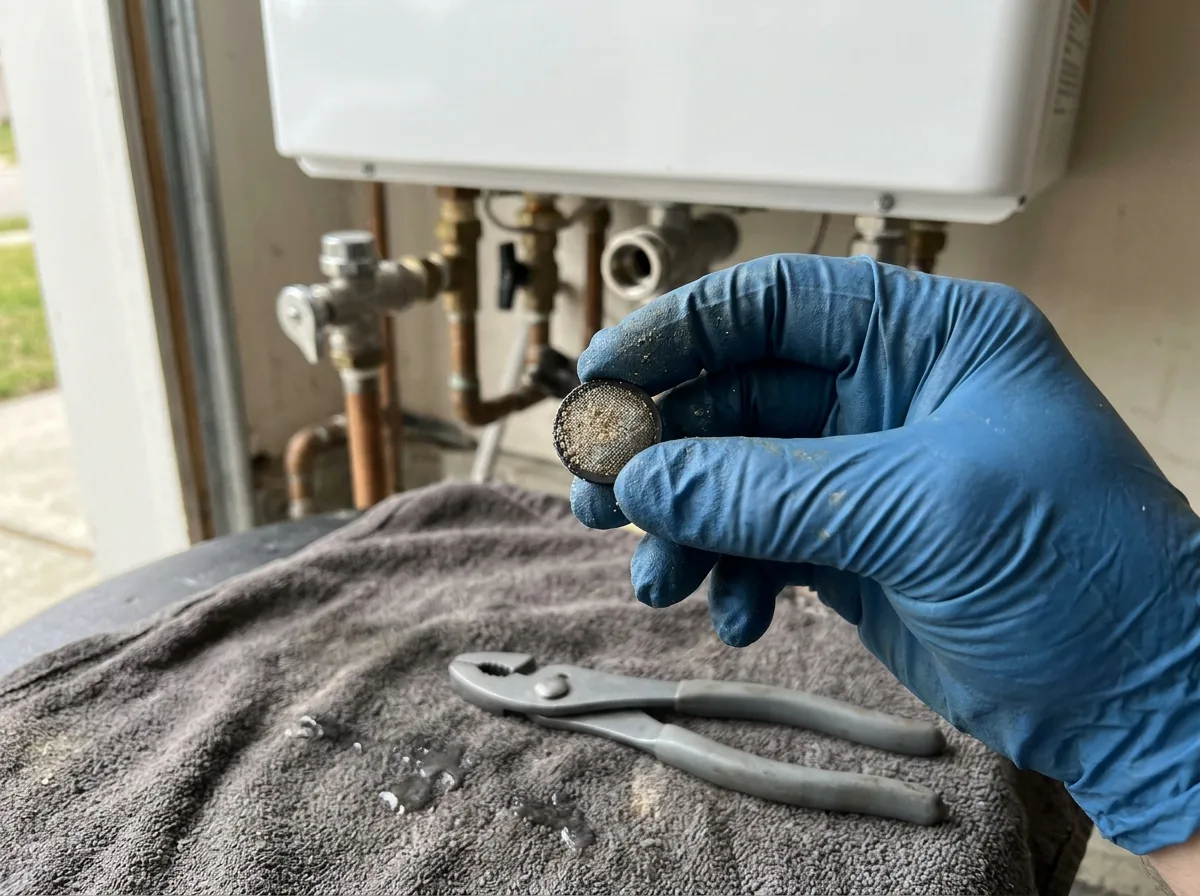
Rinsing the Cold-Side Inlet Screen
Where the cold line enters the heater there's a small mesh screen that stops sand and pipe debris. Rinnai's manual lists cleaning it as a routine step and also as the first fix when nothing happens at a hot tap. Cleaning it takes a couple of minutes during the flush. It matters most after plumbing work upstream: Rinnai's manual warns that debris in the line will damage the heater, which is why new lines are purged before the unit goes in.
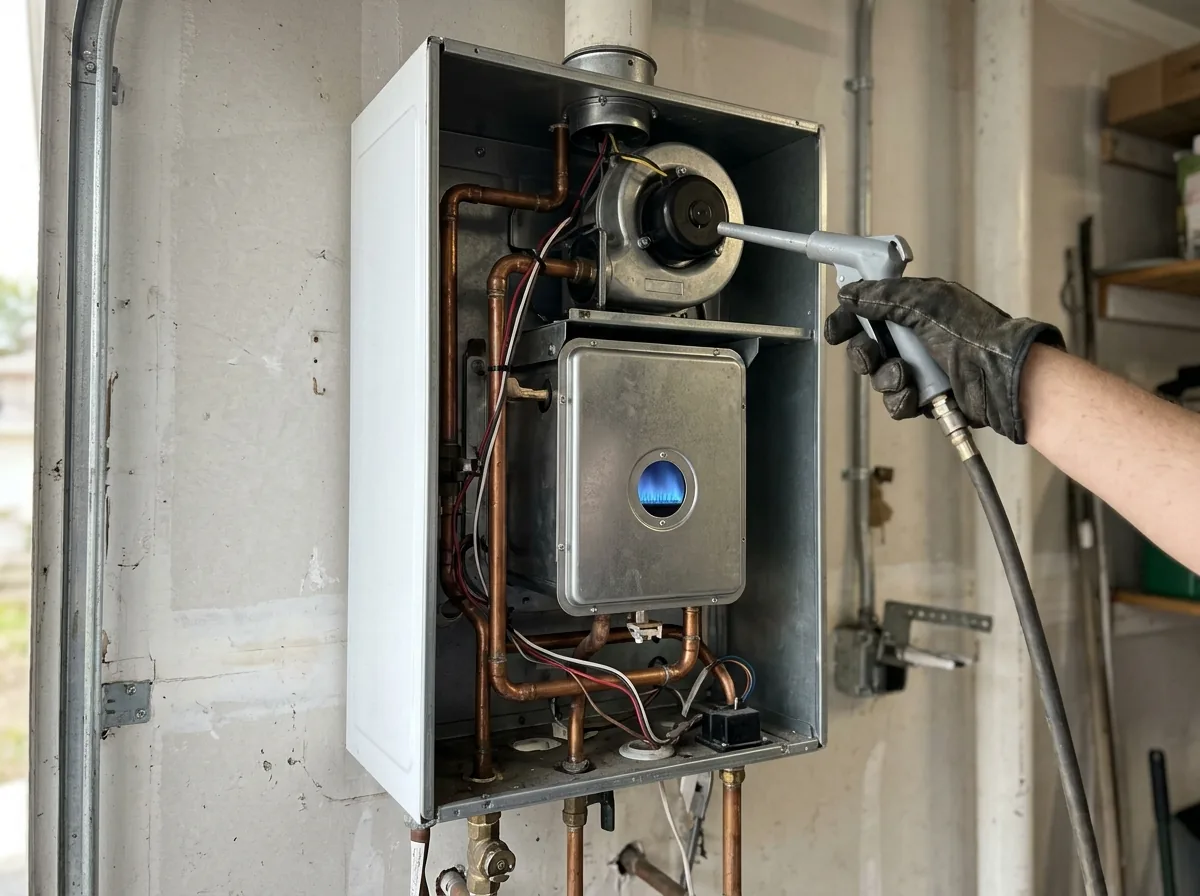
Air Filter and Burner Look on Gas Units
Rinnai's cleaning steps take the front panel off and use pressurized air to clear dust from the burner, the heat exchanger and the fan. No wet cloth, no spray cleaner. The flame should burn clear, blue and steady across the burner. Rinnai also calls for an annual check of the vent for blockage or damage. HomeGuide's tune-up list also includes cleaning the intake filters, and Rinnai says to clean the fan and motor of dust every year.
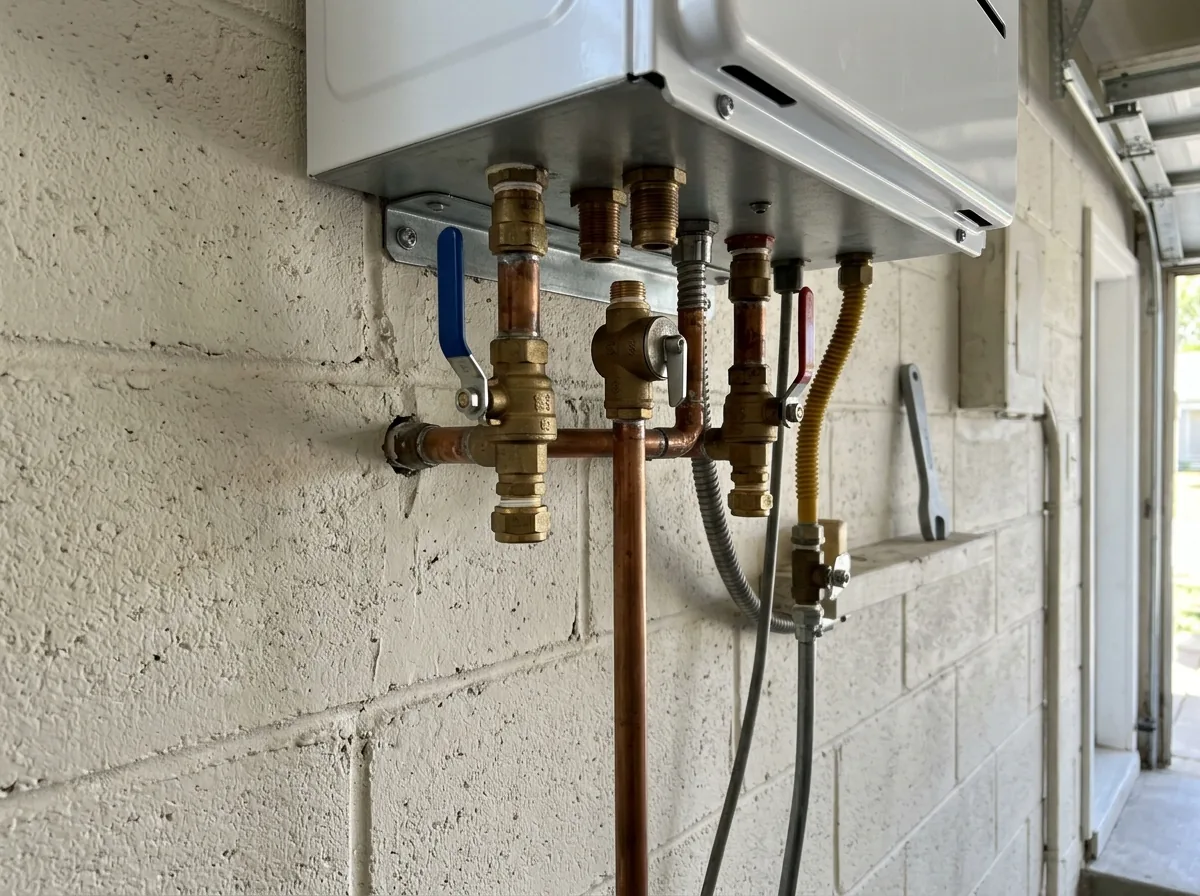
Isolation Valves and the Relief Valve
The isolation valves under the heater are what make a flush possible: each one shuts off the line and opens a drain port for the hoses. A unit installed without them is harder to service, so ask about adding a set. Rinnai recommends working the pressure relief valve by hand once a year, with somewhere safe for hot water to go. Its discharge pipe should have no valve of any kind on it and should end about 6 inches above a drain, where a release is easy to spot. HomeGuide prices a relief valve replacement at $50 to $300 if it sticks.
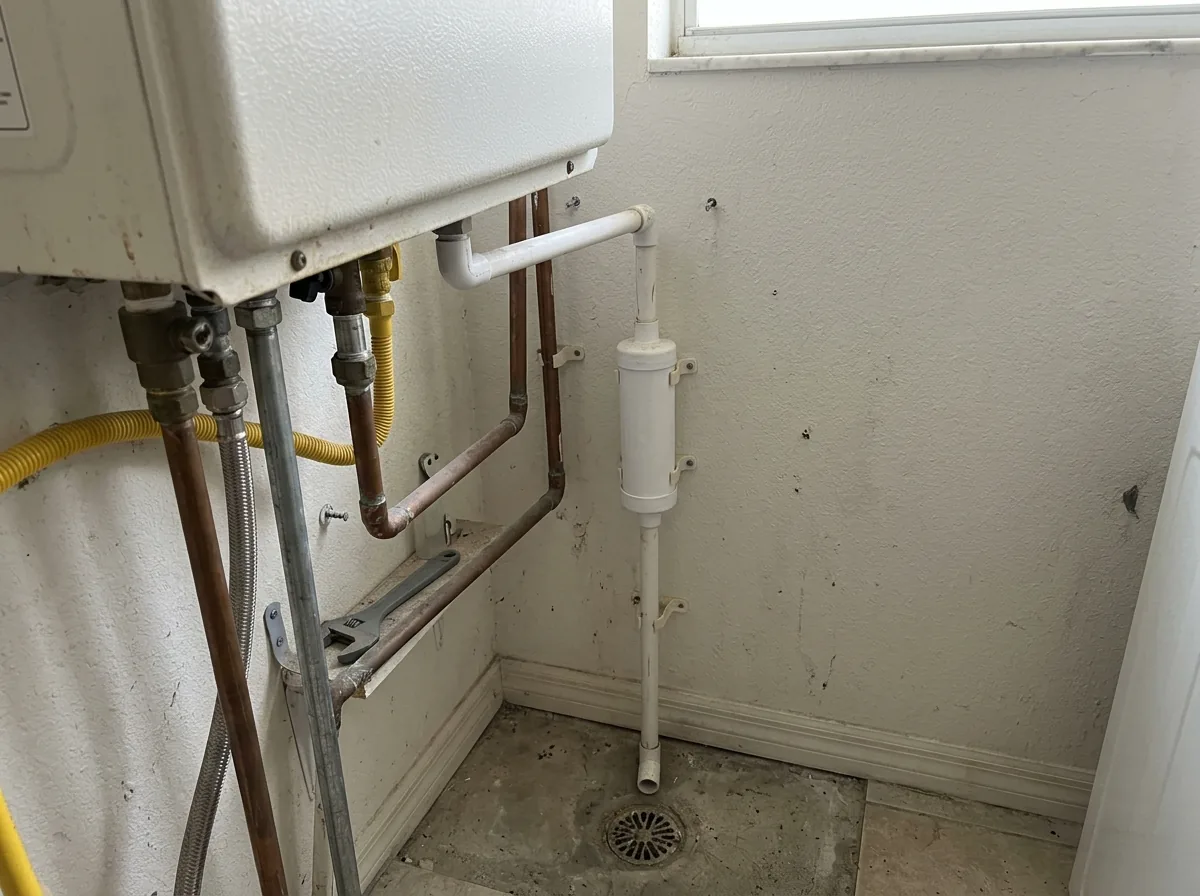
Condensate Trap Upkeep on Condensing Models
Condensing units produce acidic water from their exhaust. Rinnai's manual warns that the trap must be primed before operation so exhaust can't enter the building, and that poor drainage will damage the heat exchanger. A neutralizer cartridge protects pipes, concrete and plants from the acid; Takagi's spec sheet says to replace its cartridge every 3 years or when the condensate pH drops below 6.0.
Why Port St. Lucie homeowners and businesses call Port St. Lucie Tankless Water Heater
- Sending a request is free and doesn't commit you to anything
- Your details go to one licensed plumber, never a list of callers
- Ask for the unit's flow rate at your water temperature in writing
- Ask who files the city permit and books the inspection
- The referral adds nothing to the plumber's price
How Often to Flush on Port St. Lucie Water
Rinnai and Navien both put the minimum at once a year. Navien adds that harder water, a higher set temperature and heavier use all shorten the interval. HomeGuide goes further and suggests flushing more than yearly wherever the water is hard. City water here is a blend of lime-softened and reverse-osmosis water. The city's report gives no hardness number, and the hardness and water softener page covers what is known.
A home on a private well, a large family, or a heater set hot for a dishwasher should ask the plumber to check the first flush's residue before setting the next date.
The warranty is the other reason to keep the schedule. Rinnai's manual says skipping the flush will damage the heat exchanger and that scale damage isn't covered by the warranty. HomeGuide calls missed flushing the leading cause of tankless breakdowns. A failed heat exchanger is the most expensive tankless repair.
Proof of Service for the Warranty File
Ask for a written ticket after each visit and keep it with the manual. It should show:
Date and unit
Model and serial number, and the date of the service.Descale details
What solution was used and for how long it circulated.Inlet screen
Cleaned, and whether it was clogged.Code history
Any codes stored on the controller since the last visit.Valves
Relief valve tested; isolation valves holding without drips.Gas units
Burner, flame and vent checked; on condensing models, the trap and neutralizer.