
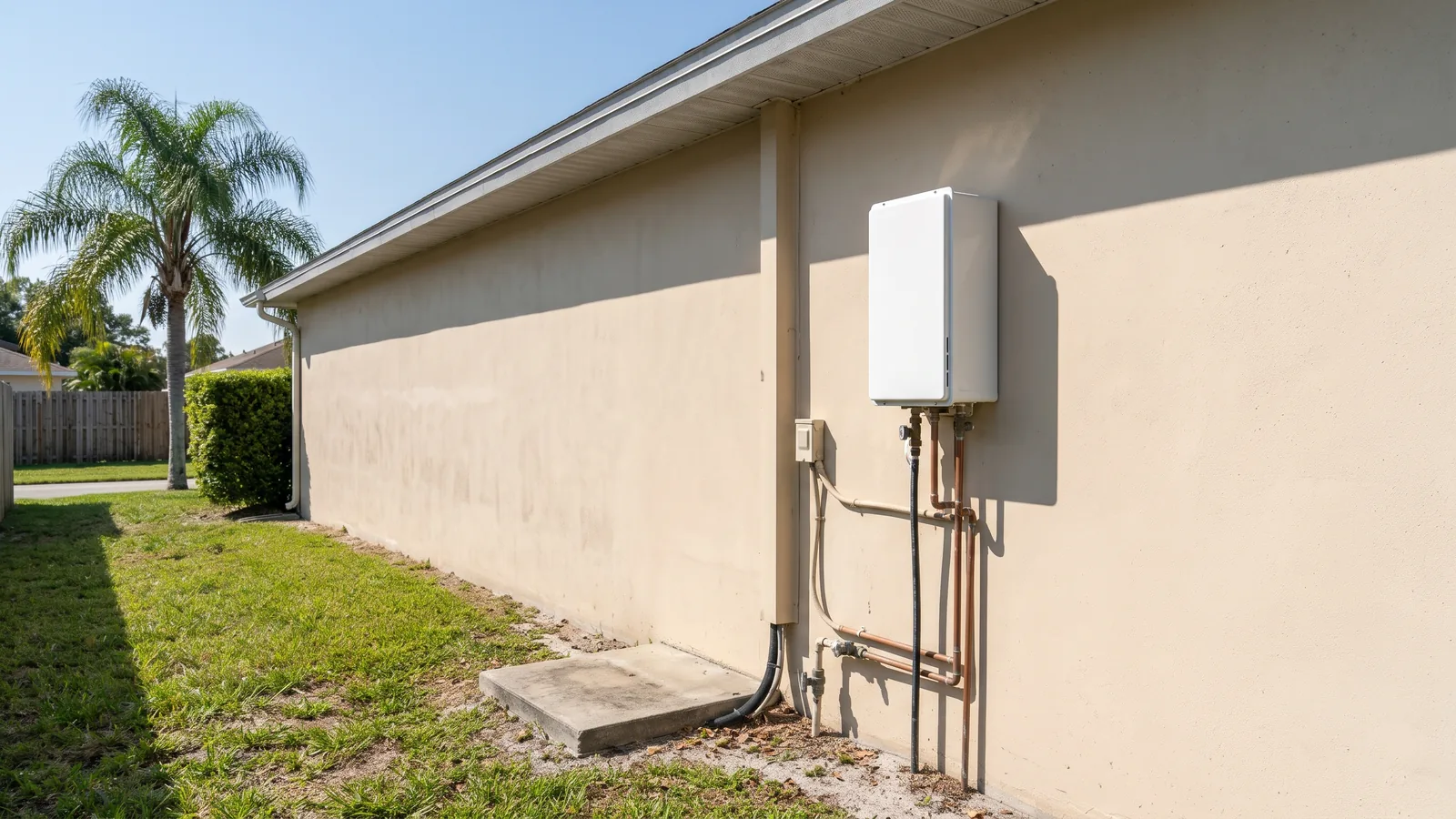
Tankless Options for Condos, Townhomes and Rentals
Port St. Lucie is mostly owner-occupied single-family houses, but Census counts still show about 2,800 attached homes, more than 7,000 units in buildings of two or more, and roughly one occupied home in six rented. Each of those owners answers to someone extra: an association, a tenant, or both.
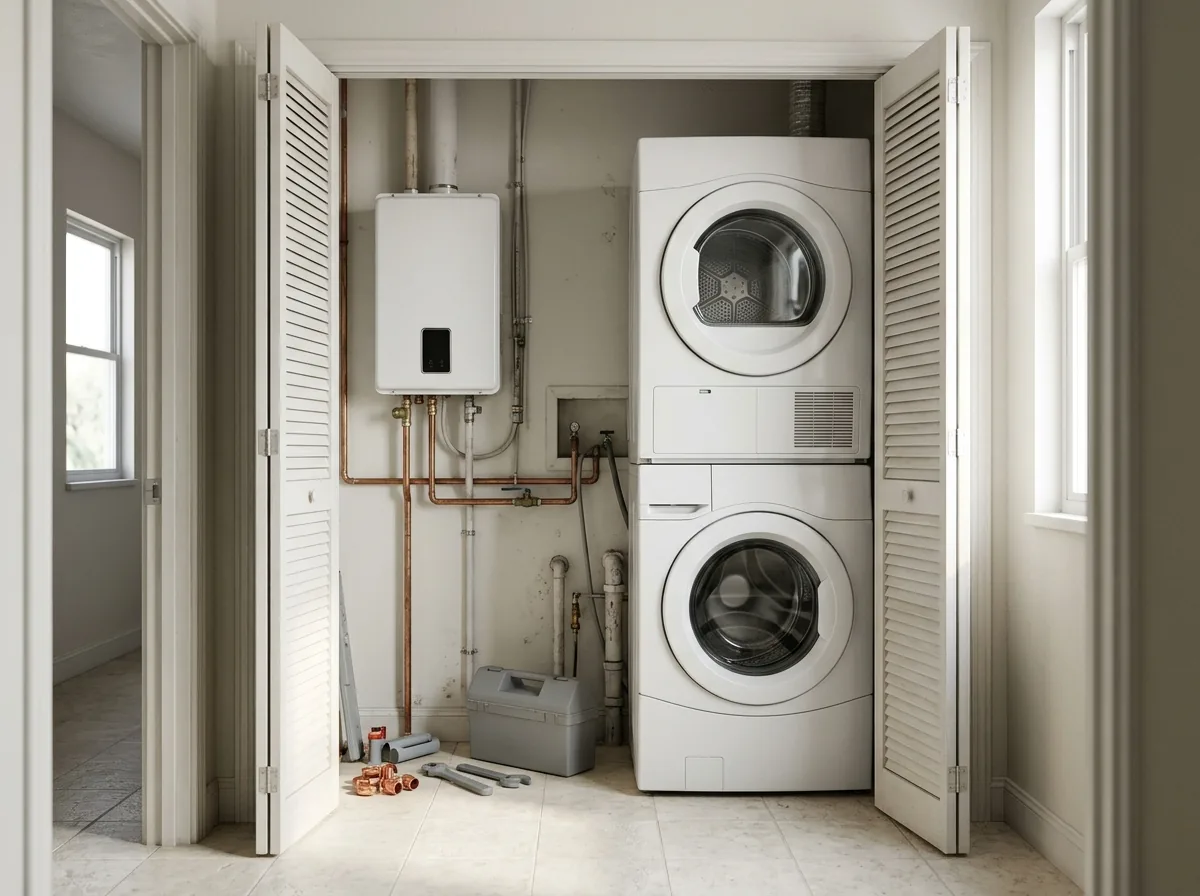
Condo Units Under Association Rules
Condo documents vary, so ask your association before you buy anything. Useful questions:
- Exterior changes. Can a vent pass through an outside wall or the roof?
- Approved equipment. Does the board require a specific model or a leak shutoff?
- Contractor access. Are there work hours, insurance certificates or elevator bookings?
Electric units skip the vent question entirely, a real advantage when the wall belongs to the association. The city's water heater permit needs both the contractor's and the owner's signatures (permit and plan review).
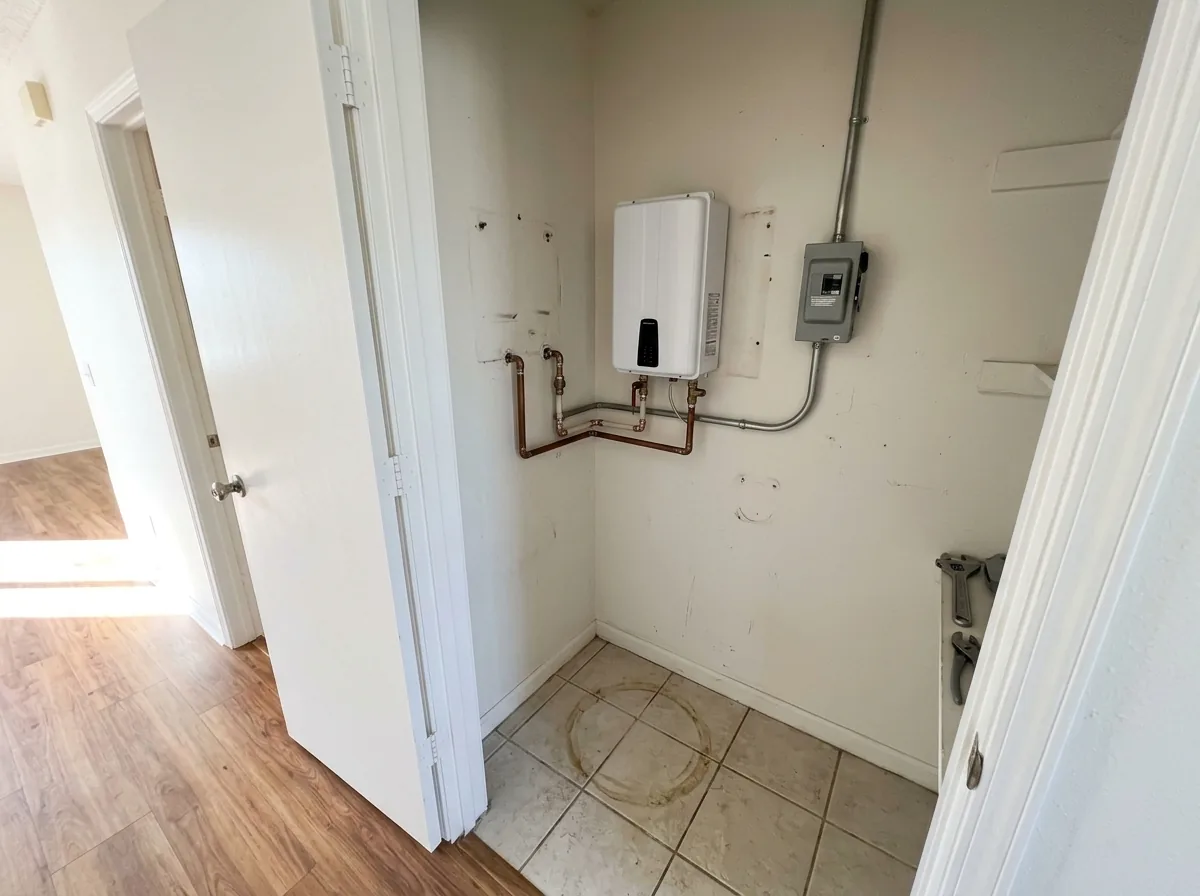
Villas and Townhomes with a Utility Closet
In a villa or townhome the old tank often lives in an interior closet. A wall-hung tankless unit gives that floor back, but the closet still has to work as a service space:
- Working room. Florida's plumbing code wants 30 by 30 inches of level floor in front of the controls.
- Drain pans. The code's pan section is aimed at storage tanks, and it excuses a replacement from adding a pan drain the closet never had.
- Access. The heater has to stay reachable for service and replacement.
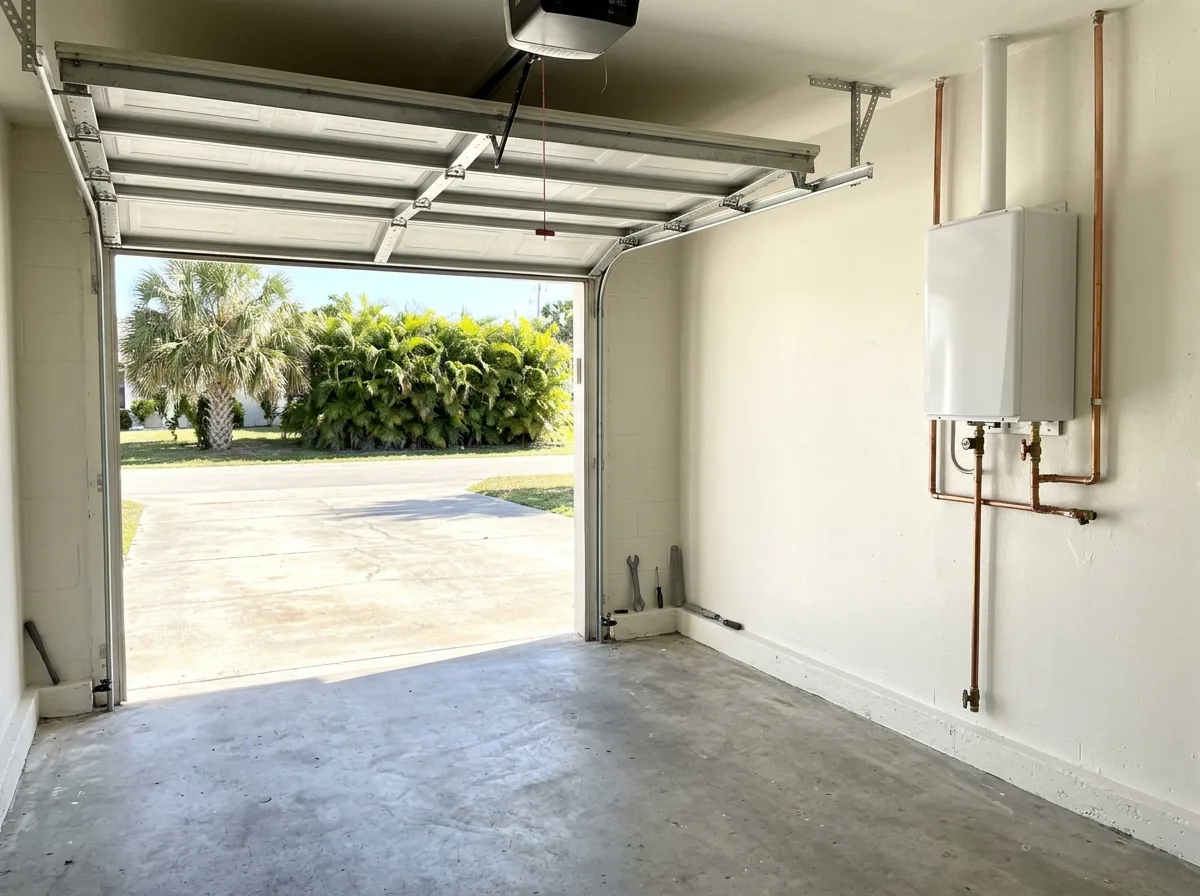
Rental Homes Between Tenants
For a single-family rental or duplex, Florida's landlord statute ties the owner's duty to building and housing codes, and lets the parties change it in writing. The gap between leases is the easy time to retire a tired tank. Labor runs 3 to 10 hours in HomeGuide's figures, and a changeout inspection can be done virtually, booked through the city's portal for the following business day. It also means no storage tank sitting full in a vacant house.
Small Multi-Family Buildings
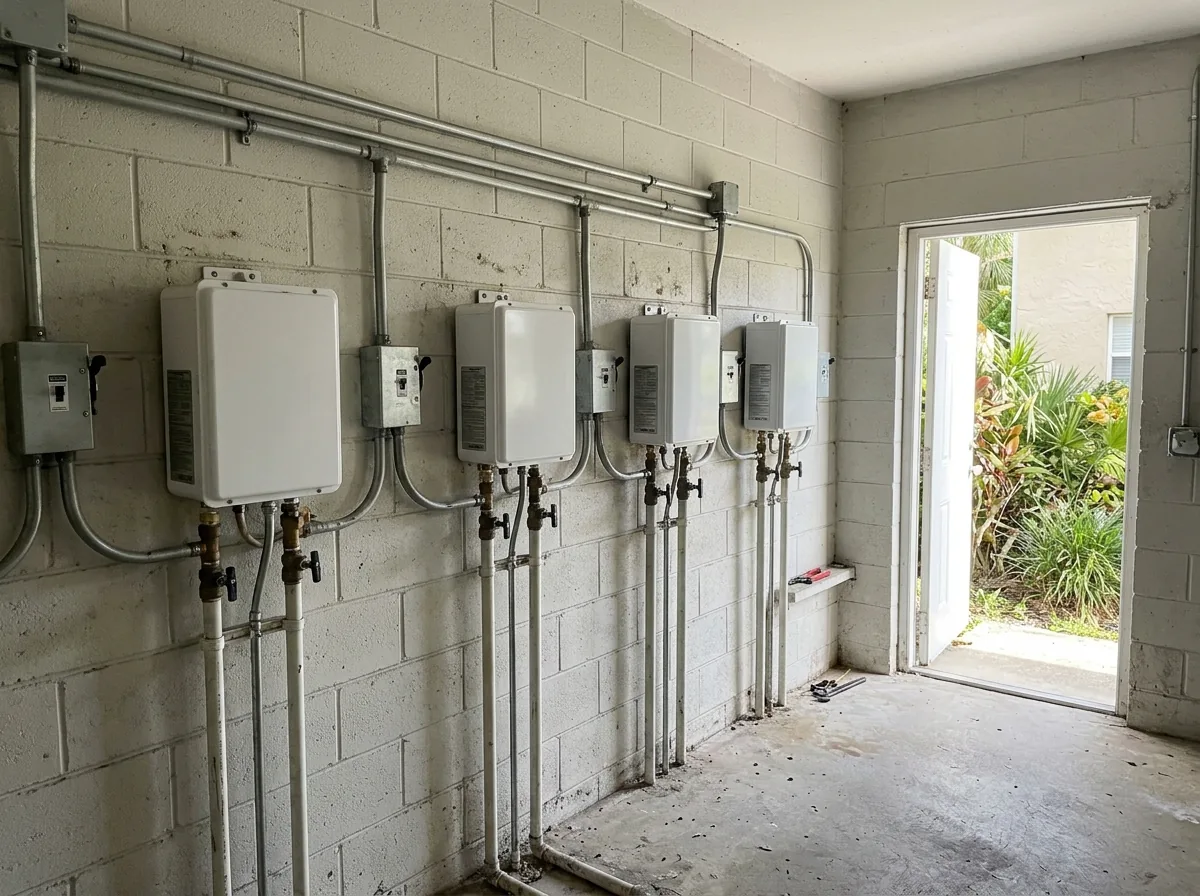
Port St. Lucie has about 1,650 units in three- and four-unit buildings and about 400 in duplexes. In three- and four-unit buildings, Florida's statute requires the landlord, unless otherwise agreed in writing, to make reasonable provisions for functioning hot water; duplexes fall under the single-family rule instead. A heater per apartment keeps one failure from reaching every tenant. A shared heater has a distance limit: every fixture must sit within 50 feet of piping from the heater or a recirculation loop. For bigger shared systems, see commercial tankless installs.
Why Port St. Lucie homeowners and businesses call Port St. Lucie Tankless Water Heater
- Sending a request is free and doesn't commit you to anything
- Your details go to one licensed plumber, never a list of callers
- Ask for the unit's flow rate at your water temperature in writing
- Ask who files the city permit and books the inspection
- The referral adds nothing to the plumber's price
Cost, Power and Paperwork for a Condo or Rental Swap
In a condo or villa, check the panel before the price. The large whole-house models need three 40- or 50-amp breakers; compare your panel against the breaker and amp load figures before choosing. Where only one bath is far from the heater, a point-of-use unit can be the cheaper fix.
Ask the quote to state the model and its breaker size, whether an electrician is included, who files the city permit, and whether the old tank's haul-away is in the price.