
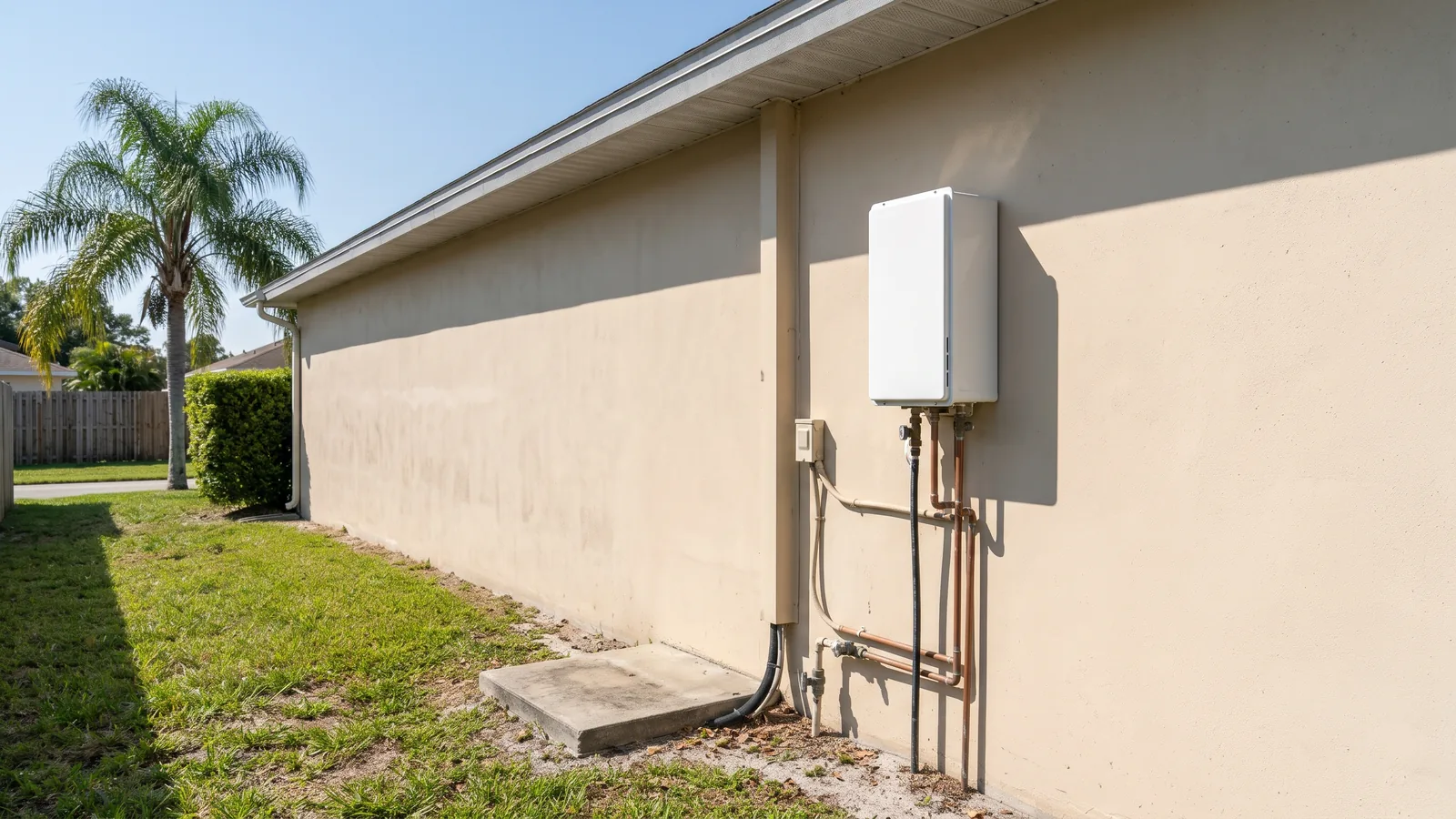
LP Tankless Installation: Tank, Line and Heater Choices
Census figures show about 0.5% of Port St. Lucie homes heat with bottled or tank gas, against 4.9% on utility gas. So a propane tankless job here usually starts from nothing: a tank to place, a line to run and a heater set up for LP. Each of the four parts below is priced and permitted on its own.
Above-Ground and Buried Propane Tanks
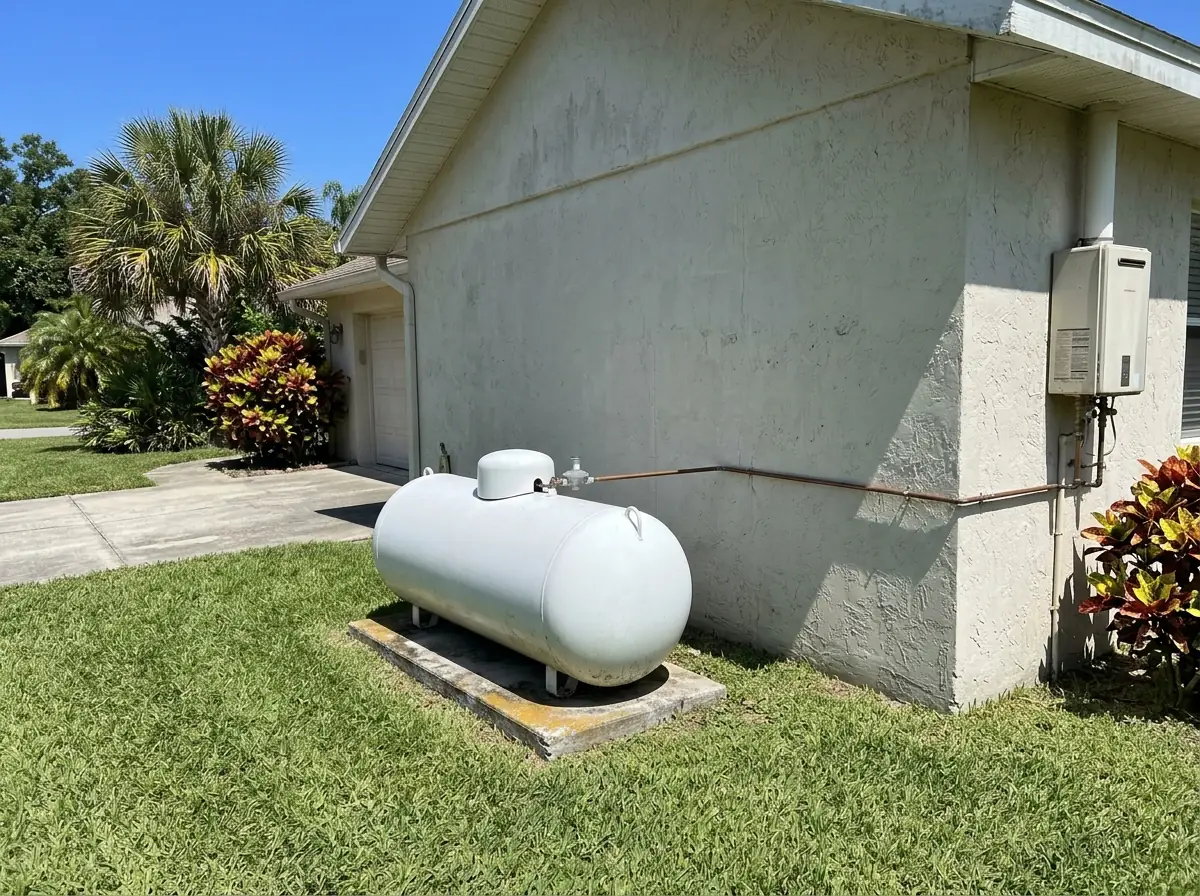
This Old House tells homeowners to plan on a propane tank of at least 100 gallons for a tankless heater. HomeGuide says a tank of 120 to 325 gallons covers heating, cooking, a dryer and standard hot water, and that a 500-gallon tank stretches refills to about every six months. Tanks of 250 gallons and up can go underground. HomeGuide also recommends keeping the tank above ground where flooding is frequent, because a buried tank can float when the water table rises past its fill level. On a low lot that holds water after a summer storm, I'd take that warning seriously.
- 100-gallon tank above ground: $380 to $650
- 250-gallon tank: about $1,200 installed
- 500-gallon tank: about $1,500 above ground, about $1,900 to $2,000 buried
- Leased tank: $50 to $200 a year, with refills from the same company
Regulator and Supply Line to the Heater
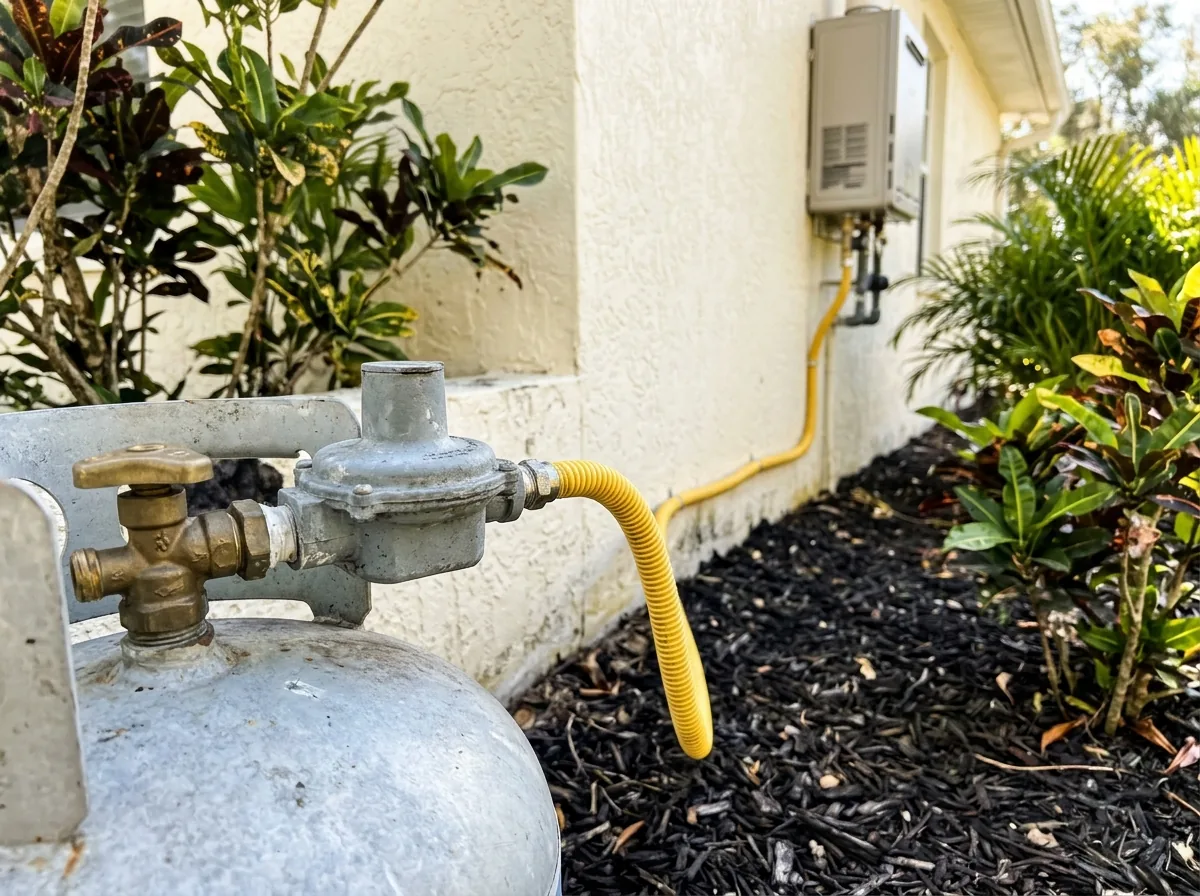
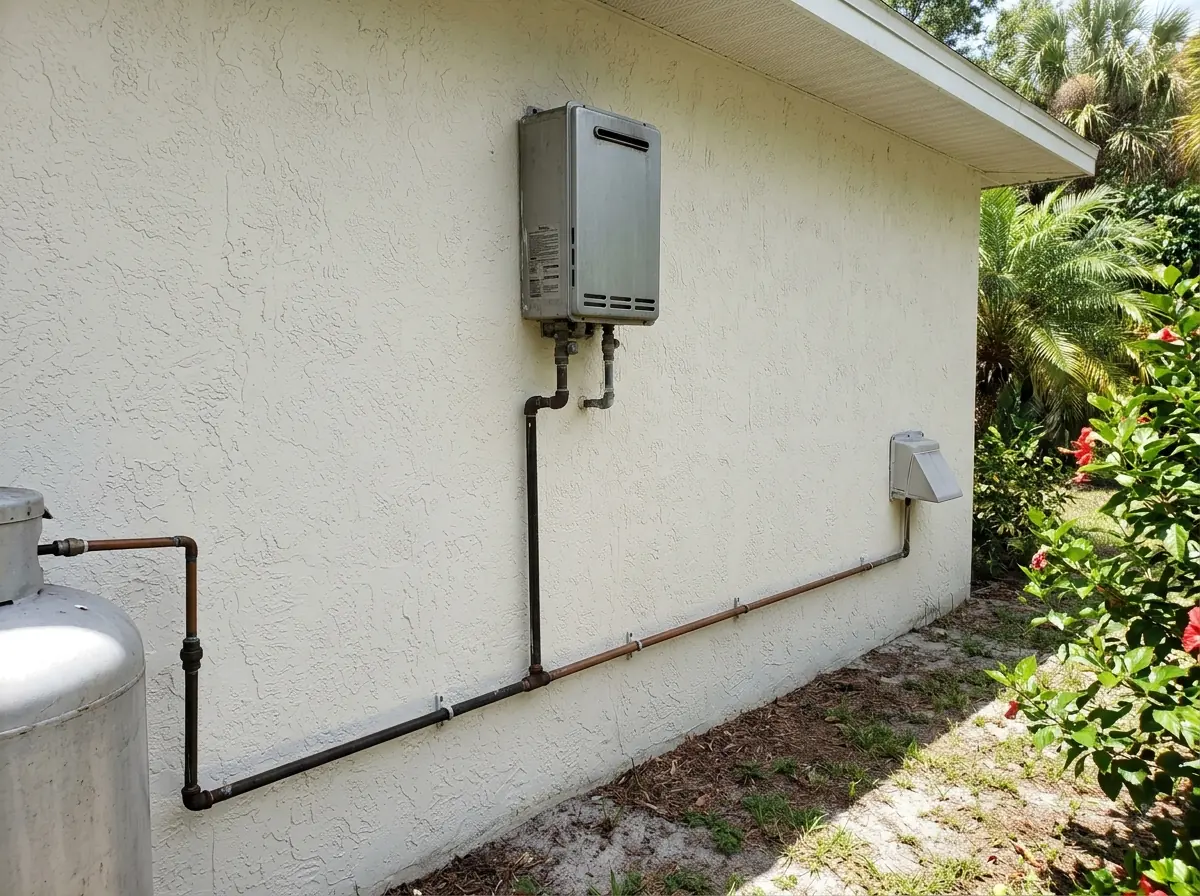
Tank pressure has to be brought down before it reaches the burner. Rinnai's outdoor and condensing spec sheets both set the propane supply at the heater between 8 and 13.5 inches of water column, and its manual says to check that pressure just upstream of the unit and to use a thread compound rated for LP. Pipe size comes from the heater's Btu input and the length of the run: Rinnai's propane table shows 20 feet of half-inch pipe carrying about 200,000 Btu per hour and three-quarter-inch about 418,000. The full sizing method sits on the gas line page.
- Inlet pressure at the heater: 8 to 13.5 inches w.c. (Rinnai RL75e and SENSEI RX)
- Whole-house propane units: up to 180,000 Btu/h (RL75e) or 199,000 Btu/h (RX199i)
- Who may run the line: a Florida plumbing contractor's scope includes LP gas piping (license scope)
Converting a Unit's Fuel Setting to LP
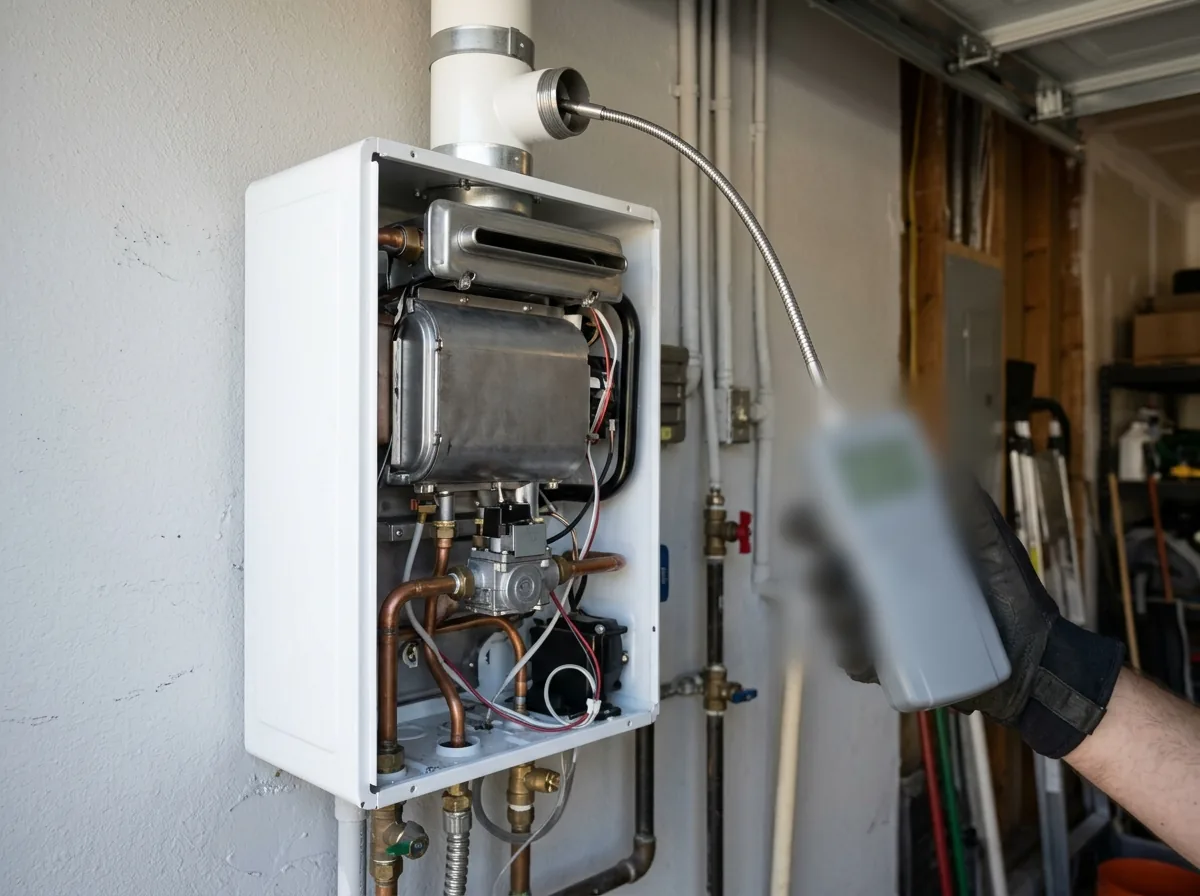
Navien's NPE-2 guide says those heaters ship "ready to fire natural gas ONLY", so a propane install of that series includes a conversion on site. The guide for its NPE-2 condensing series uses a propane kit packed with the heater, a DIP switch change and a combustion check with an analyzer or manometer, and says a qualified service agency does the work. Rinnai's SENSEI RX lists its gas conversion kit as labels only. Rinnai's manual is blunt about the end state: the unit has to match the gas supplied, and the labels should say so before the inspector arrives.
- Navien NPE-2: propane kit in the box, DIP switch 1 set to ON, CO2 checked at high and low fire
- Rinnai SENSEI RX: approved for natural gas and propane; conversion kit is labels only
- After conversion: conversion stickers placed next to the rating plate
Sharing One Tank with a Range or Dryer
Hooking the heater to a tank that already runs the range, dryer or pool heater changes two things: the size of the line and how often the truck comes. Rinnai's manual sizes pipe by adding every appliance's input to the heater's before reading the table: its example adds 65,000 Btu of other appliances to a 199,000 Btu heater. More appliances on one tank also means more deliveries; HomeGuide's six-month refill figure is for a 500-gallon tank.
- Add up every appliance's Btu rating, heater included, before sizing the line
- Check the tank size against HomeGuide's 120-to-325-gallon household range
- Ask whether the existing regulator can carry the larger load
Why Port St. Lucie homeowners and businesses call Port St. Lucie Tankless Water Heater
- Sending a request is free and doesn't commit you to anything
- Your details go to one licensed plumber, never a list of callers
- Ask for the unit's flow rate at your water temperature in writing
- Ask who files the city permit and books the inspection
- The referral adds nothing to the plumber's price
Propane Tankless Cost, Permits and Running Costs in Port St. Lucie
HomeGuide puts a propane tankless unit at $1,000 to $2,000 before installation. Angi gives $1,000 to $1,500 for the installation alone and roughly $350 a year in fuel. A full quote here should split out the heater, the tank set, the line and the city permits: the LP tank permit ($125, or $115 online), the water heater permit and plan review, and a residential gas permit ($75, or $61 online) if the department asks for one. Florida licenses tank work separately as well. Chapter 527 makes LP gas dealers and Category V installers, the trade that sets tanks, hold a license from the Department of Agriculture and Consumer Services. So ask who sets and fills the tank, and whether that company or the plumber handles the regulator.
Propane doesn't help in a blackout. Rinnai's units need 120-volt power to fire, and its hurricane bulletin includes turning off the propane tank among the pre-storm steps; see power outages. If your street does have a Florida City Gas main, compare a natural gas install first on the natural gas tankless page.