
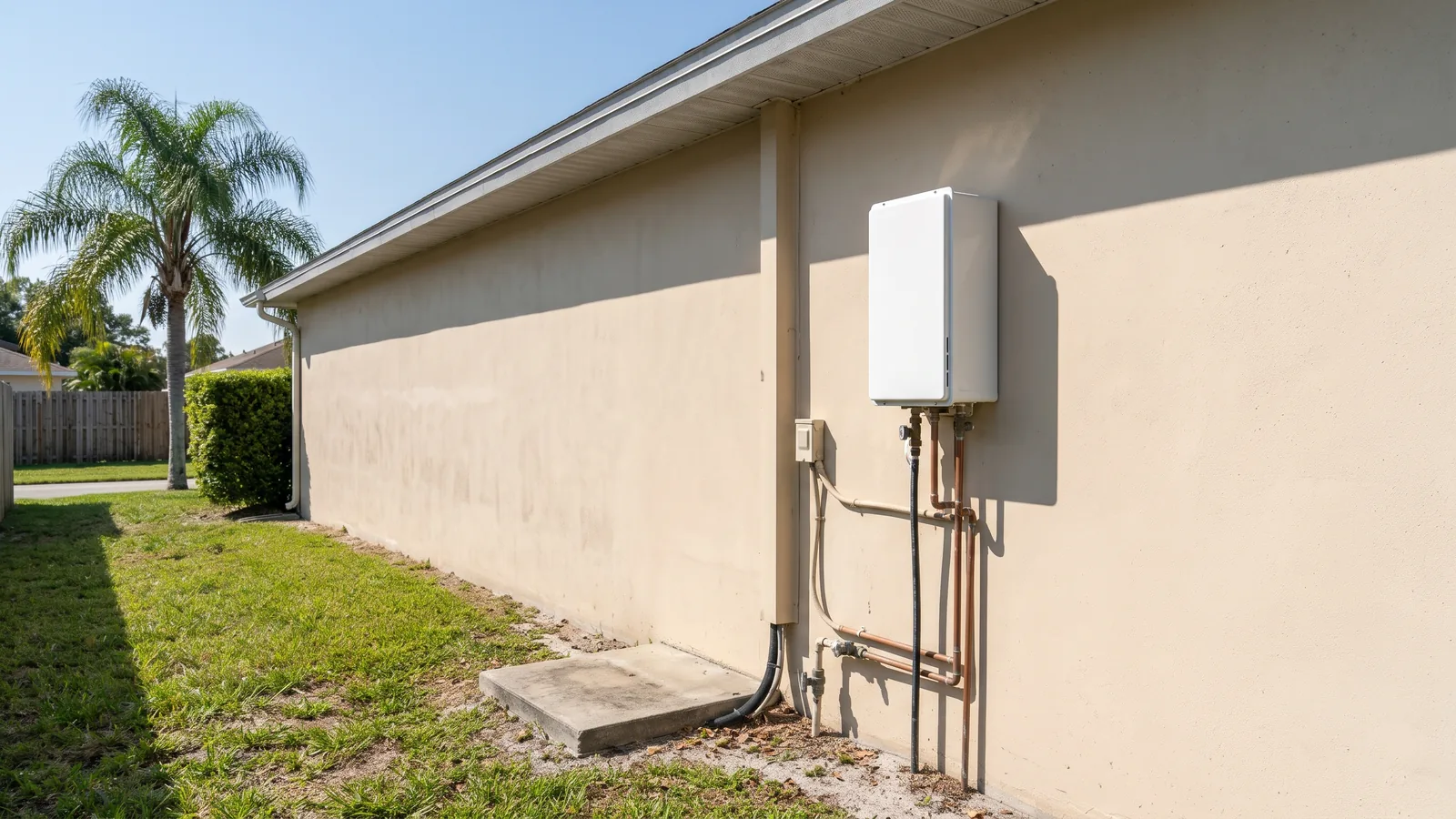
Tank Water Heater Problems and Their Usual Fixes
Census figures show about 91% of Port St. Lucie homes heat with electricity, so the heater is most likely an electric tank. This page covers tank units. For a tankless unit showing an error code or running hot and cold, see tankless water heater repair.
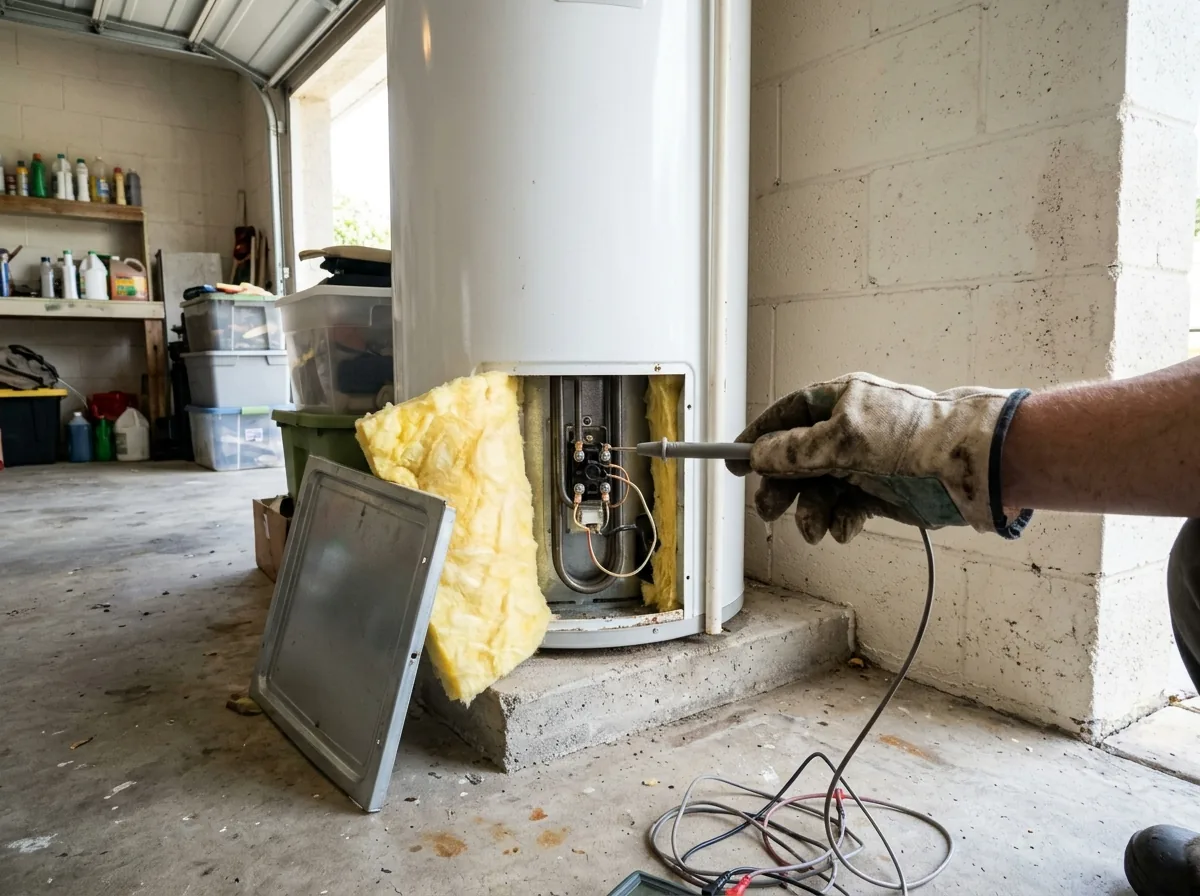
No Heat from an Electric Tank: Elements and Controls
An electric tank heats with two elements, each switched by its own thermostat. The symptom points to the part:
- Steady lukewarm water: often the upper element.
- Hot water that runs out quickly: often the lower element, which sediment at the tank bottom wears out.
- Nothing hot anywhere in the house: on a two-element heater, suspect the top thermostat.
- Element or thermostat, fitted: $100 to $350 each.
A breaker that keeps tripping calls for an electrician, since HomeGuide links it to a faulty thermostat or wiring. A yearly flush slows the sediment that kills lower elements.
Leaking Tanks and Fittings
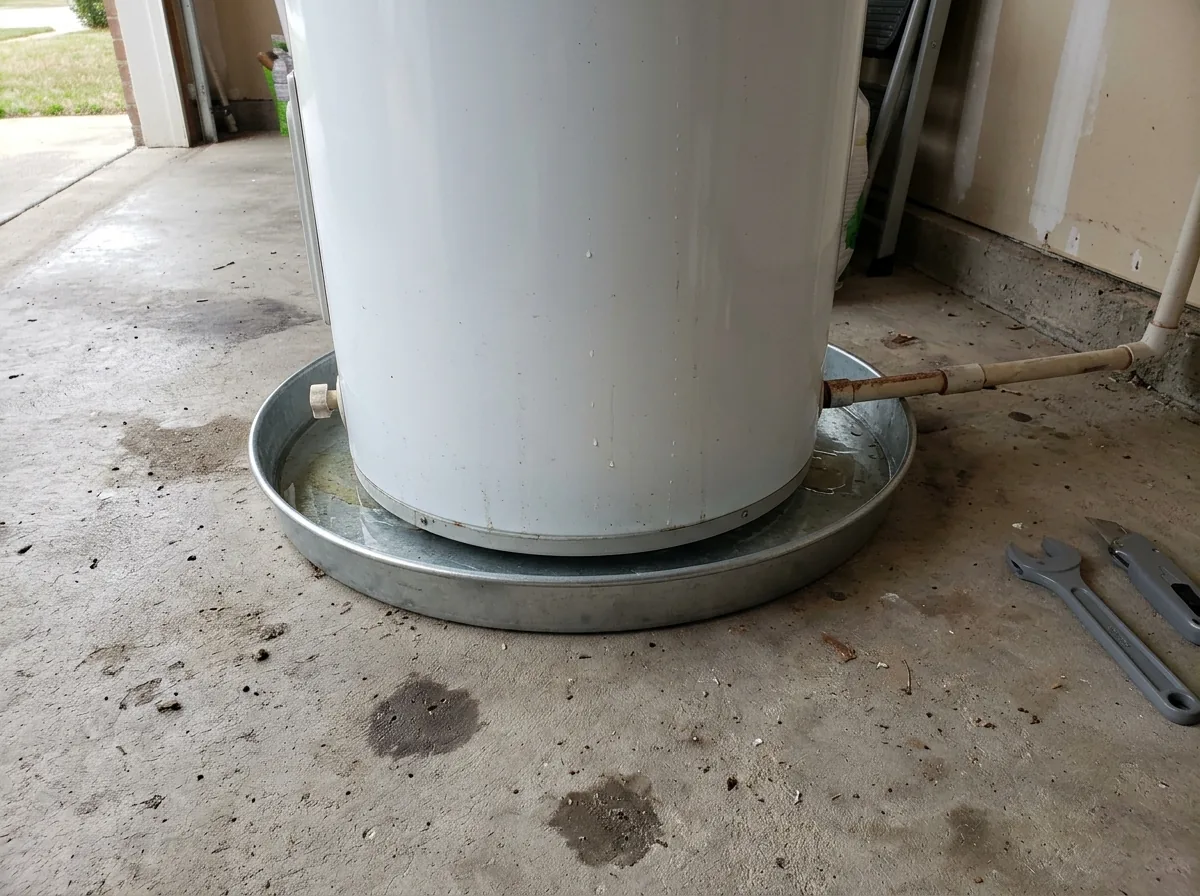
Find the source before you price the fix. Moisture around a pipe joint, a bolt or the drain valve can be as small as a turn of a wrench. When it comes from under the tank, HomeGuide says the tank body is typically damaged and the whole heater gets replaced. HomeGuide puts leak repairs at $100 to $1,000.
Florida's plumbing code wants a pan under a storage tank wherever a leak would cause damage:
- Pan depth 1-1/2 inches or more, drained through 3/4-inch pipe.
- No plastic pan under a gas-fired heater.
- No new pan drain is required when a replacement goes where there wasn't one.
Water from the Relief Valve Pipe
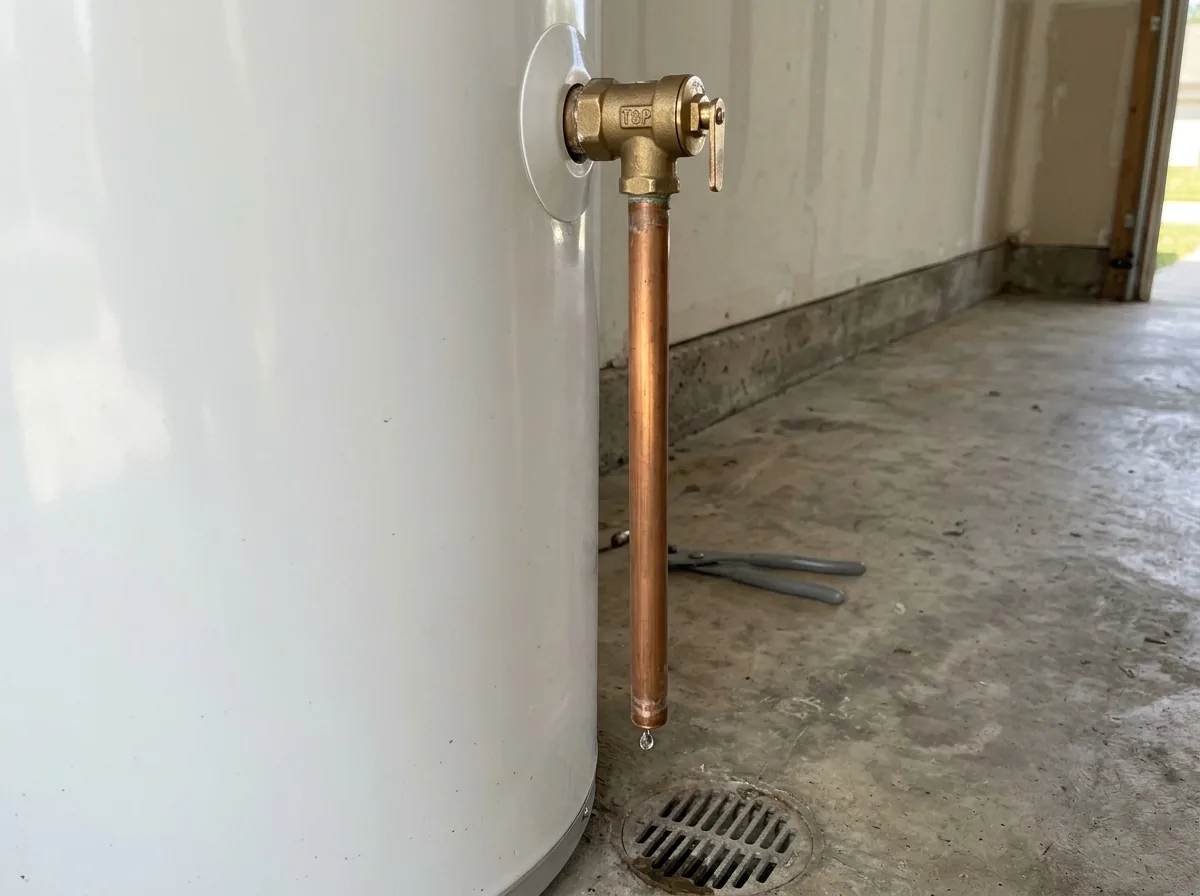
The T&P valve lets water escape when the tank's temperature or pressure goes past its rating. A slow seep can mean sediment in the valve, high tank pressure or a worn valve; a new valve is $50 to $300. Florida's code also governs the pipe it drains into: open discharge within the same room, no dips, no valves or tees, and an outlet no higher than 6 inches over the floor or a receptor. If pressure rises each time the tank heats, ask about thermal expansion and an expansion tank.
Repair the Tank or Switch to Tankless
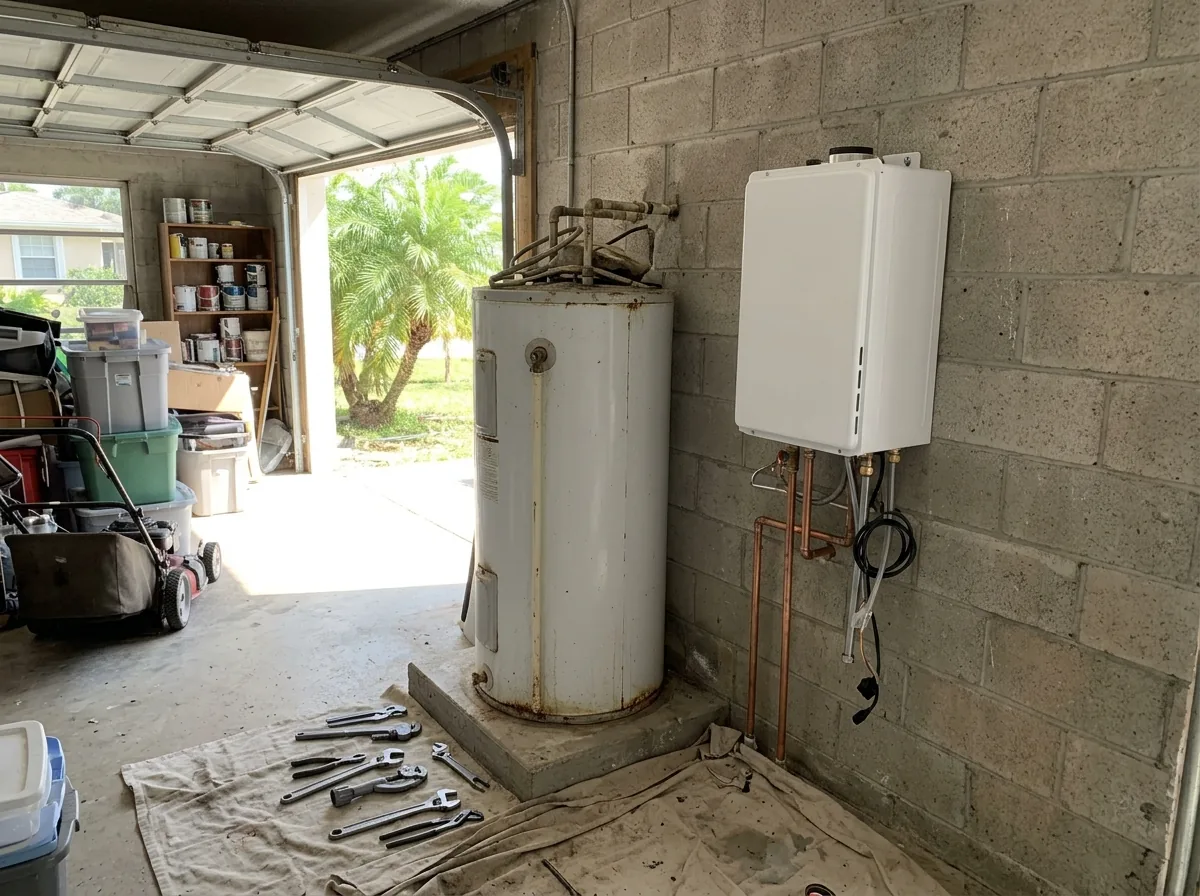
HomeGuide's repair guide expects a tank to last 8 to 15 years (its installation guide says 8 to 12). On a tank in its second decade, a cheap part can still be worth fitting, but a big repair rarely is. Two other wear items to ask about on an older tank:
- Anode rod: $150 to $350 fitted, replaced every 3 to 5 years in plumbers' usual advice.
- Dip tube: $100 to $300; when it fails, cold water mixes into the hot.
If the tank is due, compare a like-for-like tank with a tankless unit on the water heater replacement page, and see how long units last.
Why Port St. Lucie homeowners and businesses call Port St. Lucie Tankless Water Heater
- Sending a request is free and doesn't commit you to anything
- Your details go to one licensed plumber, never a list of callers
- Ask for the unit's flow rate at your water temperature in writing
- Ask who files the city permit and books the inspection
- The referral adds nothing to the plumber's price
Getting a Tank Water Heater Fixed in Port St. Lucie
A plumber can quote faster with the right details. Have these ready:
Label
Model, serial number and wattage or Btu input from the sticker on the tank.Age
The install date, or the permit card if the last heater went in with a city permit.Symptom
No heat, short hot water, a leak, or a dripping relief pipe, and when it started.Access
Whether the heater sits in the garage, a closet or the attic.
If the plumber recommends a new heater, the city requires a water heater permit for the replacement.