
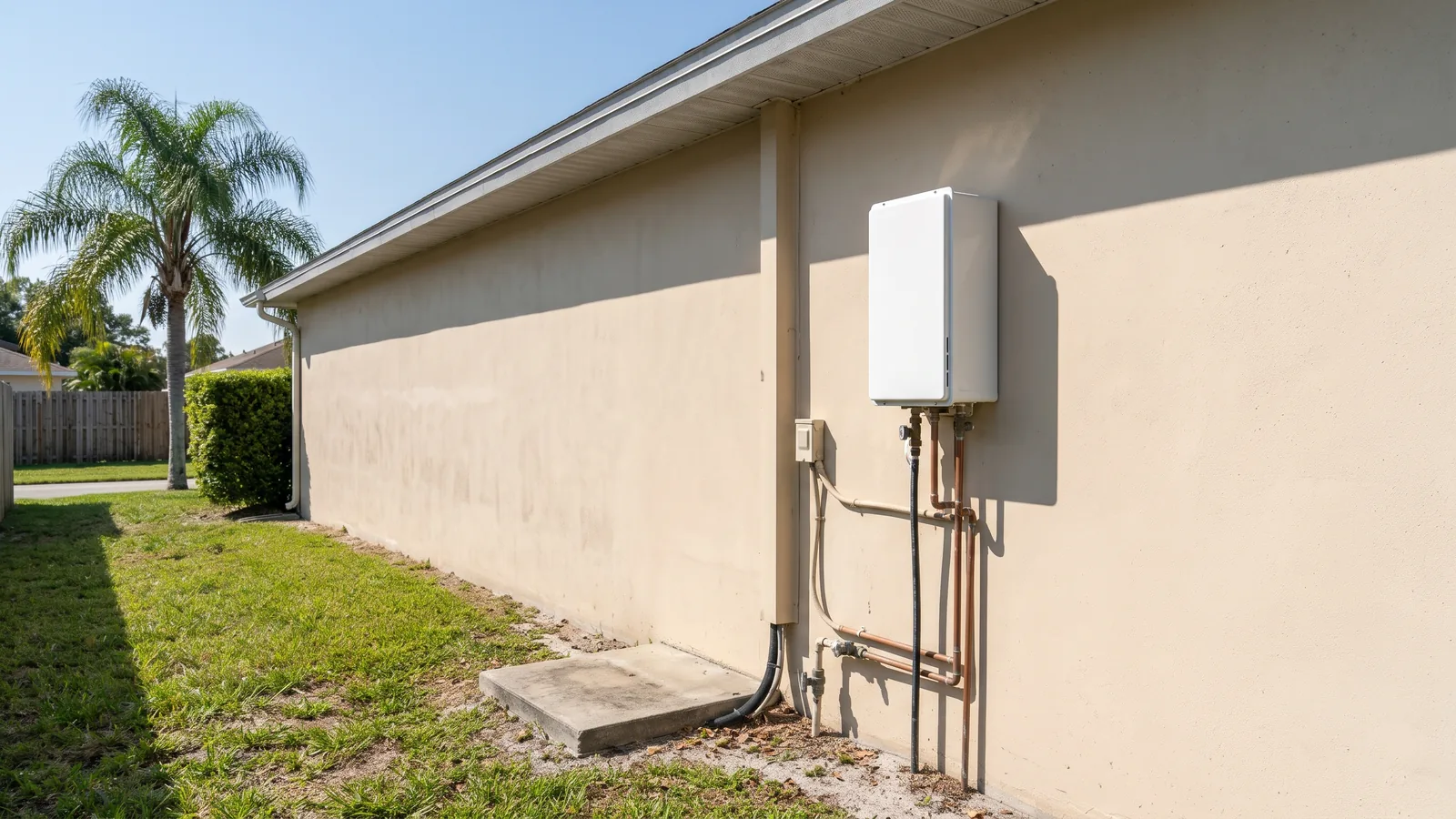
Tankless Heaters That Fit a Manufactured Home
Census figures count about 1,500 mobile homes in Port St. Lucie. Manufactured homes are built to HUD's federal Manufactured Home Construction and Safety Standards, so the choice comes down to three things: the heater's listing, the compartment it sits in, and the power or fuel the home can supply.
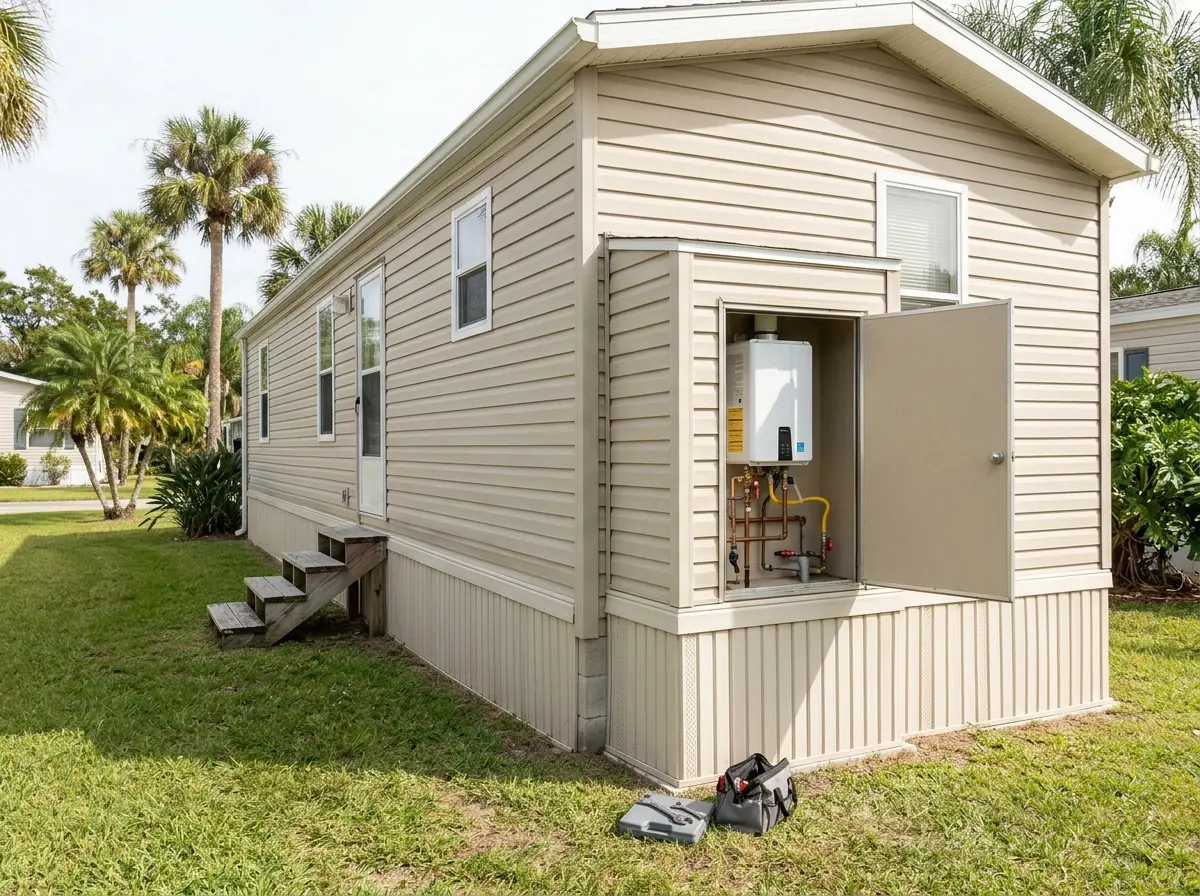
Units Approved for Manufactured Housing
Under HUD's rules, a heater and its vent parts need a listing or certification for residential use from a national testing lab, and anything that burns fuel must be a vented model that exhausts outdoors. Some makers build for this:
- Rheem: its condensing tankless manual marks the models "manufactured home approved", and the sample rating label reads "for installation in a manufactured home (mobile home)".
- Rinnai: its FAQ says it has specific tankless heaters for mobile and modular homes.
- Fuel: a gas heater stays on the gas it was built for unless its listing allows a switch.
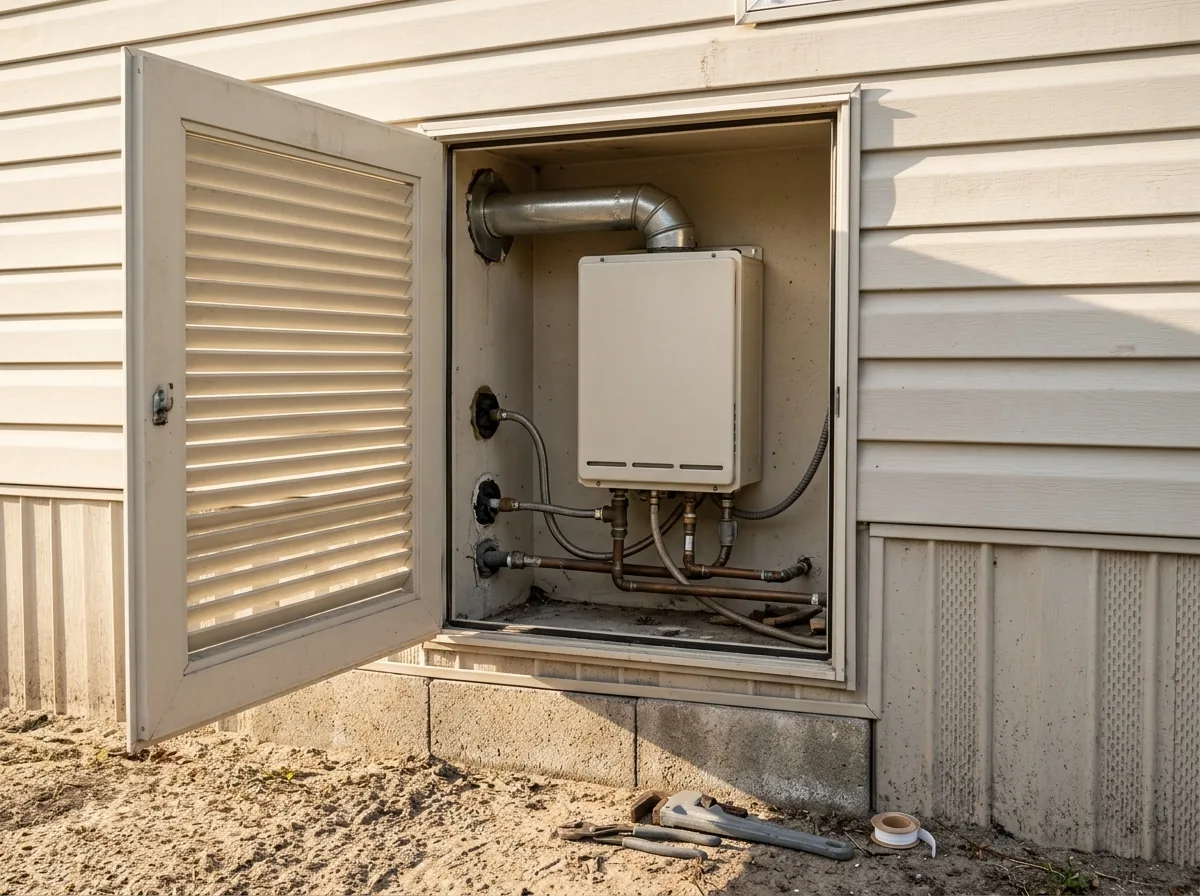
Exterior Closet Compartments
A fuel-burning heater in a manufactured home can't share air with the rooms people live in. HUD requires the combustion system of a fuel-burning appliance to be fully separated from the living space, in one of two ways:
- A direct-vent, sealed-combustion heater.
- An enclosure with no door, removable panel or other opening into the home, with pipe and wire holes sealed.
It must be fastened down, and a technician has to be able to reach it and take it out. Rheem lists 1/2 inch of clearance at the sides and front and 12 inches above and below, with 24 inches preferred for maintenance; a narrow closet may only fit a compact model. HUD's drain pan rule targets storage tanks.
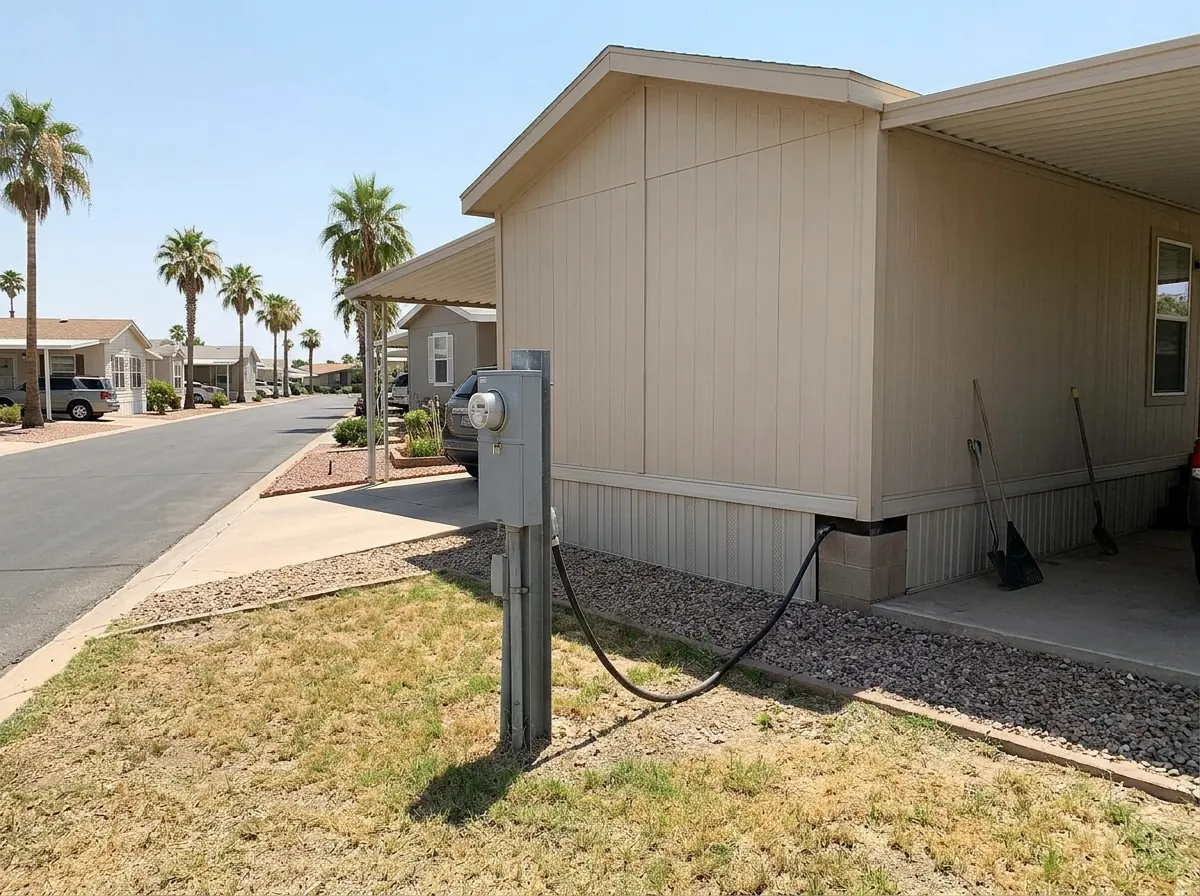
Electric Units on a Manufactured-Home Service
HUD allows a cord-fed home one listed 50-amp cord, or 40 amps for a home built with gas heat and cooking. A load above 50 amps needs a permanent feeder, a mast weatherhead or service equipment on the home. That rules out large whole-house electric units on a cord; their three-breaker loads are on the breaker and amp load page. Smaller units fit better:
- One-bedroom sizing: 5 to 8 kW (Angi).
- Point-of-use heaters for one sink: HomeGuide lists $150 to $250 each before labor.
Propane Units in Parks Without Gas Mains
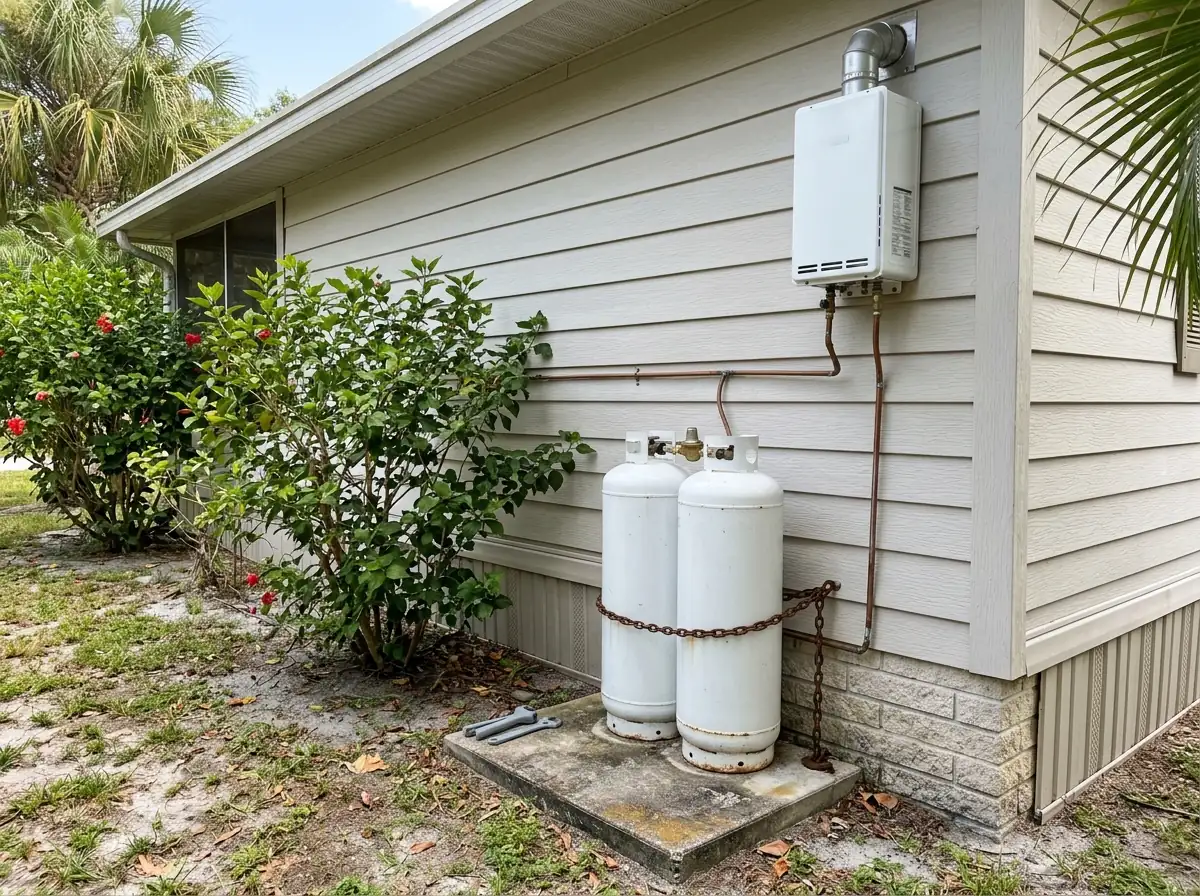
Florida City Gas only connects homes along its mains, so in a park without one, propane is the gas option. HomeGuide puts propane tankless installs at $1,600 to $4,500 nationally. Even on propane, the heater's fan and board run on household current, though that draw is tiny beside an electric unit's. Ask the park manager where tanks may stand before the quote, and see the propane tank permit page for the city's LP fee.
Why Port St. Lucie homeowners and businesses call Port St. Lucie Tankless Water Heater
- Sending a request is free and doesn't commit you to anything
- Your details go to one licensed plumber, never a list of callers
- Ask for the unit's flow rate at your water temperature in writing
- Ask who files the city permit and books the inspection
- The referral adds nothing to the plumber's price
Cost, Permit and What to Ask a Manufactured-Home Installer
Your quote should name the exact model and show its manufactured-home listing, say whether it's direct vent and list any electric service change as its own line. Find out who is filing the permit with the city, and get haul-away of the old tank written in.