
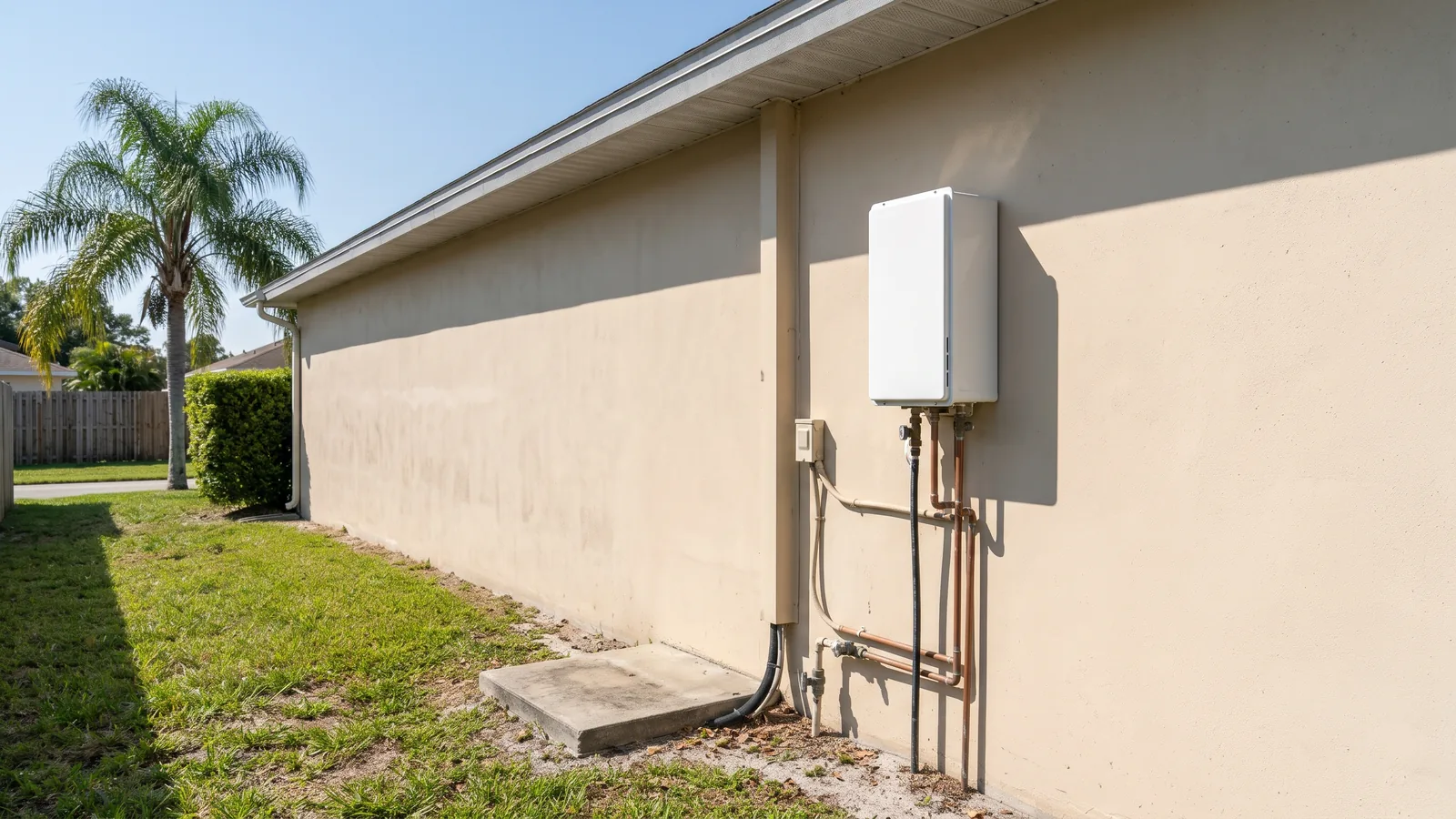
Condensing Tankless Hardware, Vents and Ratings
A condensing unit is a gas or propane tankless heater that pulls extra heat out of its own exhaust. That one design choice changes the vent, adds a drain and moves the efficiency rating, so the four parts below are where condensing and non-condensing installs differ.
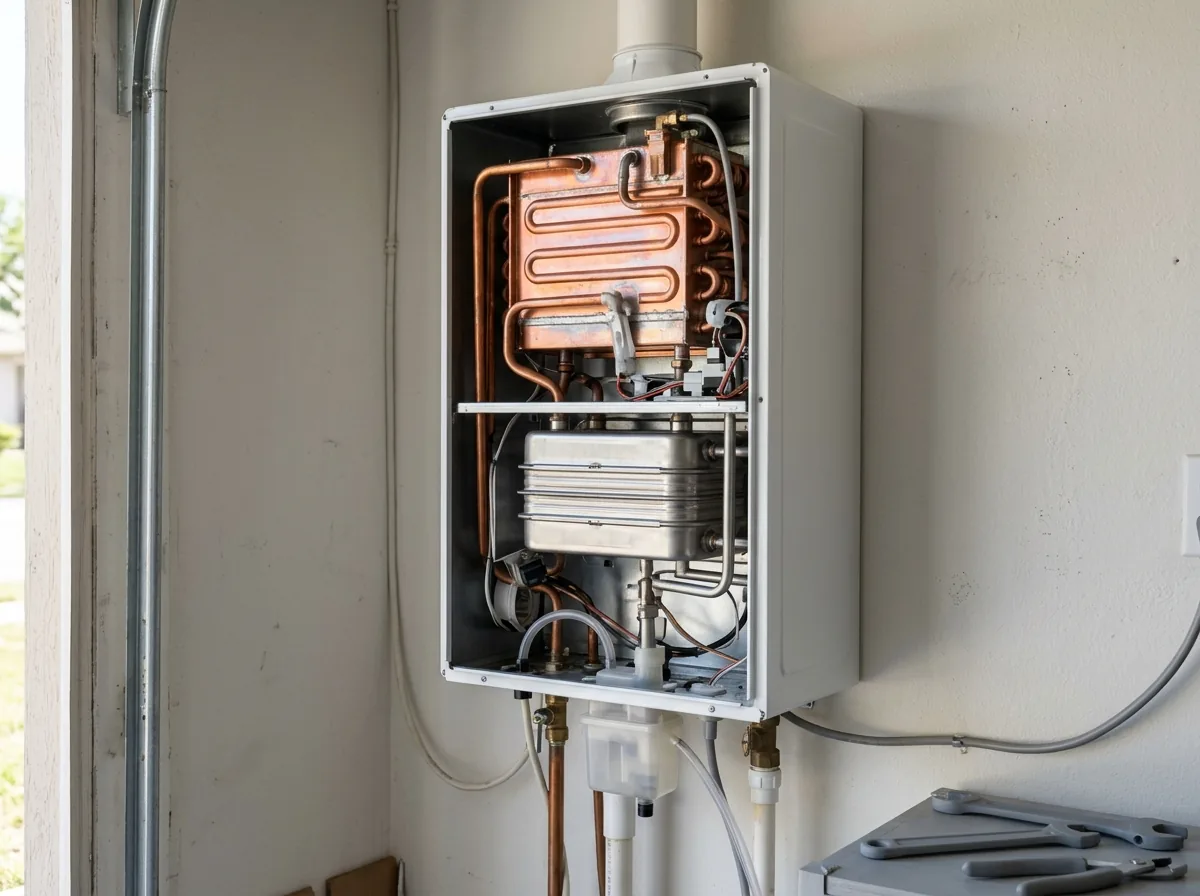
Units with a Second Heat Exchanger
HomeGuide and Angi describe the same mechanism: a secondary heat exchanger takes heat from the exhaust gases and passes it to the incoming water, cooling the exhaust until water vapor condenses out of it. That is where the efficiency comes from, and also why the unit makes water. Rinnai's SENSEI RX199i is a typical whole-house example.
- Maximum input: 199,000 Btu/h; minimum 15,000 Btu/h
- Flow range: 0.13 to 11.0 GPM
- Fuel: natural gas or propane (propane installs)
- Heat exchanger warranty: 15 years or 12,000 operating hours
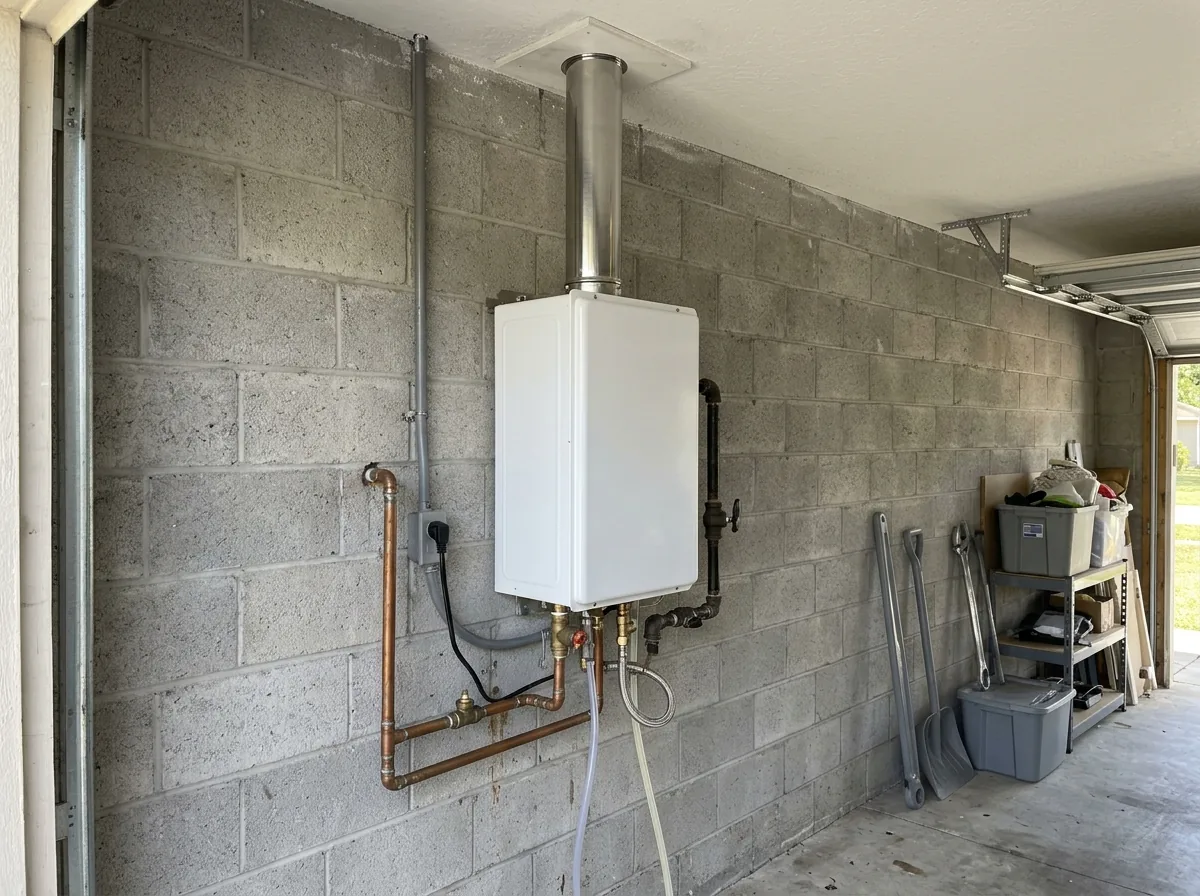
Non-Condensing Units and Their Metal Vents
A non-condensing unit sends its exhaust out hot, so the vent has to handle the heat. This Old House prices stainless steel venting at $400 to $800, and HomeGuide notes that an old gas tank's vent can't be reused for tankless. Florida's fuel gas code leaves the design of these vents to the appliance maker's instructions. Outdoor non-condensing models skip the vent pipe entirely; Rinnai's RL75e exhausts from the front of its cabinet. Wall terminal distances are on the venting page.
- Rinnai RL75e (outdoor, non-condensing): 0.81 UEF
- Installed cost: about 25% less than condensing (HomeGuide)
- Vent: stainless or other material the maker lists; never the old tank flue
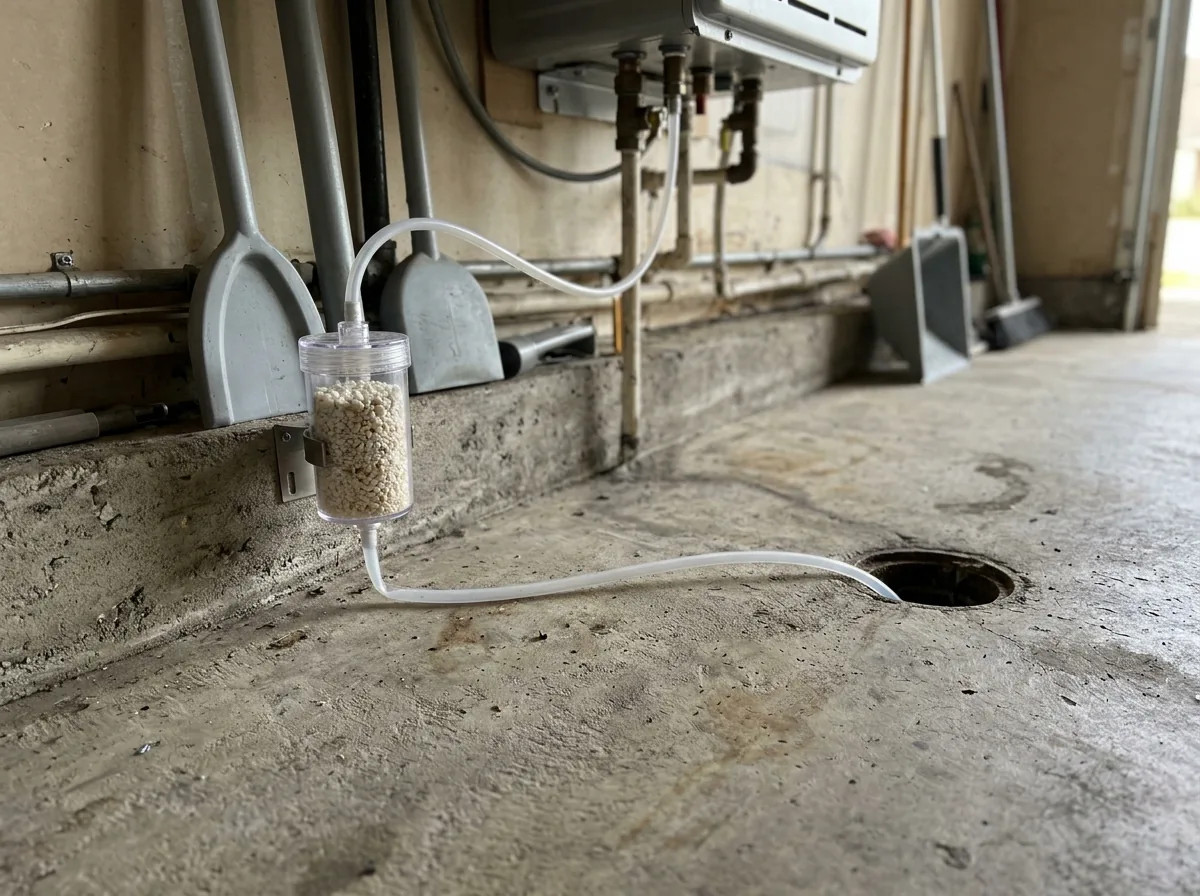
Condensate Line and Neutralizer Cartridge
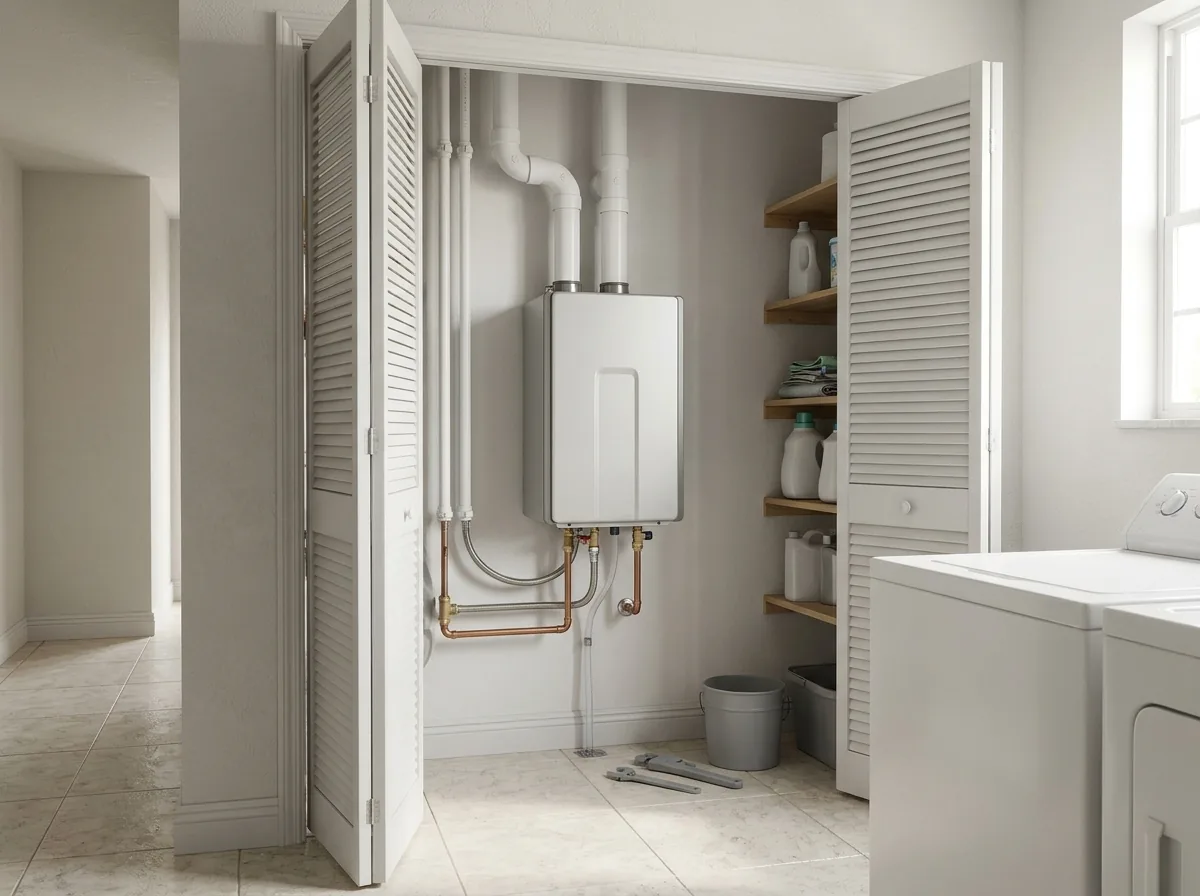
The condensate is acidic. Rinnai says combustion condensate has a very low pH that can harm septic and sewer systems, and that a neutralizer should be used on all condensing gas appliances. Its own cartridge has a clear chamber so the media can be checked once a year and replaced. Florida's mechanical code requires the condensate from condensing appliances to go to an approved fixture or disposal area, in corrosion-resistant pipe that slopes at least 1/8 inch per foot. In a garage install, where that drain can go may decide where the heater hangs.
- Drain connection on the SENSEI RX: 1/2-inch NPT
- Slope: at least 1/8 inch per foot toward the discharge
- Upkeep: look at the neutralizer media at the yearly flush and service
ENERGY STAR Models and What the Label Requires
ENERGY STAR treats a gas unit as tankless if it holds no more than a gallon of water per 4,000 Btu per hour of input and stays under 200,000 Btu per hour. To earn the label, it must meet all four of these:
- Uniform energy factor of 0.95 or higher
- At least 2.8 GPM over a 67-degree temperature rise
- At least 6 years of warranty on the heat exchanger
- At least 5 years on parts
In practice that means a condensing model; Rinnai's non-condensing RL75e, at 0.81, falls short. The label used to unlock a federal tax credit, and some cost guides still print it. It's gone. ENERGY STAR's credit page says the credit covered products bought and installed from January 1, 2023 through December 31, 2025, and the IRS confirms that 25C isn't allowed for property placed in service after that date. A unit installed in 2026 gets nothing from it.
Why Port St. Lucie homeowners and businesses call Port St. Lucie Tankless Water Heater
- Sending a request is free and doesn't commit you to anything
- Your details go to one licensed plumber, never a list of callers
- Ask for the unit's flow rate at your water temperature in writing
- Ask who files the city permit and books the inspection
- The referral adds nothing to the plumber's price
Condensing Unit Costs, Rebates and Paperwork in Port St. Lucie
Without the federal credit, the savings case rests on fuel and on utility money. On a natural gas street, Florida City Gas lists a tankless rebate of up to $675; check the current terms on the FCG rebate page before counting on it. Gas only reaches homes along its mains, so check your street first; where there's no main, a condensing unit set up for propane is the fallback.
A condensing quote should list the unit and its UEF, the PVC or CPVC vent with its equivalent length, the condensate route and neutralizer, and any gas line change. Plan review is part of the city water heater permit for every tankless unit, so the manufacturer's spec sheet goes in with the application.